

The NVA used loudspeakers to attempt to get the CIDG to surrender. They broadcast messages in English and Vietnamese, then followed their message with a barrage of artillery and mortar shells. The U.S. countered with B-52 strike that dropped 340 tons of bombs on the area surrounding the camp.
The NVA was broadcasting that Ben Het was the “Dien Bien Phu” for the American soldiers. It was imperative that the roads to both Dak To and Kontum be reopened. The camp was running low on ammunition, especially illumination rounds. This was the first major test for the “Vietnamization” process for the US pulling out and the ARVN troops taking over the defense of their country.
The ARVN commander cleared the road around Dak To but asked for reinforcements. He was augmented by four infantry battalions with half of the armor available in II Corps. The US supported with a battery of 175mm guns along with a battalion of 105mm howitzers, a large amount of helicopter support as well as tactical air strikes and B-52 strikes.
This massive amount of firepower was brought to bear on the hills surrounding Ben Het and the once triple canopy jungle was stripped bare. But the NVA with their tunnels withstood the vast majority of it unscathed.
ARVN troops succeeded in getting a convoy over Road 512 from Dak To into Ben Het on June 24 but it took heavy fighting most of the way to do so. Just outside the A-Camp US engineers clearing mines were ambushed by the NVA, suffering heavy casualties. The ARVN escort column for the engineers fled at the first shot.
Another convoy trying to make it into the camp was badly shot up. On June 27th, another valuable Mike Force company was tasked to air assault into the camp to help stem the tide. The NVA stepped up the artillery fire on the base dropping nearly 450 rounds into the camp wounding nine Americans. The Americans countered with 60 B-52s that delivered 1,800 tons of bombs.
With the eyes of many watching the ARVN troops in their first real test on their own, they poured troops in to stop the NVA. At the peak of the battle, there were seven ARVN battalions joining the two American-led Mike Force battalions totaling close to 4,000 troops.
ARVN troop convoys continued to move between Road 579 and 512 in the ensuing few days and the ARVN troops systematically cleared the areas around the camp of NVA. But they weren’t defeated although stopped at Ben Het. They faded back into jungle into Cambodia and in August, the same NVA regiments would then siege the SF A-camps at Bu Prang (A-236) and Duc Lap (A-239).
By July 2, the siege of Ben Het was declared over. The Ben Het camp was rebuilt by and reinforced by engineers and all of the bunkers strengthened.
Losses included one Green Beret killed and 16 wounded; one South Vietnamese Special Forces killed and seven others wounded; 15 ARVN soldiers killed and 70 wounded, and 52 CIDG strikers killed and 141 wounded. There were 23 civilians killed and 11 wounded. Casualties among the US artillerymen was high as well.
The end result was that the camp at Ben Het was powerless to stop the NVA from infiltrating from Cambodia along the Ho Chi Minh trail. The NVA were able to pin the CIDG strikers into the camp by siege and they weren’t able to affect the NVA as envisioned.
But the camp’s existence was a political victory, (one of the few), the camp and the SF defenders had defeated every attempt to push them out, even when the NVA brought tanks into the wire. While the US Special Forces, artillerymen and armor troops fought a heck of a fight, it showed that the South Vietnamese, the ARVN had a long way to go to being self-sufficient.
Below is a clip from the Stars and Stripes News from the battle on June 26.
B52s SATURATE BEN HET JUNGLES
*Stars and Stripes Thursday, June 26, 1969
SAIGON (UPI)– American B52 bombers unloaded hundreds of thousands of pounds on NVA Troops concentrations threatening the Allied Specials Forces camp at Ben Het, military spokesmen said Wednesday. The B52s struck in two raids Tuesday night and early Wednesday, dumping their bombs on targets in jungles about three miles south and two miles north of the Special Forces camp, 285 miles Northeast of Saigon. Reverberations from at least 180 tons of bombs rolled over the beleaguered outpost, which sits near the South Vietnam’s, Cambodian and Laotian borders.
Tuesday, Military spokesman reported Allied troops at the Special Forces Camp were resupplied by truck convoy but remained under pressure from NVA gunners. They said there had been continuing battles with NVA troops in the jungle. A spokesman reported that at least 183 NVA soldiers were killed around the outpost in a series of firefights on Monday.
A delayed report from a South Vietnamese spokesman said a government infantry battalion backed by U.S. air and artillery power killed 105 NVA troops Monday about three miles northeast of Ben Het. Most were killed by artillery. 12 U.S. Special Forces advisers, about 189 U. S. artillerymen and hundreds of South Vietnamese regulars and Civilian Defense Group (CIDG) forces occupied Ben Het.
A U.S. convoy guarded by Allied troops resupplied Ben Het from Dak To, Eight miles to the east along Route 512. NVA troops destroyed one of 11 trucks in the convoy and wounded two U.S. Army Engineers and 19 Government Soldiers along the way, but the ammunition-laden trucks got through to Ben Het
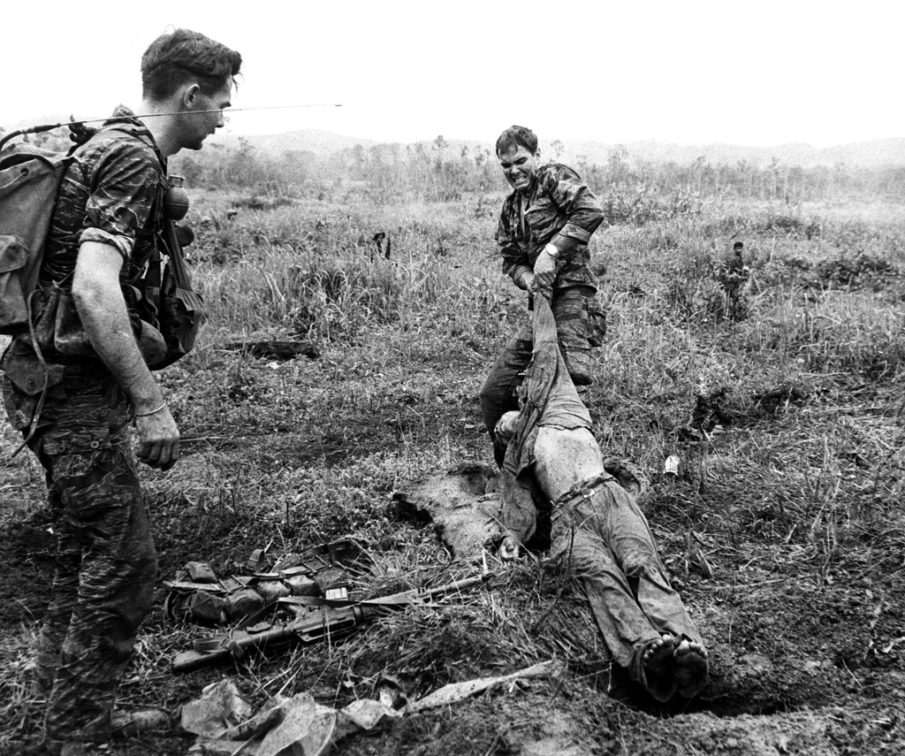
Featured image courtesy of AFP/Getty Images. A US Special Forces soldier pulls a dead North Vietnamese soldier from a hole outside the Special Forces outpost, on June 21, 1969, during the Ben Het battle, in Dak Seang area. (Photo credit should read -/AFP/Getty Images)
This article was originally published on SpecialOperations.com and written by








COMMENTS