

I think many citizens would be shocked to find out how difficult it is to get someone’s hands two inches apart behind their back to apply handcuffs. If you don’t believe me, get a willing friend and try to get their hands behind their back without any violence. Let them fight, let them run, or let them just tense up and you’ll quickly see that it’s not easy. Couple that with the fact that you routinely are attempting to arrest people who are either intoxicated on various drugs or just pumped-up on adrenaline and ready to fight. You also routinely have to arrest people who are armed either with a common weapon (like a gun or knife) or a more improvised weapon (like an axe or a crowbar). Sometimes (okay, usually) the people who are armed don’t want to cooperate with your commands or with the arrest. That is a big problem when you and the suspect are standing face-to-face. It sucks, to be honest. And as much as you try not to, you are always thinking as much about the consequence of protecting yourself as you are about the suspect’s next move. That is a terrible — and dangerous — OODA loop.
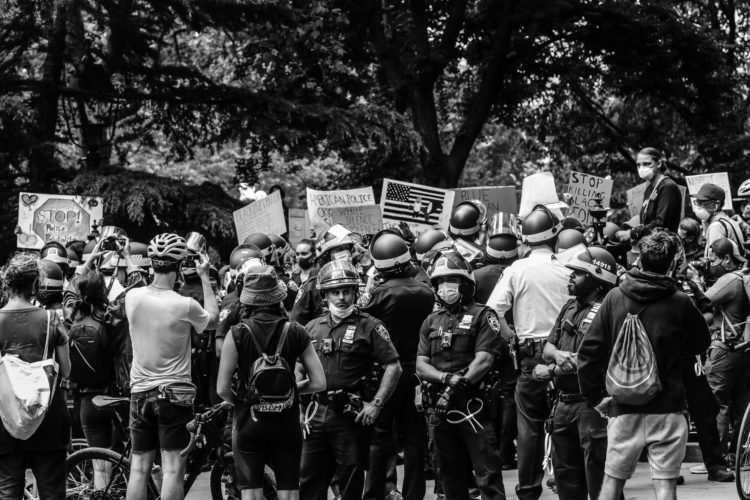
Actual police brutality is when police officers have someone, who is compliant, securely in custody and they decide to “punish” the suspect for his/her previous actions against them. This is police brutality and shouldn’t be tolerated by any department in the nation. Constantly calling everything “police brutality” is like the story of the kid that cried wolf. Always saying police officers are “racist” or are otherwise biased in some way takes credibility away from someone who tries to accurately make that report. People need to stop watering down our legal system with these consistent, but nonsensical outcries of police brutality and racism.
The Dark Side
Like many military members who have been deployed overseas, police officers routinely see death and other serious injuries (sometimes even involving their friends). These experiences can create a number of problems. Police officers are forced to either suppress those thoughts of depression or PTSD or risk being removed from their position. These experiences can lead to increased consumption of alcohol and even drugs and cause marital problems. Many police officers get divorced because their spouse just can’t handle the fact that the officer is no longer the same person they married. Sometimes they are more distant. Sometimes they are depressed. Sometimes they become so jaded through their experiences that they can’t seem to snap out of their funk even when they’re off duty spending time with their family. Other times, the alcohol abuse becomes too much for the spouse to handle and the marriage dissolves.
An article I read on Law Enforcement Today described how divorce rates in America hover around 50 percent, but police officer divorce rates are around 60-70 percent. The article goes on to say that only about 25 percent of officers will be married to the same spouse at both the beginning and end of their careers. Even worse, it adds that while the average rate of domestic violence within a household is about 10 percent, the average rate in a police household is around 40 percent. What!?! How can this be?
Many of our nation’s fiercest warriors have at best difficult — at worst dreadful — personal lives. Much like our veterans, society would do well to give police officers the mental and emotional support they sometimes need without fear of automatic job loss or judgment. Ideas of cutting police department staffing or police budgets will only increase stress on the individual officers who remain and won’t allow the ones who need help to get it. What we should be doing is setting aside money for departments to use for mental health training and counseling when needed. Some officers are fortunate and have thick skins and things don’t seem to bother them much. Others have a difficult time dealing with the constant death and chaos they encounter. Officers who need help must have the ability to get it.
An article I read on the Help for Our Heroes website states the following statistics:
- 25 percent of all police officers have an issue with drugs or alcohol.
- 20-30 percent of police officers have substance abuse disorders. For the general population, the rate is at 10 percent.
- Between seven percent and 19 percent of police officers have Post-Traumatic Stress Disorder.
- Police officers die from suicide at a higher rate than they do from homicide. The rate of death by suicide is 2.3 times that of homicide.
We can’t begin to solve any of these issues by cutting funding or hiring less-desirable candidates. We need to treat this issue the way the military is finally beginning to treat veterans with PTSD. It went undiagnosed and untreated for too long, and too many veterans died because of it. Now, the military has gotten better at treating veterans, but police officers are still largely ignored. If the public wants quality officers, then departments need more training and resources, not less. It’s as simple as that.
The final thing I’ll mention is that many police officers nowadays are such only by title. People who wouldn’t have had a chance of making it in the military are becoming officers. People who couldn’t make a sports team are now your teammates or partners. People that can’t string two sentences together to make a logical point are sometimes your bosses. I was lucky in that I worked for a solid department and I had some good bosses overall, but I’ve seen some real morons too.
Let me tell you one last little secret. Good policemen hate the useless policemen as much or more than you do. They make us look and sound bad and we just don’t like them. If there is an officer who seems like a tool when you interact with them, then likely everyone in that department already knows it as well and agrees. The reality is that police work has the same hiring pitfalls as accounting, teaching, or sales. You will usually have some duds in the bunch. Again, though, cutting police funding won’t help departments get better people in their pool of potential candidates. The quality will suffer greatly because no one who is sane would take a police job for $12 an hour, and YOU DO NOT WANT the ones who would.
In all, I’d have to say police work is time-consuming but is also incredibly rewarding. It can be deadly, but at times makes you feel full of life. Police work is exhausting, but it provides adrenaline rushes like no other. Police work is tedious, but it teaches you how to be thorough. It is nerve-wracking, but it also provides clarity. Police work is frustrating but also fulfilling. Police work is tough, but it is also worth it. It is a job, but it is more. It is a calling; like being a teacher, a doctor, a race car driver, or a pastor. Police work is in your blood and once the adrenaline from that first hot call hits your bloodstream it’s over. You’re hooked. And it is a hard drug to kick. I kicked that habit last year, but one day, maybe soon, I may dabble again.
This is part III of a three-part series on Law Enforcement in America. You can read part I here. Read part II here.








COMMENTS