

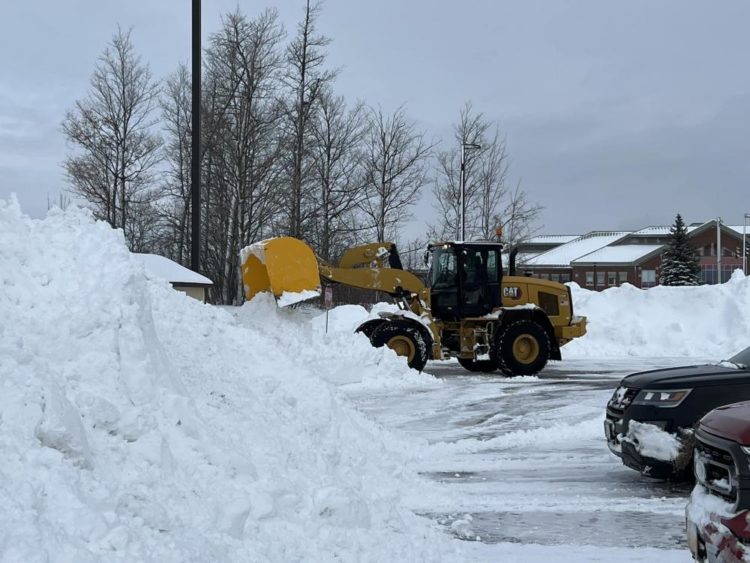
Johnson said personnel working on clearing the runway were just as excited for the plane’s arrival.
“Our guys were staged there, unable to do any more work while the runway was active,” he said. “They could have gotten a bite to eat or something, but they were watching that plane taxiing in. It took an enormous amount of work on their part to get to that point, and it was a proud moment. For us, the job got a whole lot easier once those Soldiers were taken care of.”
Johnson said that communication was key throughout the blizzard, and access to the Emergency Operations Center (EOC) virtually on his government smartphone made it easy to stay informed.
“I think having the EOC operating the way it was made a huge difference and it allowed the command team to be very proactive,” he said. “We were able to get all the information to flow from one source and keep all the organizations on the same page, so kudos to that operation.”
Rich Hughes, Fort Drum emergency manager with the Directorate of Plans, Training, Mobilization and Security, said the EOC normally operates with departmental representatives present at one location. During the November snowstorm, it was difficult for personnel to do this safely because of road conditions.
“So, we started exploring ways to do it virtually during the last storm, and then we were able to refine it,” Hughes said. “Being able to bring everyone into the situation virtually really helped us coordinate everything, keep people informed, and ensure we are operating off the commander’s priorities. Also, we knew that blizzard conditions were coming two days in advance, so that allowed us time for the garrison commander to activate the virtual EOC early.”
If there was another silver lining to the blizzard, Hughes said that a large portion of the Fort Drum community had already departed on holiday leave before the snow hit the ground.
He said that social media messaging emphasized preparedness about the impending weather event, which helped community members make informed decisions about travel and other considerations. Those platforms, as well as the Alert! notification system, kept people apprised of road conditions, closures and reporting status.
“We were also lucky there wasn’t a significant power outage related to the storm,” Hughes said. “But we still were able to get everybody together and make sure they knew what their responsibilities were if we had to activate our sheltering plan, which thankfully that didn’t come to fruition.”
Throughout the blizzard, Hughes said there was a constant effort to be prepared for any complexity the weather might bring.
“At the same time, we also made sure we were sensitive to the needs of the families who remained on post,” he said. “We were telling them to stay off the roads unless it was absolutely necessary, but we still had to have the Commissary and Post Exchange open to a certain extent in case people had needs. The last thing we wanted was for anyone to leave post for something that would be easier to get on post.”
Fort Drum may be known across the Army for cold, snowy winters, but Hughes said that comes with a reputation to be proud of.
“Snow is a fact of life here, and we make the best of it,” he said. “It may occasionally disrupt operations for a day or two, but it doesn’t shut us down. We push it out of the way, and we drive on. We’re the 10th Mountain Division, and we can win in any environment.”
***
This piece is written by Michael Strasser from the Fort Drum Garrison Public Affairs. Want to feature your story? Send your draft here today.








COMMENTS