

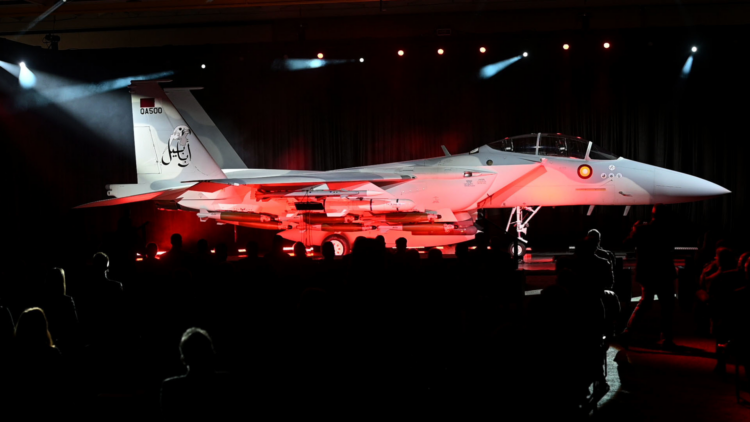
Boeing emphasizes the incorporation of next-generation technologies into the F-15QA, featuring fly-by-wire flight controls, an all-glass digital cockpit, and modern sensors, radar, and electronic warfare capabilities.
Leveraging digital engineering and advanced manufacturing, these aircraft represent a transformative advancement for the F-15 platform.
Designed to augment the QEAF’s superiority, the F-15QA offers unmatched speed, range, and payload compared to any other fighter globally. With additional weapons hardpoints, it can carry up to 16 air-to-air missiles, providing a versatile and powerful tool for Qatar’s air defense.
Aerial Demonstration and Beyond
Scheduled to participate in the aerial demonstration at the Dubai Air Show, the F-15QA is set to showcase its agility, speed, and cutting-edge capabilities.
This demonstration will undoubtedly be a highlight of the event, offering spectators a firsthand look at the prowess of this advanced fighter jet.
Boeing’s presence at the air show extends beyond the F-15QA.
A lineup of other Boeing aircraft, including the F-15E, KC-46A Pegasus, P-8A Poseidon, AH-64 Apache, and CH-47F Chinook, will be showcased in a static display.
Additionally, Boeing will highlight the T-7A Red Hawk Advanced Pilot Training System simulator, providing visitors with a preview of the groundbreaking ground-based training system that seamlessly connects with real training jets.
The Formidable Legacy of the F-15
The spotlight on the F-15 extends beyond the F-15QA Ababil as we take a closer look into the historical significance and success of the F-15 family.
Notably, the recent deployment of F-15 fighter jets by Israel for striking Hamas positions in Gaza has, in a way, emphasized their pivotal role in the Israel Air Force’s efforts to deter regional threats.
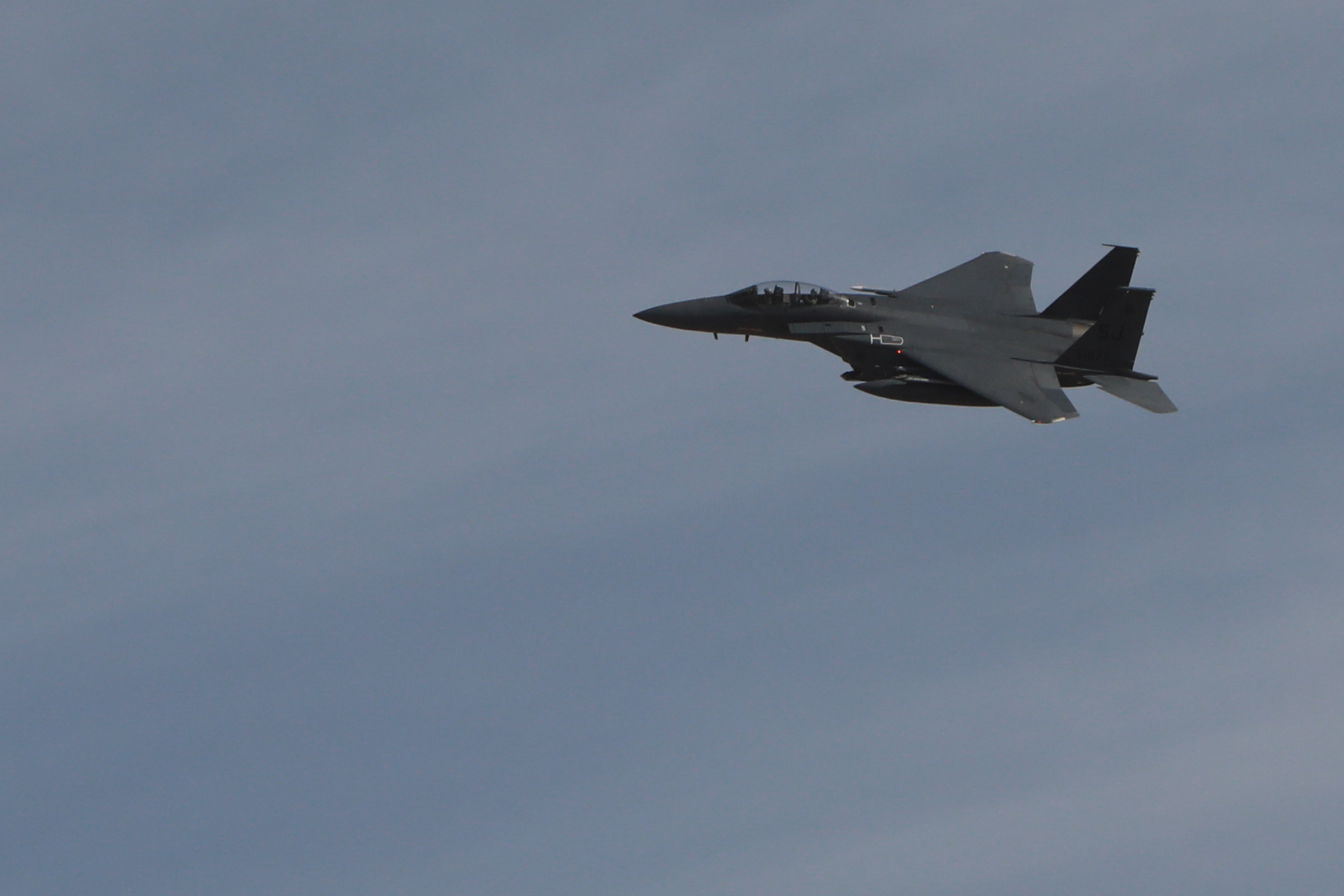
Introduced in 1974, the F-15 has a remarkable track record, with 104 enemy aircraft taken down and no losses, primarily attributed to the success of the Israeli Air Force.
The F-15’s origin lies in addressing the shortcomings of American fighters during the Vietnam War, prioritizing air superiority, and introducing the dedicated air superiority fighter concept.
The F-15’s success led to the development of the ground-attack-capable F-15E Strike Eagle, a versatile multi-role strike fighter designed for deep penetration missions while retaining air-to-air combat capabilities.
The Strike Eagle became the primary tactical fighter bomber for the US Air Force, showcasing adaptability with conformal fuel tanks, advanced radar, and targeting capabilities.
Moreover, the F-15E’s prescient utility, designed in the 1980s to align with the post-Cold War emphasis on versatility.
Equipped with a Combat Systems Officer (CSO) in the back seat and a Tactical Electronic Warfare System (TEWS), the Strike Eagle demonstrates advanced countermeasure technologies, reinforcing its defensive capabilities in contemporary warfare scenarios.
Boeing’s Confidence and Future Prospects
To reiterate, Boeing’s choice to showcase the F-15QA at the Dubai Air Show is a display of technological prowess and a strategic move signaling the company’s confidence in the aircraft’s capabilities.
This move reflects Boeing’s anticipation of securing additional orders for the continually advancing F-15 platform, which has proven its effectiveness even in an era dominated by fifth-generation fighter aircraft.
In conclusion, the debut of the F-15QA Ababil at the Dubai Air Show marks a significant moment in aviation history, highlighting the evolution of the F-15 platform and Boeing’s commitment to advancing aerospace technology.
The aircraft’s participation in the air show, coupled with Boeing’s comprehensive display of other cutting-edge aircraft and training systems, underscores the company’s position as a leader in the aviation industry and sets the stage for potential future collaborations and advancements in aerial capabilities.








COMMENTS