A reader told me to pick this up after we went back and forth about Iran’s currency, sanctions, and whether the United States deliberately pushed the rial off a cliff. I took the recommendation. I’m glad I did.
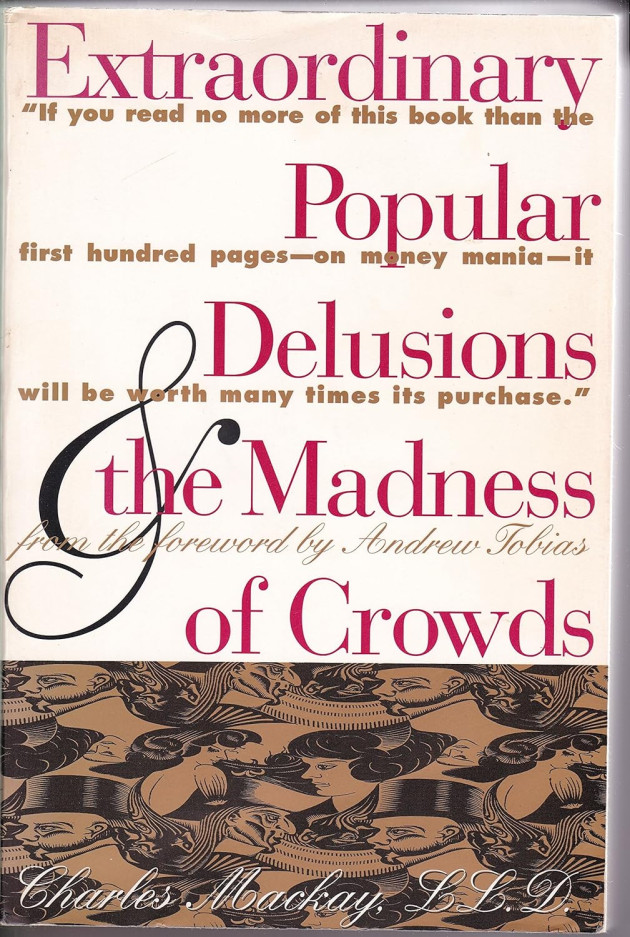
First off, this book is a blast. I found myself stopping every few pages thinking, There’s no way people did that. And then realizing they absolutely did. Tulip bulbs selling for the price of houses. Entire fortunes evaporating in the South Sea Bubble. Crowds convinced that alchemy, prophecy, or some miracle scheme was about to change the world.
Mackay’s argument is straightforward. People move together. They get excited together. They panic together. And once the mood shifts, it shifts hard.
That’s where the connection to Iran starts to make sense.
In our discussion, the claim was that Treasury created a dollar shortage inside Iran, that pressure built, a major bank failed, the rial collapsed, inflation surged, and people hit the streets. Whether you view that as strategy, leverage, or financial warfare, the mechanism itself is not mysterious.
If you make it harder for Iran to get U.S. dollars, the price of those dollars goes up inside Iran. That means it takes more rials to buy one U.S. dollar. In other words, the rial loses value while the U.S. dollar gains value against it. People see that happening and start trying to protect themselves.
Mackay spends hundreds of pages showing that confidence is the real engine. When confidence rises, prices detach from reality. When confidence falls, the same detachment works in reverse.
Iran’s currency has been under strain for years. Sanctions restrict oil revenue and financial access. Domestic inflation eats purchasing power. Capital leaves when it can. People look for safety in dollars, gold, property, crypto, anything that feels more solid than paper issued by a stressed state.
That behavior is not irrational. It is human. But when millions make that same defensive move at once, the currency weakens further. The weakness then confirms the fear.
That feedback loop is pure Mackay.
He also shows how stories amplify everything. A rumor of instability becomes a stampede. A bank failure becomes proof that the whole system is rotten. Leaders insist everything is fine, and the crowd hears desperation. Once the narrative shifts from “temporary turbulence” to “this thing is going down,” the crowd does the rest.
Already have an account? Sign In
Two ways to continue to read this article.
Subscribe
$1.99
every 4 weeks
- Unlimited access to all articles
- Support independent journalism
- Ad-free reading experience
Subscribe Now
Recurring Monthly. Cancel Anytime.
If Treasury officials openly talk about creating financial pressure, that language alone feeds into expectations inside Iran.
Expectations shape behavior. Behavior shapes markets. Mackay would recognize that chain reaction instantly.
The reader who recommended this book was not arguing that history repeats word for word. The point was simpler. Large populations can be steered through incentives and pressure. Markets can be stressed deliberately. Once the stress hits a certain point, mass psychology takes over and pushes events further than any planner might have anticipated.
That does not require secret cabals controlling every tick of an exchange rate. It requires leverage applied to a system that already has weaknesses, and a population reacting in predictable ways.
What struck me most is how modern all of this feels. Swap tulips for currency. Swap 18th century stock certificates for sanctioned banking systems. The mechanics are cleaner now, the tools more sophisticated, but the crowd looks the same.
This book does not answer whether Iran will rebound in three years or ten. It does not predict whether pressure will produce regime change or harden resolve. What it does is provide a lens. It shows how belief, fear, scarcity, and momentum can compound until events move faster than anyone expected.
I owe that reader a thank you. The recommendation reframed the entire conversation. If you want to understand how financial pressure, narrative, and human behavior collide, this 1841 book reads like it was written for 2026.
https://a.co/d/09uHyp96









COMMENTS