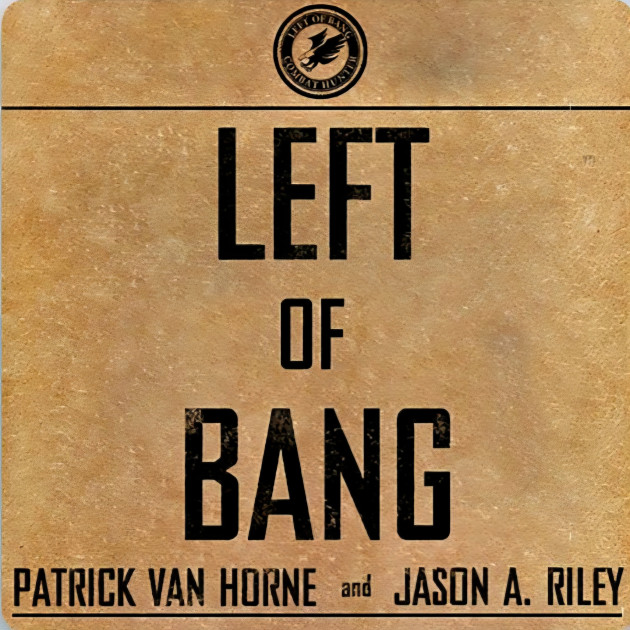
Left of Bang by Patrick Van Horne and Jason A. Riley should be required reading for anyone who operates, travels, or lives in places where the environment is unfamiliar and there is not much of a margin for error.
The book takes situational awareness, something most people treat as instinct or luck, and gives it structure, or a language.
The authors distill the U.S. Marine Corps Combat Hunter program into a practical framework for identifying threats before violence occurs. The “bang” is the moment things go boom. Everything that happens before it – that space where lives are saved – is left if bang.
Combat Hunter was developed during Iraq and Afghanistan when Marines learned that armor and firepower alone could not stop IED networks and suicide attackers. The answer was not more protection. It was better observation. Marines were trained to read human behavior, establish environmental baselines, and identify anomalies that signaled hostile intent early enough to act.
The core idea is simple and repeatable. First, establish a baseline. What is normal for this place, this time of day, this crowd. Second, identify anomalies. Not one odd thing, but clusters. Three or more anomalies usually mean intent is forming. Wrong clothing for the weather. Hands hidden or working. Someone too close or moving against the flow. Timing that does not fit the environment. When those indicators stack, action is required.
The book does an excellent job explaining how the human brain already processes this information subconsciously. That uneasy feeling people ignore is often accurate data being dismissed. Left of Bang teaches readers how to trust that feeling and act deliberately instead of rationalizing it away.
Van Horne and Riley give readers usable tools. They break down spatial, temporal, and personal anomalies with clear examples and photos. They integrate the Cooper Color Code and reinforce the importance of staying mentally engaged without tipping into panic. Decision-making is treated as a skill, not a personality trait.
For military and law enforcement readers, the applications are obvious. The book reinforces kill, capture, or contact decision trees and compressing the OODA loop under stress. For civilians, the lessons translate cleanly to run, hide, or fight without turning everyday life into paranoia. Awareness is the goal. Early action is the payoff.
The strongest sections are the case studies. Real-world examples like Entebbe and the Mumbai attacks show how early indicators were present and either acted on or missed. These chapters drive home that violence rarely appears out of nowhere. It announces itself to anyone paying attention.
The book does repeat its core concepts often, but repetition reinforces discipline. Baseline work requires effort and practice. That truth does not change because the reader is uncomfortable with it.
Overall, Left of Bang earns its reputation. It gives language to instincts, structure to awareness, and permission to act early. For SOFREP readers, it belongs on the shelf next to any serious discussion of threat identification and personal security.
Already have an account? Sign In
Two ways to continue to read this article.
Subscribe
$1.99
every 4 weeks
- Unlimited access to all articles
- Support independent journalism
- Ad-free reading experience
Subscribe Now
Recurring Monthly. Cancel Anytime.
This is a practical manual for staying alive before things go bad.
What readers are saying
Generating a quick summary of the conversation...
This summary is AI-generated. AI can make mistakes and this summary is not a replacement for reading the comments.