

Why Was BRICS Established?
The idea behind BRICS was not only to recognize the economic potential of these emerging markets but also to offer an alternative to Western-dominated institutions like the IMF and World Bank.
The group’s goal is to create a more balanced, multipolar world where the economic policies aren’t dictated solely by the US or Europe.
BRICS’ mission is to foster cooperation in areas like finance, energy, agriculture, and technology while providing a space for dialogue on political issues that often get sidelined by Western institutions.
Critics from the West often dismiss BRICS as an eclectic mix of countries with little in common beyond their desire to challenge Western hegemony.
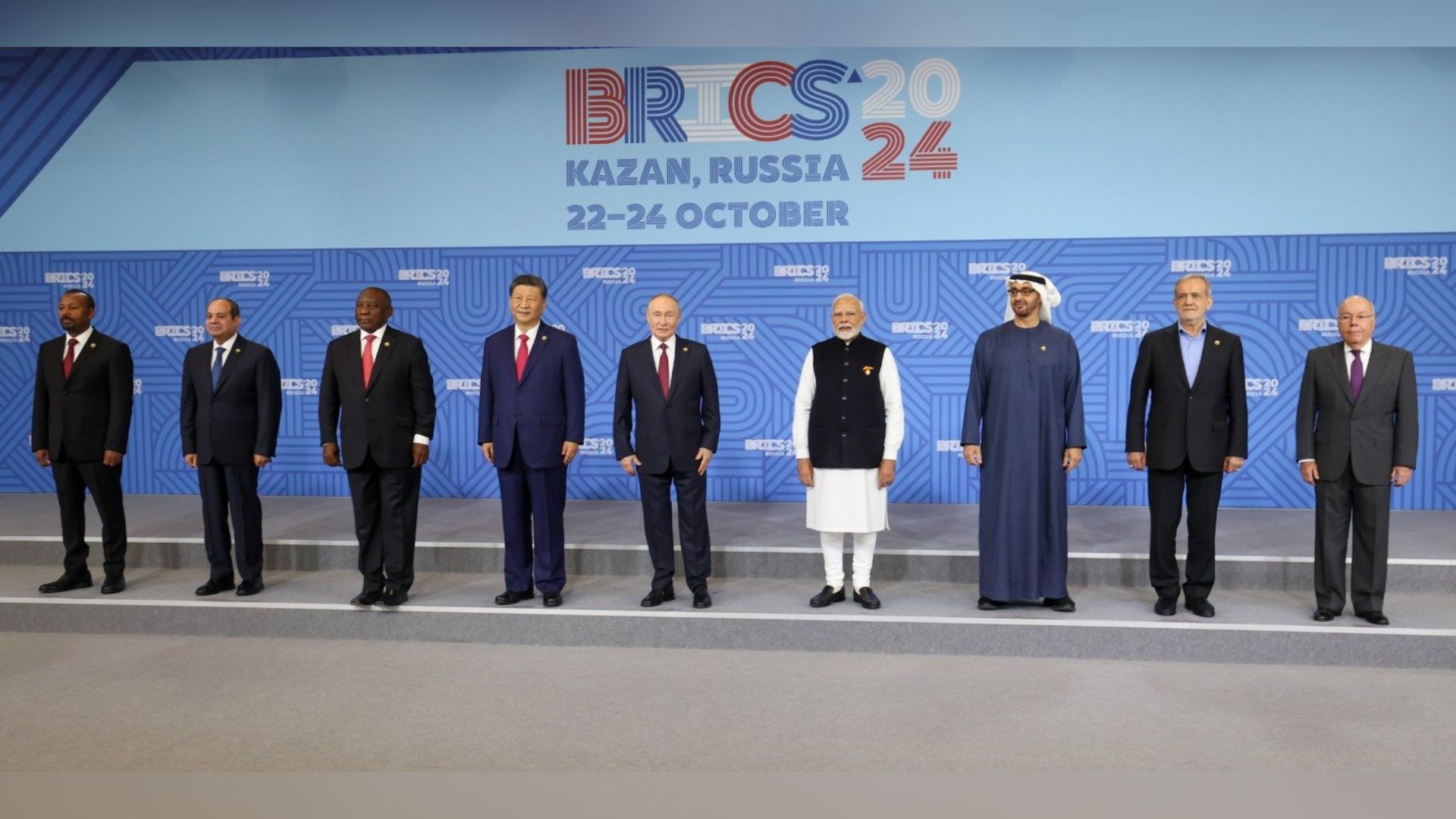
13 nations have officially joined up as BRICS partner countries, though they are not yet full members pic.twitter.com/EWnmWjgALg
— RT (@RT_com) October 25, 2024
It’s true that BRICS includes nations with different political systems and economic goals—from China’s centralized, state-driven economy to India’s democratic market-driven one.
Yet, despite these differences, there is a shared sense among BRICS members that the existing global order does not adequately serve their interests.
This sentiment resonates, especially in the Global South, where countries feel the effects of decisions made by Western institutions that often don’t prioritize their needs.
The Timing: An Alternative to the IMF and World Bank?
The timing of this year’s BRICS summit coincides with the IMF and World Bank meetings in Washington, bringing the contrast between the two groups into sharp focus.
While the IMF and World Bank are often criticized for their one-size-fits-all economic policies and stringent lending conditions, BRICS aims to present itself as a champion of economic sovereignty and a voice for developing nations.
Supporters argue that the IMF and World Bank have become out of touch with the needs of countries in the Global South.
Critics of these institutions point to their emphasis on austerity measures that often leave countries more indebted and economically vulnerable than before.
The rise of the global South!
Modi 🇮🇳 pushes for payments between BRICS countries without west’s involvement!
— Erik Solheim (@ErikSolheim) October 25, 2024
A recent report suggested that the IMF has drifted from its mission to support struggling economies, while the World Bank is seen as complacent in addressing global poverty, with rising poverty rates indicating that its efforts may be falling short.
BRICS, in contrast, promotes itself as offering a more cooperative approach. It’s about finding solutions that don’t come with the harsh conditions often associated with Western loans.
The new additions to the BRICS bloc, such as Iran and Ethiopia, are drawn to the idea of an alternative that doesn’t hinge on adopting Western economic policies.
However, skeptics question whether BRICS can genuinely provide a viable alternative.
While the idea of moving away from the US dollar as the dominant currency in international trade is appealing to many BRICS members, the reality is more complicated.
The dollar remains deeply entrenched in global finance, and efforts to replace it are easier said than done.
Additionally, there is a concern that if the Chinese renminbi becomes the leading alternative, BRICS could end up replacing one dominant power with another, swapping US influence for the Chinese.
Views on the War in Ukraine
The Ukraine conflict is one of the most contentious issues looming over this year’s summit.
While Russia seeks to use BRICS as a platform to strengthen its geopolitical position, some of its closest partners are calling for peace.
Ukrainian officials recently stated that Russia failed to gain support for its invasion at the BRICS summit, noting that the world majority continues to back Ukraine’s quest for comprehensive peace.
China’s President Xi Jinping made his stance clear, emphasizing the need to avoid escalation and calling for efforts to “ease the situation as soon as possible.” His comments reflected concerns about the conflict’s spillover effects on global stability.
Similarly, Brazilian President Luiz Inácio Lula da Silva urged for the start of peace negotiations, though he avoided direct criticism of Russia.
Indian Prime Minister Narendra Modi also called for peace through dialogue and diplomacy without mentioning Ukraine directly.
While these calls for peace don’t amount to direct opposition to Russia’s actions, they do highlight a divergence within BRICS on how to approach the conflict.
For Putin, this means balancing his narrative of military progress with the reality that even within this supposedly anti-Western bloc, there is not unanimous support for Russia’s military ambitions.
Is BRICS a Genuine Alternative or Just Anti-West?
The big question surrounding BRICS is whether it represents a true alternative to Western-led institutions or merely serves as a platform for countries dissatisfied with the current order.
The idea of “BRICS Plus,” which includes more countries from the Global South, certainly signals an intention to create a more inclusive platform.
Yet, the fundamental differences between member countries could also hinder the group’s ability to achieve meaningful reforms.
As one expert noted, “BRICS+ is only anti-West in that it operates as an alternative institution,” cited from CNBC News.
While there is a collective interest in achieving economic development that rivals the West, there is no guarantee that all member states will agree on what that development should look like.
For now, the unity within BRICS is driven more by shared grievances against Western economic practices than by a cohesive vision for the future.








COMMENTS