

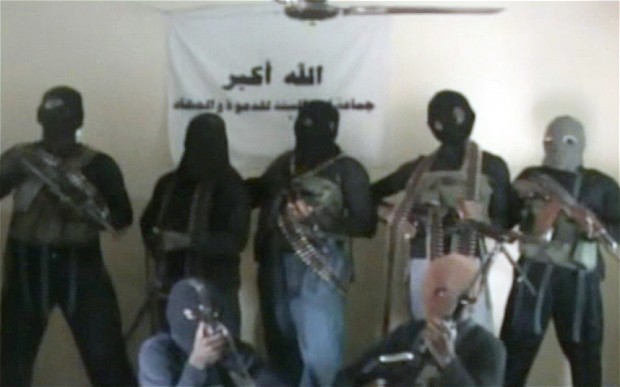
In a complex mix of religious, political, economic, and social issues, Nigeria suffers from years of “social unrest, criminality, and corruption” that has been coupled with feelings of “perceived neglect and economic marginalization.” This situation fuels resentment between the split Muslim and Christian Nigerian populace. It is a vicious cycle that destabilizes not only Nigeria’s troubled northern regions, but also regional nations such as Cameroon and Niger, as SOFREP has previously reported.
While a country of “significant promise,” the Congressional Research Service notes that Nigeria’s state and regional stability has historically faced constant political turmoil, and has always struggled to balance its vast oil resources with domestic and political challenges such as extreme poverty, social unrest, and government corruption. It is this list of constant factors in Nigeria that enable groups such as Boko Haram (and its splinter factions, namely Ansaru) to not only survive, but thrive.
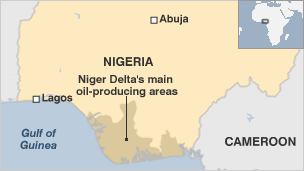 It is also important to note that the majority of Nigeria’s oil is produced in the southern portion of the country, with the majority of the marginalized population living in the northern regions. According to the Council on Foreign Relations, 72% of people in Nigeria’s northern regions live in poverty, compared to only 27% in the south.
Coupled with years of poverty and social unrest, it is the northern populace that feels the greatest need to mobilize in order to seek some sort of response from the Nigerian government.
Capitalizing on Chaos
Despite the fact that Boko Haram and its splinter group Ansaru were designated Foreign Terrorist Organizations by the State Department last year, it is clear that “little appetite for direct intervention [against Boko Haram]” exists in foreign circles. While the US claimed that designating the groups FTOs would “internationalize Boko Haram”, the US has since demonstrated restrained intent to strongly prosecute the group to the extent of its full capabilities, as it has done to stem the growth of groups such as AQIM, AQAP, etc.
As experts from Westpoint’s Combating Terrorism Center identified, the US’ initial response to Boko Haram’s latest exploit “appears to focus on its criminal aspect—forced abduction, potential sex abuse of minors, and human trafficking—leaving the long-term counterterrorism and counterinsurgency dimension of Boko Haram to the Nigerian government itself.” The State Department further supported this statement by urging Nigeria to counter Boko Haram using a combination of “law enforcement, political, and development efforts, as well as military engagement.”
Most importantly, the State Department stressed the importance of winning the hearts and minds of Nigerians, by balancing out the disproportionate political system and working to reform education and health-care services in troubled parts of the country.
While this may be a relatively refreshing course of action for a supporter of more restrained and refined US intervention abroad, the fact remains that the Nigerian government has historically failed to demonstrate the capacity or will to address the many challenges and grievances inherent in its social structures, to include the spike in Boko Haram activity in the past decade.
The Way Ahead
Unfortunately for the marginalized Nigerian populace living in northern Nigeria, the Nigerian government currently lacks the capability to stem the growth of criminal and terrorist enterprises, and will most likely be unable to prevent Boko Haram from gathering further support in the region.
Due to the extensive economic and social unrest inherent in Nigeria (but especially in the north), Boko Haram recognizes that it has an abundant recruiting pool from which it can draw both active and passive supporters for its cause, despite the increasingly violent actions of the group. The Nigerian government has failed to commit any serious efforts addressing the needs of the northern population. This only further delegitimizes any potential government attempts to control Boko Haram, which stands as one of the only enterprises in Nigeria that offers the population an opportunity to take action against the many problems that Nigerians see as being the result of disproportionate oil wealth.
With the influence of Boko Haram steadily increasing, it is also possible that Boko Haram could see another split that produces two factions: “one that is focused on local grievances, and another that [seeks] regional expansion.” This is a dangerous possibility that highlights the existence of other regional terror actors in the Sahel, to include AQIM and other al-Qaeda affiliated Islamist groups.
Thanks for listening.
Feature image courtesy of the Telegraph.








COMMENTS