

Two three-man sniper teams from the 3rd Battalion of Princess Patricia’s Canadian Light Infantry were attached to the 101st Airborne for the operation’s duration.
In addition, operators from the Joint Task Force 2 (JTF-2), a Canadian special operations unit similar to the U.S. Army’s Delta Force, worked independently and directed airstrikes against the enemy.
The Canadian snipers hit the ground running, racking up multiple kills, but they truly distinguished themselves a few days into the operation, when Master Cpl. Arron Perry took out an al-Qaeda fighter who was acting as a forward observer.
Perry’s shot was from 2,310 meters, or 2,526 yards, breaking the record for the longest sniper kill. But glory was not his for long.
A few days later, Cpl. Rob Furlong broke that record with a 2,430-meter (2,657-yard) shot against an enemy machine-gunner.
By the end of Operation Anaconda, the Canadian snipers had made the difference, killing numerous enemy fighters and saving countless U.S. lives. As a result, the five snipers received the U.S. military’s Bronze Star Medal for Valor, the fourth-highest award for bravery under fire.
In the years of fighting that followed in Iraq and Afghanistan, the impressive records set in Shahi Khot Valley were broken, but the titles remain in Canadian hands. The current record is 3,540 meters (3,871 yards), set by JTF-2 commandos against ISIS fighters in Mosul, Iraq, in 2017.
Disaster on Takur Ghar
Operation Anaconda, however, didn’t end well for everyone.
Advance Force Operations teams from the elite Joint Special Operations Command (JSOC) were the first to deploy to Shahi Khot Valley, sending precious information about enemy positions back to headquarters.
But as the battle progressed, the teams — composed of Delta Force, SEAL Team Six, and operators from other special-mission units — ran out of rations and batteries. Instead of resupplying the teams on the ground, JSOC sent in fresh personnel. However, the new teams weren’t acclimated to the brutal conditions and terrain. This would be fatal.
MAKO 30, a SEAL Team Six element, decided, with approval from the JSOC task force commander, to insert on top of Takur Ghar instead of landing on its slopes and making its way to the top.
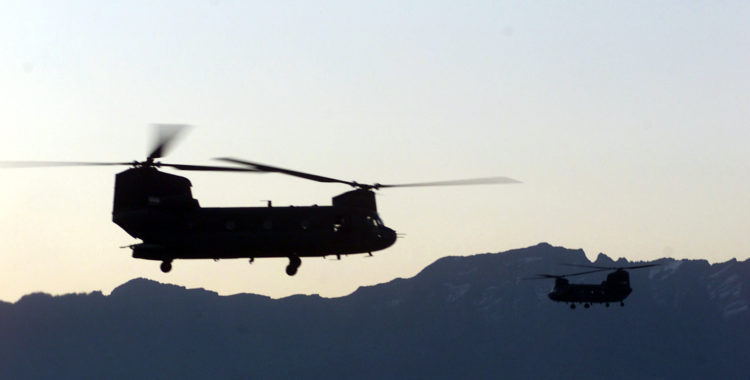
During its approach, the MH-47 Chinook helicopter carrying MAKO 30 came under intense fire. Chief Petty Officer Neil Roberts fell from the ramp of the Chinook as it took evasive action.
The chopper had to make an emergency landing on the slopes before heading back to base. MAKO 30 was reinserted on Takur Ghar to save their teammate, who by that time had been killed and mutilated by al-Qaeda fighters after a valiant last stand.
Once reinserted, the SEALs were pinned down and forced to retreat with several wounded, leaving behind Tech. Sgt. John Chapman, an Air Force combat controller, whom they thought had been killed. Chapman, however, was still alive and fought to the end, even charging the enemy positions by himself.
An Army Ranger quick reaction force went in to save MAKO 30 but came under fierce enemy fire. One Chinook carrying the Rangers crash-landed on the slopes of the mountain. The soldiers inside put up a brave fight but lost four men, while five were wounded. A second Ranger quick reaction force relieved them after several hours of battle.
The Battle of Takur Ghar yielded two Medal of Honors with Chapman and Master Chief Britt Slabinksi, MAKO 30’s team leader, received the military’s highest award for valor.
A CIA drone was over Takur Ghar as Chapman fought, making his the first Medal of Honor action ever caught on film.
This article was written by Stavros Atlamazoglou and originally published on Insider.








COMMENTS