An American volunteer with the Kurdish Peshmerga caught a Squirtle near Mosul, Iraq and subsequently challenged Daesh (ISIS) to a Pokémon battle.
Read the full article for more on:
Important insights and detailed analysis
Expert commentary on current events
Breaking developments and updates
Updating summary...
Challenging Daesh to battle, fun, chaos, and security concerns – Pokémon Go
Buck Clay
Speed
1x
Listen
COMMENTS
An American volunteer with the Kurdish Peshmerga caught a Squirtle near Mosul, Iraq and subsequently challenged Daesh (ISIS) to a Pokémon battle.
This it not Hit the Woodline, the Duffle Blog, or the Onion but there are twenty-one million daily security threats set to wander into restricted access facilities. Pokémon Go was released on the 5th of July and has swiftly become a global craze for civilians and servicemembers alike. In fact, Pokémon Go has become the biggest mobile game ever.
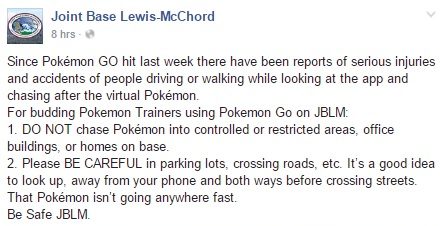
Via Facebook
Advertisement
Bigger doesn’t necessarily mean better in regard to national security. Especially when people are being led around by a mobile device that is influenced by an unsecured third-party game, which can be influenced by other players.
For the Pentagon, Pokémon Go, has, in a sense become an active metaphor of too much with too little. The 21st-century digital soldier, we don’t know how to read, but we got a lot of toys.
The Air Force is prepared to treat the wounded who walk into traffic, as opposed to telling servicemembers to put their damned phones away.
Advertisement
Several Air Force bases have sent out safety reminders to airmen in hopes of preventing injury or accidents. The Air Force reminds our airmen to always make safety a top priority when engaging in recreational activities. Airmen should always conduct proper risk management, have a plan, and maintain situational awareness during any and all recreational activities.
Pokémon Go is specifically a mobile game that is available for both Android and iPhone operating systems. The game uses your mobile device’s ability to track your location and deploys virtual Pokémon in random locations. The idea is that Pokémon are everywhere, and each player is encouraged to explore the world around them in the hunt for Pokémon, you ‘Gotta catch ’em all.’
To accomplish this, the game uses an augmented reality overlay, which is visible via the in-game screen. The player then tracks the Pokémon to wherever they are randomly populated by the game to catch Pokémon — by virtually throwing “Poké Balls” at the Pokémon.
All the while, Pokémon Go is collecting data on you, and your surroundings. The information collected may seem harmless to most gamers, but is considered critical information to intelligence services and militaries. The precise GPS location, azimuth, elevation, audio and video capture, and player-user data are a few of the things being transmitted via Pokémon Go via unsecured mobile devices. Dumbasses who are playing Pokémon Go on military bases, within restricted areas, and like facilities should be immediately smacked with a rubber hose – no questions asked.
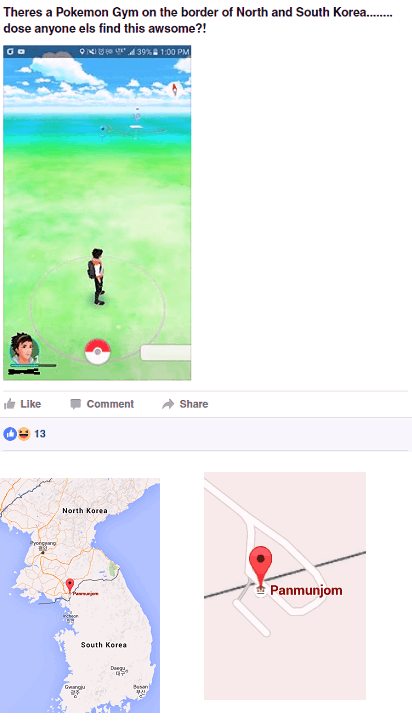
Asides from the obvious threat of phones with active cameras moving around secured and sensitive facilities. Security personnel are on extended alert to intercept inept gamers who’ve inadvertently wandered into the wrong or a dangerous place in search of Pokémon. A prime example of the wrong place would be the DMZ,
Via Facebook
There have also been plenty of reports of the game being used for malicious intent such as luring victims with a spoofed Pokémon location.
Although, some opportune Pokémon locations have occurred. Louis Park, an American volunteer with the Kurdish Peshmerga caught a Squirtle near Mosul, Iraq and subsequently challenged Daesh (ISIS) to a Pokémon battle.
Via Facebook.
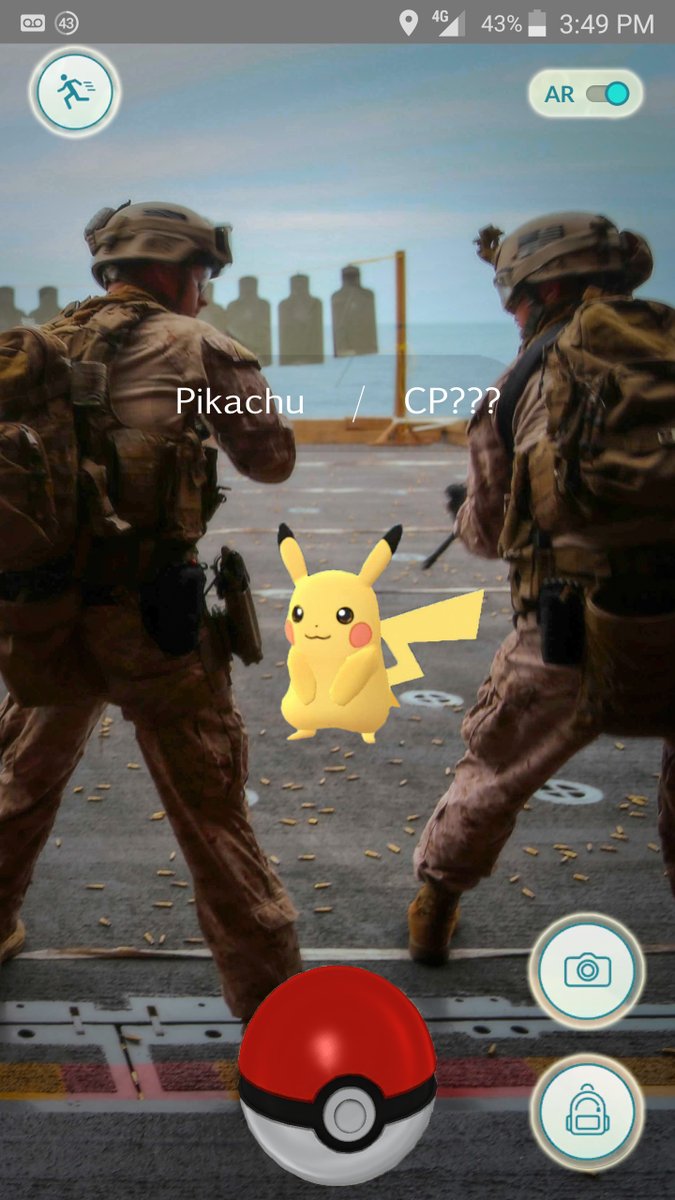
The Marine Corps, via Twitter @USMC caught Pikachu downrange and posted,
Get off the firing line, Pikachu! That’s a safety violation!
Via Twitter
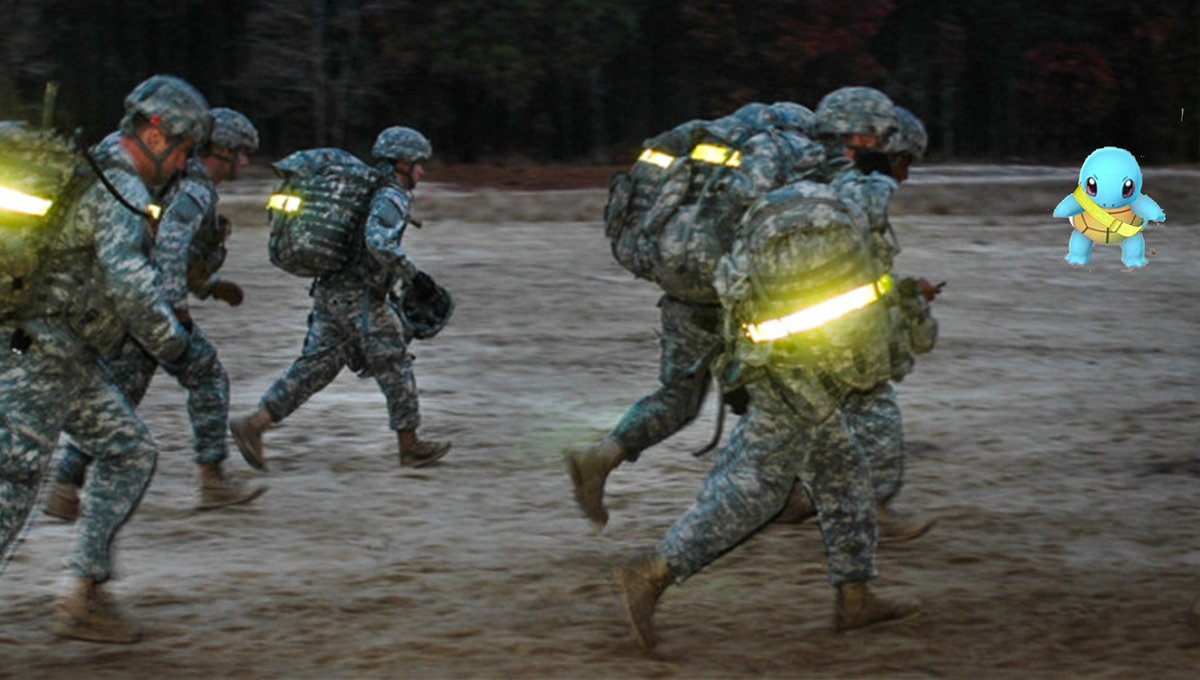
The Army, predictably, kept it extremely lame and promoted reflective belt usage. Some people, including the good idea fairy, never leave the ‘Skiff.’ – Sensitive Compartmented Information Facility (SCIF.)












COMMENTS