When venture capital lights up defense tech like the Vegas strip at midnight, and the radar hums in the background with precision, you know the battlefield is shifting.
Chaos Industries has just closed a staggering $510 million Series D funding round, catapulting its valuation to roughly $4.5 billion. This move is more than a win for one startup; it’s a vivid symptom of how investors are placing massive bets on the future of defense technologies as drone threats escalate around the globe.
The Radar Revolution: Vanquish and Coherent Distributed Networks
Chaos Industries isn’t just another radar company. They’re showing up with a whole new paradigm.
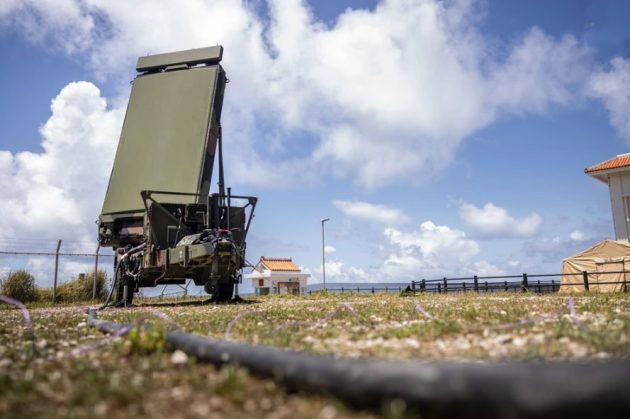
Their core architecture is called Coherent Distributed Networks™ (CDN), a system where nodes work in unison, time-synced to near perfection, to detect threats faster and farther. Their flagship product, the Vanquish radar system, is specifically designed to detect unmanned aerial systems (UAS), missiles, and aircraft.
What sets Vanquish apart? Here are key claims:
- It can detect drones and small UAS from “hundreds of kilometers away.”
- It gives defenders up to ten minutes more warning than traditional “exquisite” radars.
- It uses a network effect: add more nodes, and detection, resilience, and accuracy improve.
In effect, Vanquish and CDN combine to create a system built not simply for big aircraft but for the cheap, fast, abundant threat of drones and missiles—something legacy systems struggle with efficiently.
It is the difference between a sleepy sentry in a tower and a trained K-9 that hears danger the moment it crosses the fence line.
Why The Flux: Startups Outpacing Traditional Contractors
Here’s where the metaphor gets blunt: traditional defense contractors are still fighting with the equivalent of yesterday’s old foldable gas station maps while startups like Chaos are flying drones with digital GPS-level accuracy. Big legacy firms built large centralized radars, engineered for Cold War threats: heavy, expensive, difficult to deploy quickly. Chaos, in contrast, is sprinting with agile engineering, rapid prototyping, and enterprise-scale manufacturing backed by venture capital. This is the way of the future.
The fact that Chaos raised over half a billion dollars in one swoop so soon after its founding in 2022 indicates investors believe the shift has already happened. That confidence is shaking the ground beneath established defense primes and signaling that procurement timelines, budgets, and expectations may soon realign.
Battlefield Implications: From Ukraine to the Middle East
The real-world consequences matter. According to data cited in Chaos Industries’ latest funding announcement, Russia launched more than 5,600 drones into Ukraine in September 2025, a 38 percent jump from August and the highest monthly total of the war.
It’s a drone-swarm moment. Traditional radars were simply not optimized to detect small, low-signature UAS en masse. A system like Vanquish could flip that imbalance.
Already have an account? Sign In
Two ways to continue to read this article.
Subscribe
$1.99
every 4 weeks
- Unlimited access to all articles
- Support independent journalism
- Ad-free reading experience
Subscribe Now
Recurring Monthly. Cancel Anytime.
In the Middle East, where missile salvos and drone attacks have become normalized, deployment of distributed network radars means a defender can gain precious minutes, detect cross-border launches or swarm attacks earlier, and cue interceptors or countermeasures more effectively. Think of it as moving from reactive guard dogs to a sensor network that can bark the second the smell hits. That added time isn’t trivial—it’s the difference between scrambling fighters, launching interceptors, or eating damage.
For asymmetric warfare, these capabilities tilt the scale. Non-state actors deploying low-cost drones may have had the edge because the defender’s sensors were configured for big-ticket threats. Chaos’s model shrinks that gap. This could impact border security, infrastructure protection, and military forward bases alike.
The Funding Boom: Investor Appetite Meets Strategic Urgency
The $510 million infusion is part of a broader def-tech surge. In 2025 alone, nearly $30 billion has been poured into defense startups as investors clamor for the next edge in sensors, autonomy, and war-fighting tech. That means venture-backed firms are no longer fringe—they’re front-row players.
In this environment, Chaos stands out: less than four years old, yet already refashioning how we think about early warning, sensor networks, and operational tempo. The company collected a total of over $1 billion in funding since its founding.
It’s a clear message: modern warfare demands modern sensing, and mastery of time is becoming as critical as mastery of terrain.
Final Word: Time as Shield, Speed as Sword
In the swirl of global conflict, where drones, missiles, and unmanned systems redefine the airspace, victory will belong to those who sense first and act fast. Chaos Industries is positioning itself at the nexus of speed, sensing, and scale. Their Vanquish radar, powered by Coherent Distributed Networks, is not just surviving the pace of change—it’s driving it.
So when you see headlines about $510 million bets in defense tech, remember: that money is buying more than hardware—it’s buying seconds of warning, nodes of detection, and seconds of decision.
On tomorrow’s battlefield, those seconds will cost lives, territory, and strategic advantage.
If Chaos is right, the future of war belongs to whoever can spot the drone first and turn those seconds of notice into steel and fire on target.










COMMENTS