

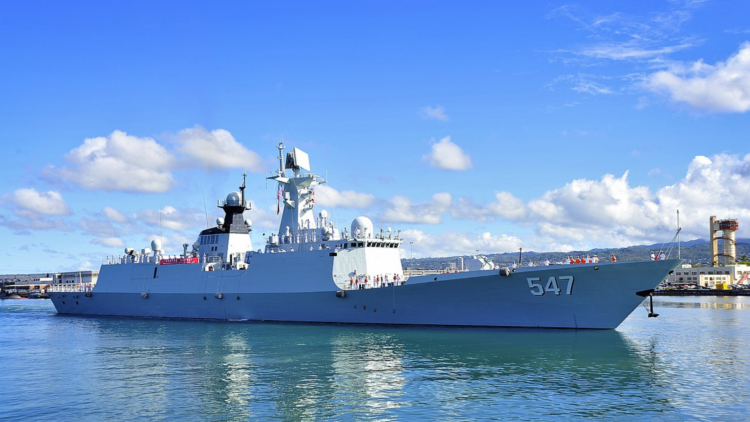
Iranian state media reports that the drills will encompass a massive 17,000 square kilometers (6,600 square miles) of water in the Gulf of Oman.
Admiral Mostafa Tajaddini, the drill’s spokesperson, emphasized that the maneuvers extend beyond just military prowess.
He highlighted goals like promoting trade, combating piracy and terrorism, supporting humanitarian efforts, and fostering information exchange for rescue operations.
Déjà Vu with Security Bond 2023
Flashback to last year, and it’s a bit of déjà vu with China, Russia, and Iran pulling the same stunt, dubbed “Security Bond 2023.”
It’s their way of fist-bumping in public, showing they’re tight, especially when it comes to facing off with the Western crowd.
Le marine di Russia, Cina e Iran hanno iniziato l’esercitazione “Maritime Security Belt 2024” nel Golfo di Oman💪🏻 pic.twitter.com/KRtKm2IWA4
— Valentina 🇧🇬🇷🇺🇮🇹🧱 (@ValentinaMihay5) March 12, 2024
Now, they could be genuinely worried about piracy or something, but frankly, it feels more like a show of force. A way of saying, “Hey Uncle Sam, see these big shiny ships? Don’t mess with us.”
Now, don’t get me wrong—the US Navy is still the top dog on the high seas.
But you can’t ignore these kinds of maneuvers. They remind us that the world’s a complicated place, and sometimes, old rivalries never truly die.
🇮🇷🇨🇳🇷🇺| Iran-Russia-China's "marine security belt" exercise is being held for the 5th year straight
US piracy over international waters is the main reason that has brought these countries together. pic.twitter.com/hP49N5CnUC
— 𝐄𝐡𝐬𝐚𝐧 𝐒𝐚𝐟𝐚𝐫𝐧𝐞𝐣𝐚𝐝 🇮🇷🇵🇸 (@Safarnejad_IR) March 13, 2024
In addition to China, Russia, and Iran, countries including Azerbaijan, Kazakhstan, Oman, Pakistan, and South Africa will also be present in the joint naval drill as observers.
Tensions in the Gulf of Oman
The Gulf of Oman has become a focal point of tension in recent years.
Since 2019, a series of attacks on commercial shipping in the region have been attributed to Iran by the US, further straining relations.
Additionally, the collapse of the Iran nuclear deal with world powers has emboldened Tehran to seize ships, raising concerns about freedom of navigation in this critical waterway.
The Strait of Hormuz, the narrow mouth of the Persian Gulf, serves as a vital chokepoint for global oil supplies, with an estimated one-fifth of all oil traded passing through its waters.
These factors make the “Marine Security Belt 2024” drills all the more significant as they unfold in a region already on edge.
The Significance of Naval Unity
As this trio of naval powerhouses lines up in the Gulf, it’s more than just a show of force.
It’s a clear signal that the waters are anything but calm, with every maneuver speaking volumes about the global tug-of-war for maritime security and regional stability.
Keep an eye on the news to see how things unfold!








COMMENTS