Cuba ranks 89th in the 2025 Military Power Rankings, facing severe limitations due to U.S. sanctions and outdated military equipment. The country relies heavily on Russian and Chinese intelligence support, raising concerns about national security for the U.S.
Key points from this article:
The 2025 Military Power Rankings place Cuba at 89th, significantly lower than Venezuela at 52nd and Iran at 11th.
How Cuba's military capabilities are severely limited by U.S. sanctions, affecting its ability to acquire spare parts and advanced systems.
Why the presence of Russian and Chinese intelligence operations in Cuba poses a direct national security threat to the United States, especially with the Lourdes and Bejucal SIGINT sites intercepting U.S. communications.
Updating summary...
Cuba’s Defense Posture and Special Forces
Warren Gray
Speed
1x
Listen
COMMENTS
Power, in Cuba, no longer wears the uniform of revolution, it wears the face of a man tasked with managing its slow unraveling.
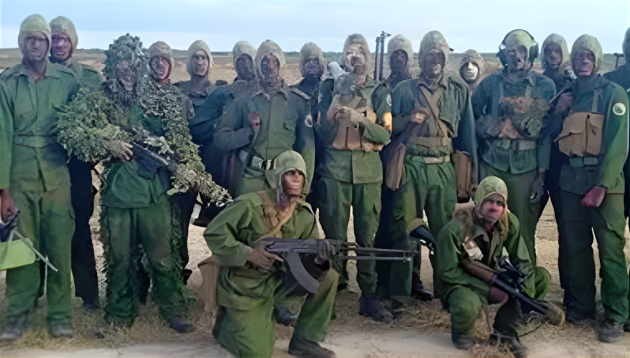
Cuban “Black Wasp” special forces.Photo credit: United24media.com.
Cuba ranks 89th globally in the 2025 Military Power Rankings (Venezuela was 52nd; Iran was 11th)…Due to U.S. sanctions and limited, defense industry capacity, Cuba faces severe restrictions on spare parts, fuel, and advanced systems acquisition…Cuba has no ability to project power beyond its borders… limiting its role entirely to island defense and symbolic, regional influence. – MilitaryPowerRankings.com
President Donald J. Trump recently stated that, “I’ll be the honor of – have the honor of taking Cuba. That would be good…Taking Cuba. In some form, yeah. Taking Cuba. I mean, whether I free it, or take it.” Did he mean militarily, politically, or some other form of takeover, and is that realistically possible?
Advertisement
Believe it or not, the Republic of Cuba, a mere 94 miles south of Florida, was once a tropical playground for America’s rich and famous, with numerous casinos, nightclubs, hotels, and prostitution, all overseen by U.S. organized crime elements, until the January 1, 1959, revolution of rebel leader Fidel Castro, overthrowing the corrupt regime of dictator Fulgencio Batista.
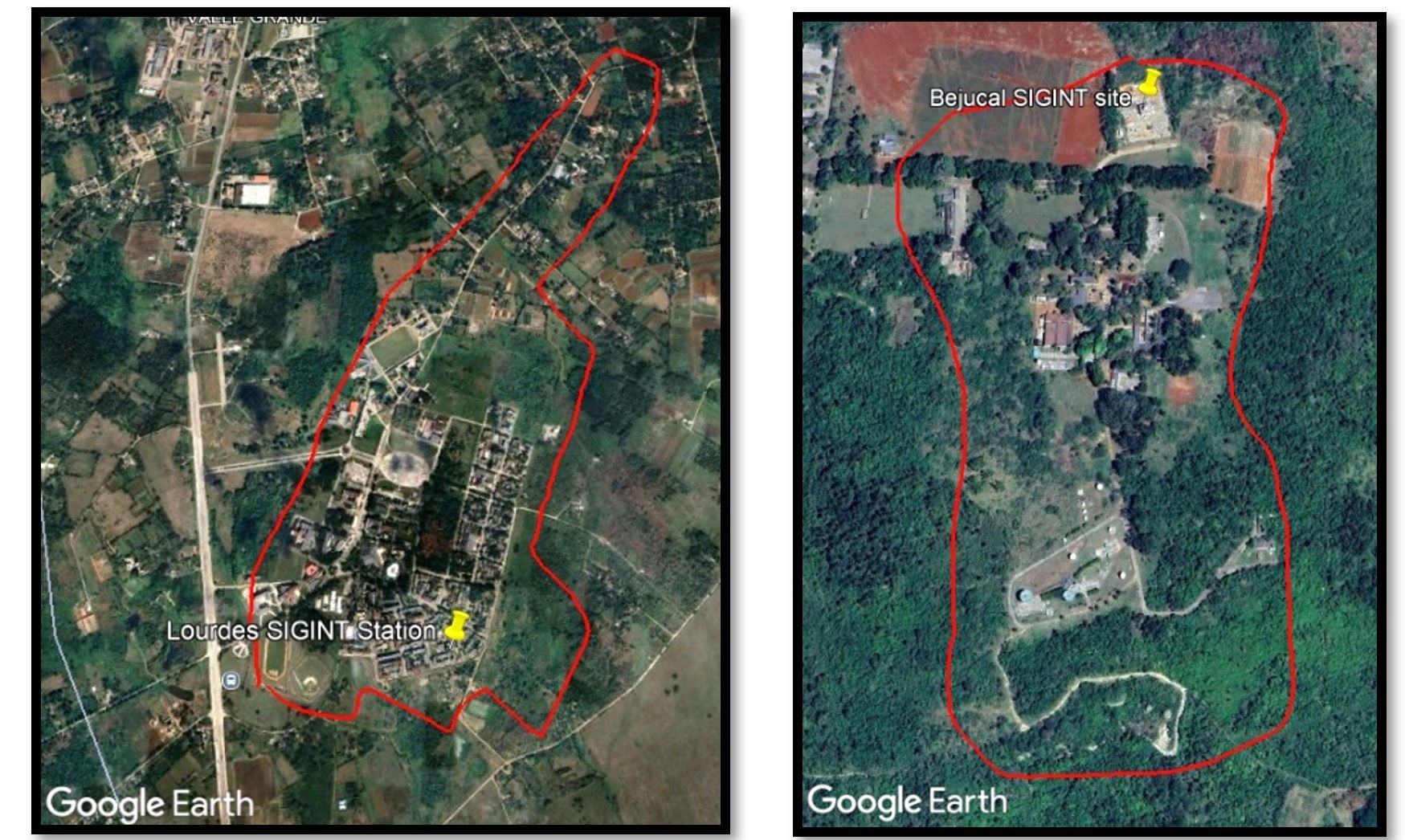
Since then, Cuba has been an equally-corrupt, communist dictatorship, and a perpetual thorn in America’s side, especially during the failed, Bay of Pigs invasion of April 1961, and the dramatic, Cuban Missile Crisis of October 1962, but also from the perpetual presence, since 1967, of the Lourdes Radio Electronics Center, a Russian-operated, high-quality, signals-intelligence (SIGINT) site, about six miles southwest of the national capital of Havana.
Lourdes has been able to intercept traffic carried by American communications satellites, eavesdrop on telephone communications, and intercept messages from the NASA Mission Control Center in Florida, and has been responsible for at least 50 percent, and many sources cite 75 percent, of the Russian intelligence collection against the United States. The site was allegedly shut down in 2001 to 2002 because it was too expensive to maintain, but reopened in 2014, when Russia forgave literally 90 percent of Cuba’s unpaid, Soviet-era debts, totaling $32 billion!
Advertisement
Especially since 2017, there has been abundant evidence that Lourdes is not only operating once again, but the massive facility, the largest intelligence complex, with 3,000 technicians, operated by the Russian Federation and its intelligence service outside its own borders, is currently shared by Russian and Chinese agents, in addition to which the Chinese now have their own SIGINT facility a mere 6.5 miles to the southeast, at Bejucal, according to the U.S. Senate Committee on Foreign Relations, and the Select Committee on Intelligence, in 2016, publicly referring to “this Chinese listening station in Bejucal.”
In fact, communist China is Cuba’s largest international creditor and trading partner, having recently made a $120-million development loan for a container port at Santiago de Cuba, and visits by high-level Cuban and Chinese military leaders took place from 2015 to 2017. Russian foreign intelligence chief Sergey Naryshkin admitted on January 17, 2023, that Russia and communist China are sharing a large amount of intelligence, operational, and signal data.
Advertisement
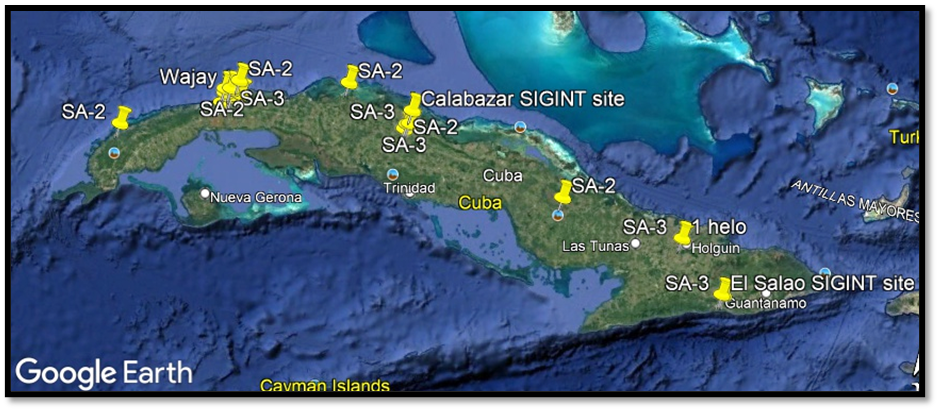
In addition, there are Russian-operated military sites at Holguin, Remedios, Artemisia, and Santiago de Las Vegas, as well as extra SIGINT facilities at Wajay, Calabazar, and El Salao, so the Russian and Chinese intelligence threat from within Cuba is substantial. Also, the Cuban government reportedly sells its intercept data from U.S. communications to third-party buyers, particularly Russia and communist China.
The Russians and Chinese are able to intercept nearly all U.S. electronic communications, such as radio messages, cell phones, faxes, computer communications, satellite communications, and they can also track missiles and objects in space. This enables them to collect personal information about United States citizens in the private and government sectors, engage in industrial espionage, and have and the means to engage in cyber warfare against the U.S. And with communist China gearing up for operations against free and democratic Taiwan, it’s especially important to thwart such open aggression in that region by limiting Chinese access to U.S. communications.
The Lourdes and Bejucal SIGINT sites in Cuba. Photo credits: Google Earth, 2026.
Militarily, Cuba ranks quite low in overall power, with the bulk of its air defense comprised of 1970s-vintage/antique, SA-2 Guideline (S-75 Dvina) and SA-3 Goa (S-125 Neva/Pechora) fixed, surface-to-air missile (SAM) sites, with only six SA-2s (28 miles range) and five SA-3 (22 miles range) batteries still active at the latest count. The SA-3s have been upgraded with a dozen SA-26 Pechora-2BM vehicles from Belarus, essentially containing two SA-3 missiles mounted on a truck chassis, instead of a fixed launcher. These are still dangerous missiles, but not nearly as threatening as Iran’s much more advanced, SA-20 Gargoyles, which the U.S. easily defeated very recently.
There are also just three batteries of SA-6 Gainful mobile missile launchers (maximum range is 15 miles), and limited quantities of SA-8 Gecko, SA-9 Gaskin, and SA-13 Gopher short-range, mobile missiles, and shoulder-fired, SA-7 Grail, SA-14 Gremlin, and SA-18 Grouse heat-seeking missiles.
The Cuban Air Force is in a similarly sorry state, with only 20 total aircraft still airworthy, including nine Mi-8/17 Hip transport helicopters (just four are currently visible on Google Earth satellite imagery, dated 2020), four Mi-24/35 Hind-E helicopter gunships, three L-39C Albatros jet trainers, and four An-24 Coke/An-26 Curl military transport aircraft. Their inventories of MiG-21 Fishbed-J, MiG-23 Flogger, and MiG-29 Fulcrum-A jet fighters have been depleted to the point that none are officially active now, although three MiG-29s and a few MiG-21s may possibly be reactivated in an emergency.
The Cuban Army has 50,000 active-duty soldiers and 40,000 reservists, but their equipment is mostly poor and outdated, including antique T-55, T-62M, and PT-76 tanks, BMP-1 armored personnel carriers, and beat-up UAZ-469 jeeps. Even the Russians have a military joke that “the UAZ breaks down where few other vehicles dare to go.”
Their standard infantry weapons are the well-known Kalashnikov AKM assault rifle, sometimes with a suppressor, Dragunov SVD sniper rifles, and Makarov PM service pistols, all from the 1960s and 1970s.
Likewise, the Cuban Navy is small and not very effective, with only three submarines, two guided-missile frigates, one corvette, six Osa-II patrol boats, and several minesweepers, smaller patrol boats, one intelligence vessel, and two Mi-14 Haze naval helicopters.
Overall Cuban air defense network. Photo credit: Google Earth, 202
Cuba’s premier, military unit is officially known as Mobile Brigade of Special Troops (BMTE), often identified as Military Unit 4895, or Commando Tropas Especiales (CTE, or Special Troops Command), but widely known as the Avispas Negras (“Black Wasps”), a special forces organization created in 1986. They have trained jointly with officers from communist China, North Korea, Vietnam, and with Russian paratroopers and SpetsNaz commandos, and have fought in the past in Angola, Ethiopia, and other African countries, and served as advisors in Nicaragua, Mozambique, and Venezuela.
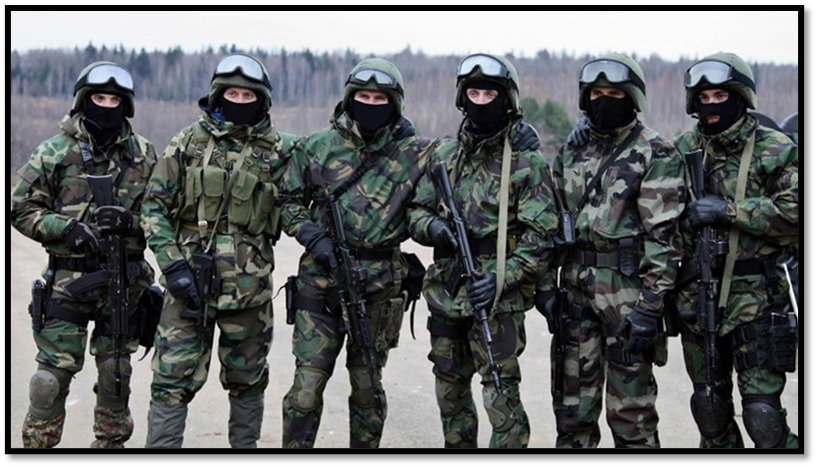
The Black Wasps are trained in jungle warfare, guerilla warfare, direct action, special reconnaissance, parachuting, psychological operations, intelligence operations, underwater missions, sniper operations, infiltration, and espionage. They work in teams of five members, who may be either male or female, and wear a camouflaged uniform and olive-green beret in garrison.
Cuban Black Wasp commandos. Photo credit: XY news service.
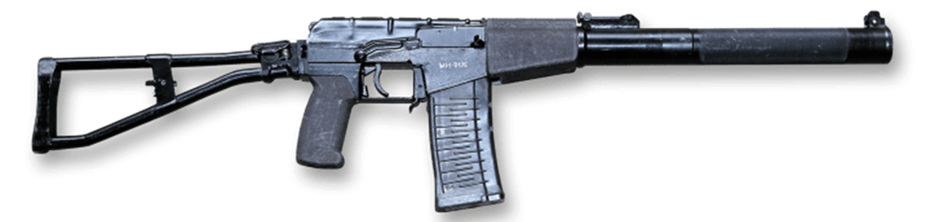
As an elite unit, the Black Wasps have a wider variety of weapons and equipment at their disposal, including the standard, Makarov PM pistol, Czech ČZ 75, or Russian Stechkin APS machine pistol, H&K (German) MP5 submachine gun, several AKMS assault rifle variants, AKS-74U carbines in 5.45x39mm, various sniper rifles, and integrally-suppressed weapons, such as the AS Val rifle and VSS Vintorez.
AS Val suppressed, assault rifle in 9x39mm. Photo credit: Wikimedia Commons.
They also possess a variety of specialized vehicles, including the armed, Fiero ATV, the Iguana Humvee-type vehicle with NSV heavy machine gun, UAZ jeeps with machine guns or grenade launchers, and BRDM-2 armored personnel carriers.
Unfortunately, The Black Wasps have also been directly involved in the brutal suppression of protests in both Cuba and Venezuela, especially the July 11, 2021, protests across Cuba, during which thousands demonstrated against economic hardship, blackouts, and government policies. The Black Wasps unit beat unarmed civilians with batons and rifles, indiscriminately arresting participants.
On January 3, 2026, the Black Wasps were protecting Venezuelan President Nicolás Maduro at his Fort Tiuna compound in Caracas, when the U.S. Army’s Delta Force arrived during Operation Absolute Resolve, killing 12 Cuban Black Wasp officers and 20 members of the Cuban Ministry of the Interior, including two colonels. The Cuban media reported that, “Our compatriots fulfilled their duty with dignity and heroism and fell, after fierce resistance, in direct combat against the attackers, or as a result of bombings on the facilities.”
The bottom line is that Cuba is a weak and ineffective, failed economy and only a marginal, military power, in no position to resist a military, political, or economic takeover by the United States. They received most of their oil products from Venezuela in the past, but no longer. Fidel Castro died on November 25, 2016, and there has been no such charismatic leader since then.
President Trump should demand that Cuba immediately remove all Russian and Chinese advisors and intelligence personnel, who pose a direct, national security threat to the United States of America, in exchange for reopening the flow of oil from Venezuela, and not executing a military takeover of the nation of Cuba.
Cuba’s overall defense posture, weapons, equipment, and military mindset, all seem hopelessly mired in the late 1970s, except for 12 MiG-29 Fulcrum-A fighters (and two MiG-29 trainers) delivered in 1989, all of which are now reportedly nonoperational. It’s a hugely outdated, military force, ranked 89th globally, by no means prepared for modern, 21st-century warfare, and even their most-elite unit very recently proved no match for the U.S. Army’s Delta Force in Venezuela.
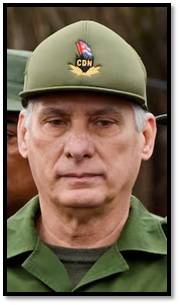
Cuban President Miguel Díaz-Canel, 2026. Photo credit: Norlys Perez/Reuters.
Advertisement
What readers are saying
Generating a quick summary of the conversation...
This summary is AI-generated. AI can make mistakes and this summary is not a replacement for reading the comments.










COMMENTS