

First to Field: Indo-Pacific Focus
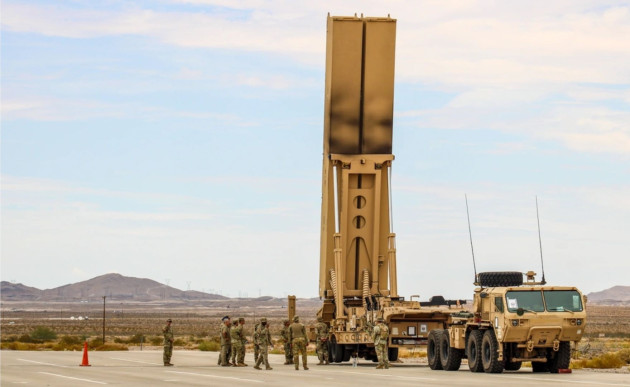
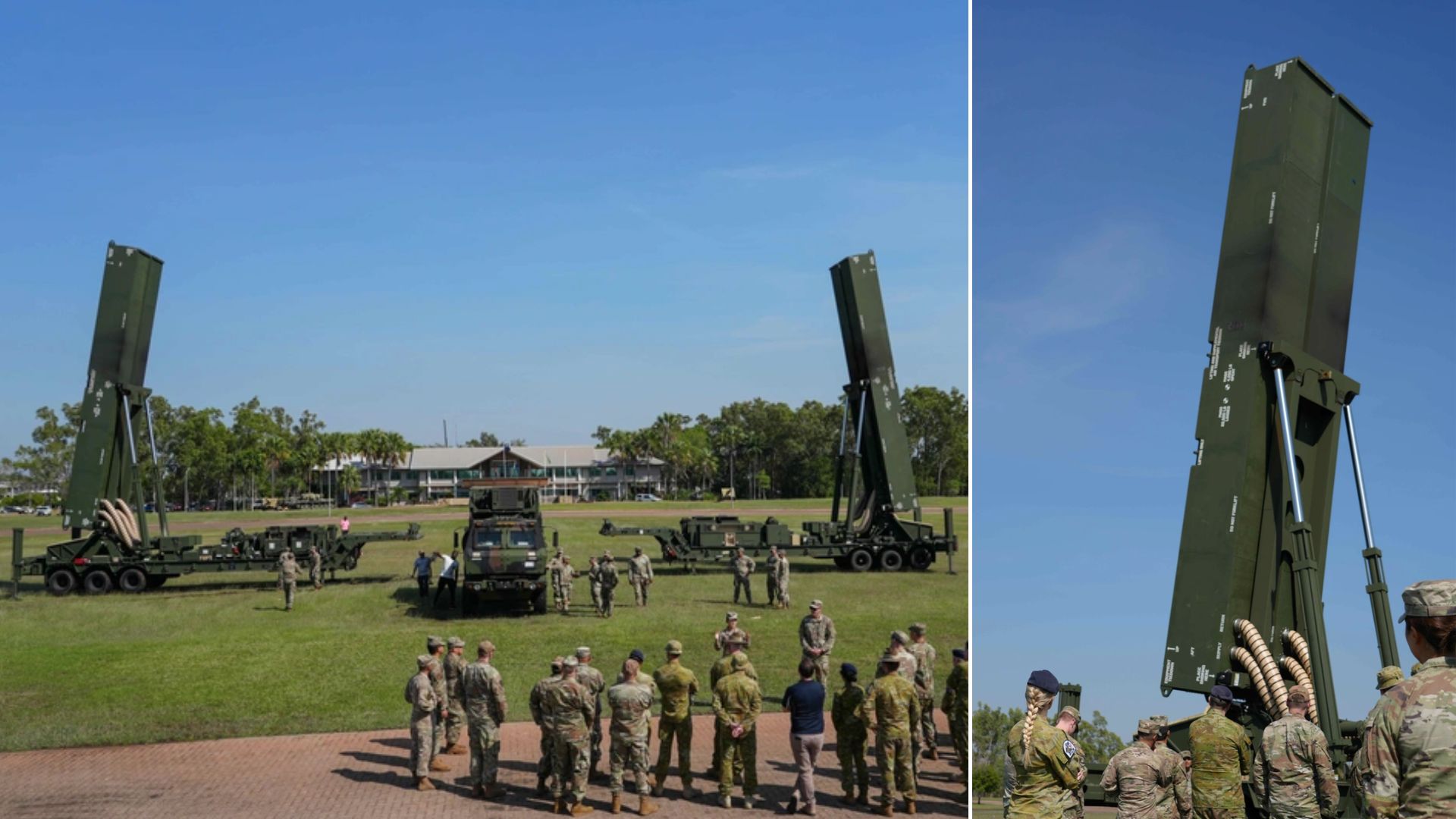
The first unit to receive the LRHW will be the 5th Battalion, 3rd Field Artillery Regiment, assigned to the Army’s 1st Multi-Domain Task Force under I Corps. The choice is not incidental.
This is an Indo-Pacific-focused formation, designed to operate inside contested environments where long-range precision fires are essential to countering anti-access and area denial (A2/AD) networks.
In practical terms, this places Dark Eagle squarely in the strategic geography that defines modern great-power competition.
From forward positions in the Pacific, the system’s estimated range (at least 2,775 kilometers) allows it to hold targets across vast swaths of adversary territory at risk. From Guam, it can reach deep into the Chinese mainland. From Eastern Europe, it can threaten command nodes around Moscow. From the Gulf, it extends coverage toward Tehran.
This is not tactical fires. It is theater-level strike capability.
Still, the initial deployment will likely be limited to Initial Operating Capability (IOC). A status that reflects a system ready for use, but not yet optimized for sustained operations or large-scale employment.
Anatomy of a Hypersonic Strike System
Each Dark Eagle battery is built around a compact but potent configuration.
Four transporter erector launchers (TELs), mounted on modified trailers, carry two missiles each (eight ready-to-fire rounds per battery). These are supported by a Battery Operations Center for command and control, along with dedicated support vehicles to sustain operations.
The missile itself follows a two-stage sequence.
A rocket booster accelerates the payload to hypersonic speeds (around Mach 10) before releasing a glide vehicle that reenters the atmosphere. From there, the weapon shifts from ballistic predictability to aerodynamic maneuver. It glides, adjusts, and descends along a depressed trajectory designed to complicate detection and interception.
Speed is only part of the equation.
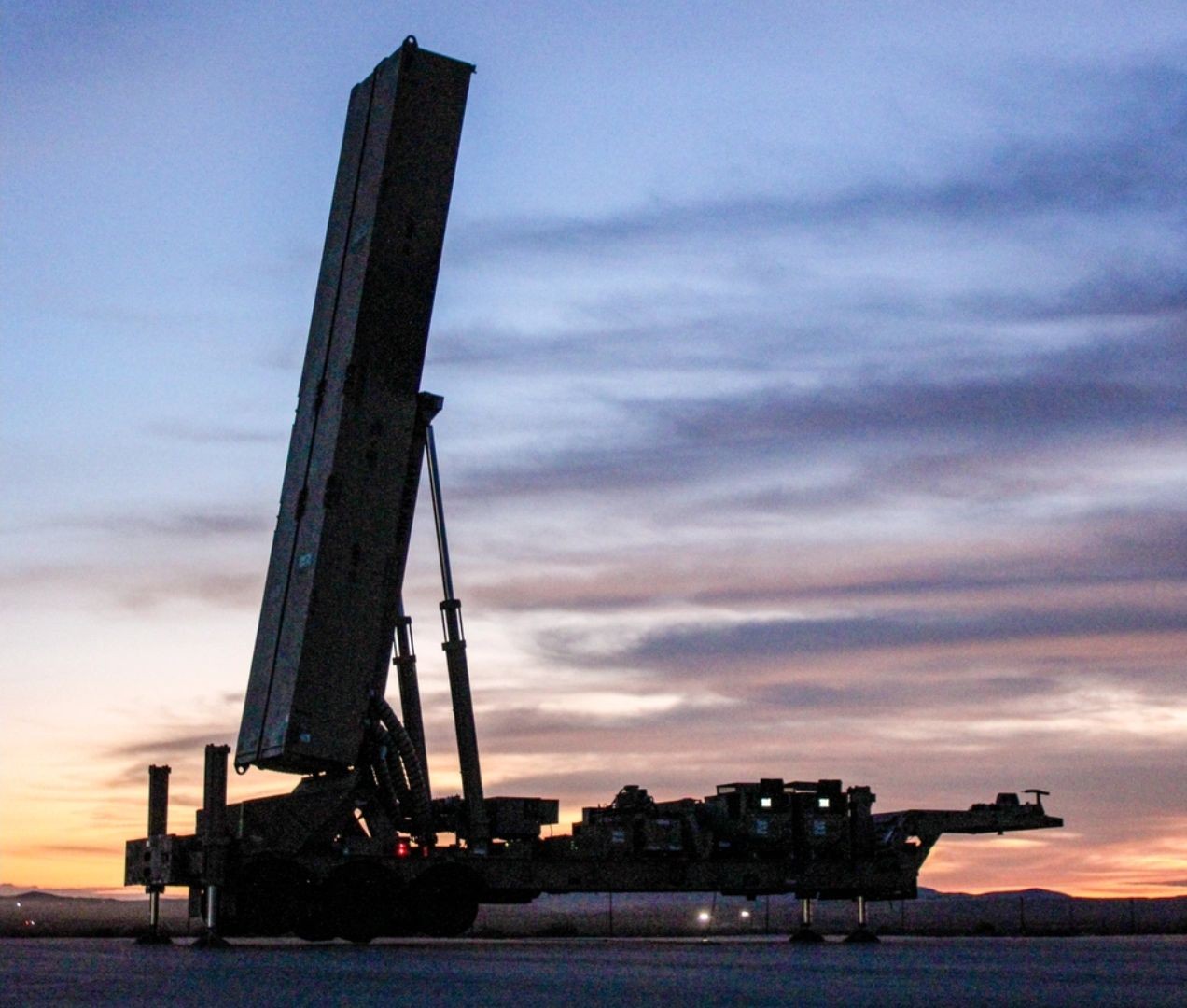
The true advantage lies in the combination of velocity and maneuverability. Unlike traditional ballistic missiles, which follow largely predictable arcs, hypersonic glide vehicles can alter their path mid-flight, compressing an adversary’s decision window and degrading the effectiveness of missile defense systems.
Built to Break A2/AD
Dark Eagle is purpose-built for one mission: penetrating advanced defenses to strike high-value, time-sensitive targets.
These include command-and-control nodes, integrated air defense systems, mobile missile launchers, and other assets typically shielded by layered A2/AD networks. Such defenses are designed to keep US forces at a distance. Hypersonic weapons are designed to negate that advantage.
The system’s depressed trajectory keeps it lower than traditional ballistic missiles, reducing radar visibility. Its maneuverability introduces uncertainty into interception calculations. Its speed compresses engagement timelines to the point where even advanced defenses may struggle to respond effectively.
In short, Dark Eagle is not just another missile. It is a tool designed to force adversaries into a reactive posture.
Challenges and Constraints: Technical Hurdles, Production Bottlenecks, and Cost Limits
For all its promise, Dark Eagle is not a finished product.
Key technical challenges remain: thermal shields must survive extreme hypersonic heat, high-speed stability tests the limits of materials and guidance, and communications and terminal targeting in contested environments are still being refined. Operational testing will continue through 2027, underscoring that deployment does not mean perfection.
The Army is effectively fielding the system while still learning how to use it.
Production adds another layer of constraint. Current rates are roughly one missile per month, with plans to double output, and each round costs about $41 million. Early units are more expensive due to low-volume production and complex manufacturing processes. With the program already consuming over $12 billion since 2018, scaling production will demand sustained investment, expanded industrial capacity, and supply chain solutions.
Inventory remains limited, meaning every missile carries strategic weight and careful operational consideration.
Beyond the Army: A Joint Hypersonic Ecosystem
Dark Eagle is not an isolated effort. It is part of a broader joint initiative to field hypersonic weapons across multiple domains.
The US Navy’s Conventional Prompt Strike (CPS) program shares the same glide body and booster architecture, adapting it for maritime platforms. This commonality is intended to streamline development, reduce costs, and accelerate deployment across services.
The end state is a distributed hypersonic strike network—land- and sea-based systems capable of holding targets at risk from multiple vectors.
For adversaries, this complicates defense planning. For the US, it enhances flexibility.
A Line Crossed
Dark Eagle’s first deployment will not deliver overwhelming capacity. It will not solve every challenge of hypersonic warfare. It will not immediately shift the balance of power.
But it does something equally important.
It marks the moment the US Army moves from concept to capability.
For years, hypersonic weapons have defined the future of warfare, where speed compresses time and maneuver defeats prediction. With Dark Eagle, that future has arrived.
It is arriving in batteries, in launchers, and in small but growing inventories.
The Army no longer needs to prove the technology works. The next phase is to scale the system, integrate it across units, and determine how and when to employ it.








COMMENTS