Dick Cheney, who died on November 3, 2025, at 84, was a pivotal figure in U.S. national security, known for his role in shaping the war on terror and expanding executive power during his vice presidency under George W. Bush. His legacy is marked by significant military interventions and controversial policies that continue to influence American politics and security.
Key points from this article:
The article details Dick Cheney's rise from a Wyoming upbringing to becoming Vice President, highlighting his influence on U.S. military strategy post-9/11.
How Cheney's policies, including the 2003 invasion of Iraq and enhanced interrogation techniques, have led to ongoing debates about executive power and civil liberties in America.
Why Cheney's legacy matters as it reflects the complexities of U.S. foreign policy and national security, raising questions about the balance between security and democratic values.
Updating summary...
Dick Cheney has Died at 84: The Passing of a Commander in the Shadows
Guy D. McCardle
Speed
1x
Listen
COMMENTS
Cheney was the quiet hand on the throttle who turned a superpower into a perpetual hunting party where the quarry was fear and the bag was the Constitution.
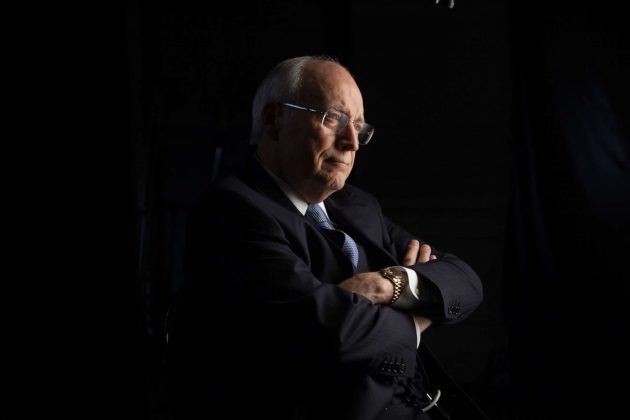
A lifetime spent engineering wars and guarding secrets left him a man of steel and shadows, sitting in the half-light here like he was waiting for the next classified briefing. Image Credit: ABC News
When Dick Cheney died on November 3, 2025, at the age of 84, from complications of pneumonia and cardiovascular disease, the theatre of American power paused for a breath. In the annals of national‐security history, he looms as the architect of the so-called “war on terror,” the man who believed the gloves must come off and the rules must bend when the enemy was barbaric and invisible.
Advertisement
Early Life and Rise into the Cold-War Machine
Richard Bruce Cheney was born January 30, 1941, in Lincoln, Nebraska, the son of a soil-conservation agent and a homemaker. He grew up amid Wyoming’s wide-open spaces, absorbing a rugged, no-excuses conservative worldview that would later frame his public logic. He studied political science at the University of Wyoming after flunking out after an initial stint at Yale.
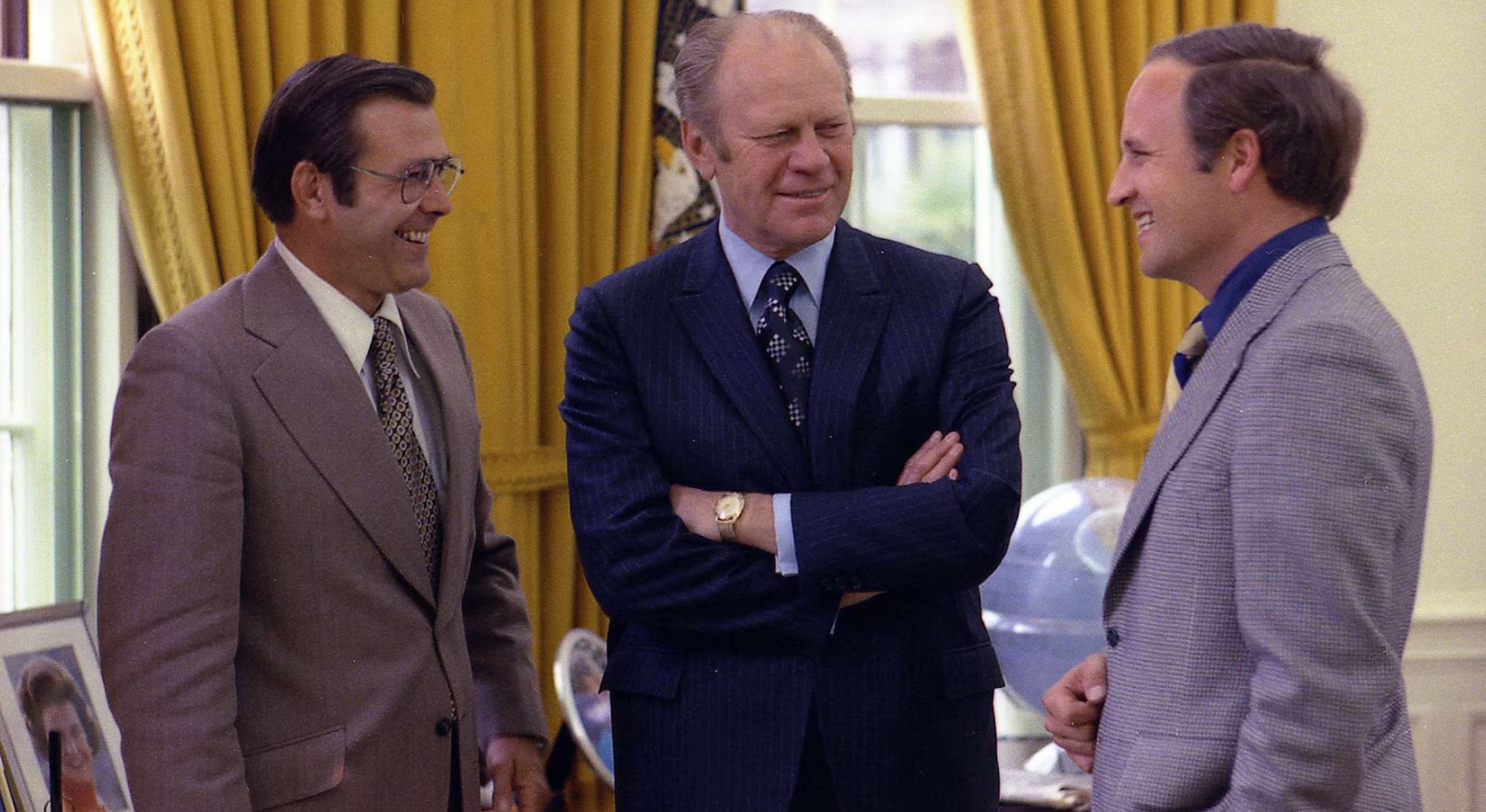
He entered Washington in the early 1970s, attaching himself to the levers of the Ford administration, and eventually worked his way up to become White House Chief of Staff. From intern to architect: Cheney’s trajectory was now upward.
Cheney (right) chats with President Ford (center) and Don Rumsfeld (left). Image Credit: ABC News
From Congress to the Pentagon: Secretary of Defense
Elected to the U.S. House of Representatives for Wyoming’s at-large district in 1978, Cheney served until 1989, rising to be House Minority Whip. Then came the pivotal appointment: in March 1989, he became Secretary of Defense under George H. W. Bush, serving until January 1993. In that capacity, he oversaw the U.S. invasion of Panama and the 1991 Gulf War (Operation Desert Storm), successfully managing the transition from Cold War to new regional conflicts. It was then that he began to see warfare as an instrument not just of national defense but of global design—a mindset he would carry into his vice presidency.
Advertisement
Halliburton and the Corporate Interlude
After leaving the Pentagon, Cheney entered the private sector and became chairman and CEO of Halliburton Company from 1995 to 2000. Under his leadership, Halliburton grew into a major energy‐services firm, though controversy followed: there were issues surrounding accounting practices, Nigerian contracts, and ongoing shareholder lawsuits. For Cheney, the corporate world was both a relief from politics and an extension of it—business and geopolitics overlapping.
Vice President and The War on Terror
In 2001, Cheney became Vice President under George W. Bush, and few holders of that office have wielded such influence. In the aftermath of the September 11 attacks, he stamped his imprint on U.S. policy: surveillance expansions, “enhanced interrogation,” secret detentions, the 2003 invasion of Iraq—all for the purpose of pre-empting a new kind of war.
Advertisement
He argued that the protections that had been built after Vietnam and Watergate were now liabilities in a world of “dark side” threats. He predicted U.S. troops would be greeted as liberators in Iraq. The subsequent insurgency proved worse than many foresaw.
Cheney also endured a famous hunting accident in 2006 when he accidentally shot a fellow hunter, an episode that highlighted the unpredictable consequences of power.
Healthwise, the stress of the job tracked him relentlessly: by the time his vice-presidency ended in 2009, he had suffered five heart attacks.
Advertisement
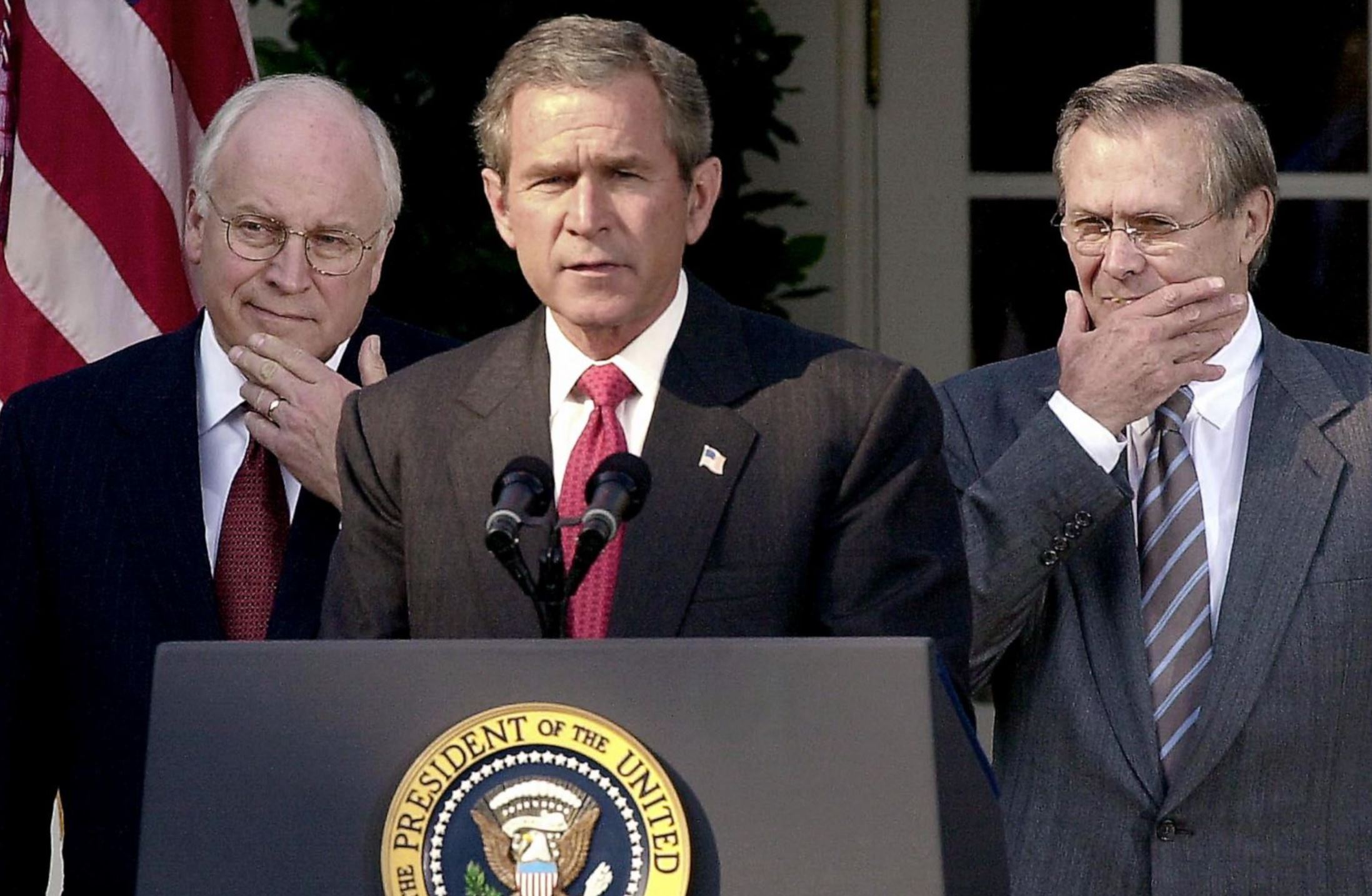
Vice President Cheney (left) is shown here with President Bush (center) and Secretary of Defense Rumsfeld (right) in this 2002 photo. Image Credit: ABC News
Later Years: Health Battles and Public Withdrawals
Cheney’s heart problems were chronic and profound. His first heart attack came at age 37; he underwent quadruple bypass in 1988; in 2010, he had a left-ventricular assist device implanted, and in March 2012, he received a full heart transplant. In later years, he lived under the heavy surveillance of his own body, a veteran of literal internal wars.
Though he withdrew from day-to-day politics, his voice remained relevant—he opposed certain Republican directions, endorsed his daughter Liz Cheney, and even backed Democrats in later elections.
How will history remember Cheney? As a man who believed the presidency must wield maximum force when standards were broken and enemies hidden. Supporters see him as firm, fearless, and pragmatic. Critics view him as the epitome of unchecked executive power—a figure who pushed detention, surveillance, and military intervention with minimal oversight.
His war-on-terror vision changed the U.S. national-security apparatus, resetting the American state of mind from deterrence to a constant war footing. The Iraq War, the debates over torture and privacy, the expansion of the vice-presidency into a power-center: all bear his mark.
He leaves behind a contentious legacy, less like a monument than a crossroads, with points diverging in U.S. policy: where do we draw the line in wartime? How do we endure peace after perpetual combat?
Legacy: Power with a Price
In the end, his battles weren’t only abroad; they were internal: in the heart, in the mind of a culture grappling with fear, in the corridors of power. Sure, Cheney got the job done—but at what cost?
Dick Cheney died surrounded by his family—his wife Lynne, daughters Liz and Mary—and leaves generations who will remember both the man and the war he helped wage.
In the fullness of his life, Cheney embodied the shadow operations of the state in the open glare of democratic society. His legacy will live in statutes and in lawsuits, in soldiers’ memories and in constitutional arguments.
Whether one calls him a guardian or a usurper, there is no escaping the fact that he redirected the course of U.S. policy in the early twenty-first century.
Advertisement
What readers are saying
Generating a quick summary of the conversation...
This summary is AI-generated. AI can make mistakes and this summary is not a replacement for reading the comments.










COMMENTS