

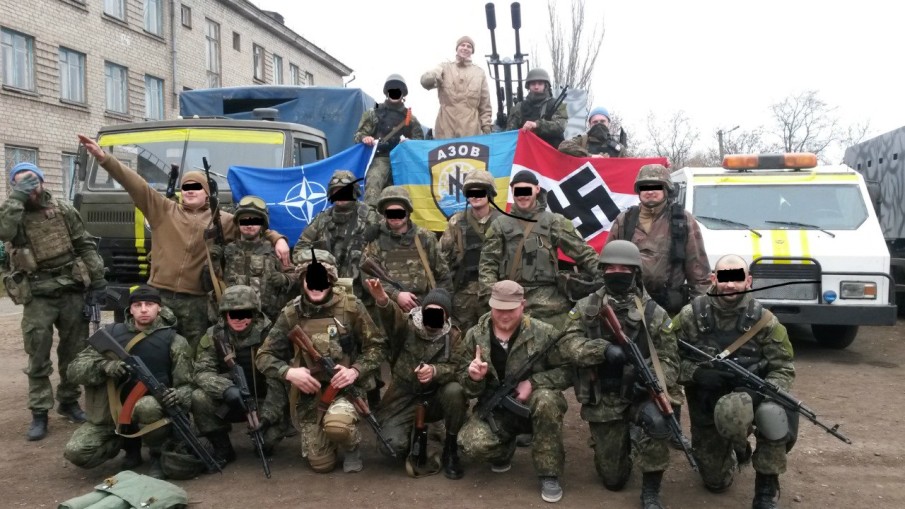
The Azov Battalion’s hard-fighting reputation is often at odds with its more radical public displays and views, evidenced by their unit insignia (below), which showcases Nazi symbols. This, coupled with the battalion’s deeply rooted national socialist ideology, has triggered growing apprehension throughout the Western world. The battalion is well-known for its far-right political agenda, and there have been regular reports of volunteers displaying Nazi symbols.
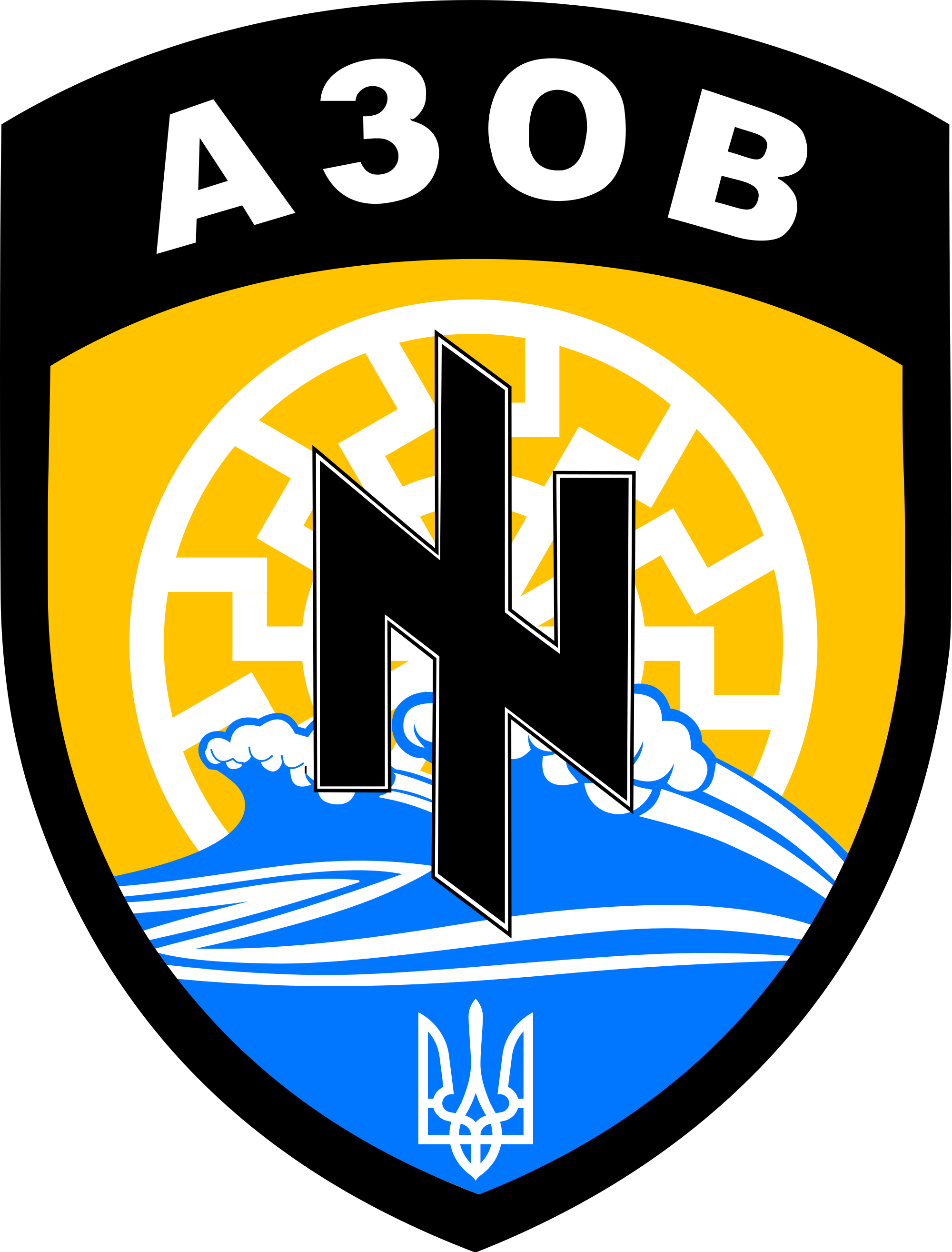
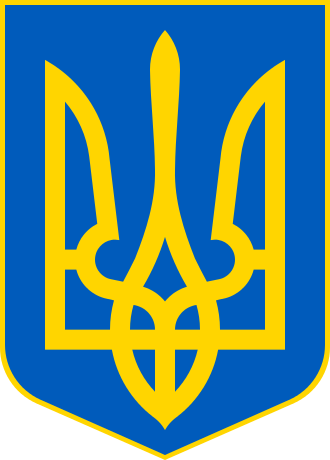
In rebuttal, public affairs officials speaking on behalf of the Azov Battalion deny allegations that Nazi symbology is incorporated or endorsed by the Azov Battalion, and that such symbols are not incorporated into the unit logo of Azov. They’ve gone on to state that the logo itself is based on the coat of arms of Ukraine (below).
Notwithstanding their denials, neo-Nazi allegations have already impacted international relations, especially with the U.S. The rift with America amped up after a March 2015 announcement by Minister of Internal Affairs Arsen Avakov that stated Azov Battalion was to be one of the first units to receive training by U.S. Army troops deployed to Ukraine as part of the Operation Fearless Guardian training mission. The U.S. House of Representatives responded by passing an amendment to the Defense Appropriations Act that blocks any aid, training, or arms, to include the hotly contested Man-Portable Air-Defense Systems (MANPADS) as well as desperately needed professional army instruction.
Volunteers from Azov Battalion conduct an impromptu early evening-fire exercise. Video courtesy of author.
The Azov Battalion has a public relations and global image problem that is well known and scholarly identified. In a video discussion panel held in November, 2014, by the Georgetown University Center for Eurasian, Russian, and East European Studies (CERES) Conference titled “Ukraine, Russia, and the West—The Way Forward,” a panel of global experts confirmed that some volunteers of the Azov Battalion are indisputably fascists and neo-Nazis.
The panel goes on to flatly repudiate the notion that the neo-Nazi claims against volunteers of the Azov Battalion are simply Russian propaganda. In fact, the claims against Azov Battalion may be the most honest thing out of Moscow-based media in decades, and Azov delivered it to the Kremlin on a golden platter.
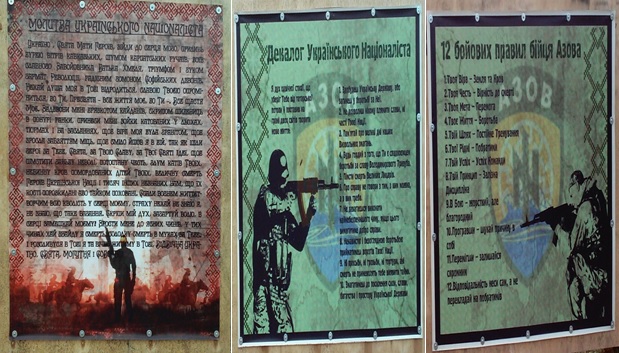
Despite the media portrayals, it is irresponsible for anyone to suggest that Azov is a purely neo-Nazi unit. The vast majority of the volunteers serving in the Azov Battalion are no more neo-Nazi than the super-white, suburbanite kids from high school who wore FUBU and listened to a lot of rap were gang members.
Of course the battalion does have its hardcore members who really believe in such asinine ideology. These are often the ones recruited from prison, and they look the part. These uncompromising volunteers of the Azov Battalion brandish the same tattoos you would expect from an Aryan Nation ex-con fresh out of an American prison. They have at some point in their misguided lives decided it was a good idea to tattoo a swastika on the side of their shaved heads, or to have a portrait of Adolph Hitler tattooed on their shoulder. (I blame the schools for failing to appropriately teach history.)
There’s also a large contingent of jokers within the Azov Battalion, and much of their humor does not culturally or linguistically translate well to those in the West. Their actions are the linking cause of the unit’s occasionally reckless behavior and their total disregard for the country’s sensitive political situation. This path has continued to lead to a storm of bad press for the battalion. The most popular of these press-related screw-ups was conducted by soldiers who displayed a Nazi flag and made of photo op out of it. This incident will be the poster child of poor judgement and terrible field humor for years to follow.
This mishap has deteriorated the battalion’s public image. The same jokers of Azov Battalion have also been known to pose with the Islamic State flag. One could assume it’s the same merry band of volunteers who have created an interesting video showing their various field roles as ISIS shenanigans. One of the most darkly humorous plays on their situation can be seen when volunteers scream “Allahu Akbar” while in training, or in jest when heading off on assignment.
Video courtesy of ATO in Ukraine.
The simple fact is, most people in Azov are volunteers, not professional soldiers. There is no regimented or highly disciplined fighting force in existence in Ukraine today. That means that a responsible non-commissioned officer corps is not available to enforce standards and lead by example. Any notion of being a commissioned officer or being in command in Ukraine is based on an abstract of the Soviet Army’s modus operandi, which is well outside the scope of even the most obscure NATO standards. The notion of professional soldiering is a brand new, undeveloped concept in Ukraine.
The motivating factor for most volunteers who joined Azov has been that Azov has been proven to be the most successful BTD in combat. Azov offers its volunteers the best pathway for both foreign and domestic volunteers who wish to obtain fast and immediate training, and to be given a real opportunity to fight.
Generally speaking, there is no real ideological consensus among Azov’s volunteers or those belonging to other volunteer battalions. The volunteers in Ukraine are fighting for a plethora of reasons. They come with their own baggage and ideas, and each represents unique national origins. Many are Russian citizens or Eastern European nationals ideologically at odds with Russia, as they disagree with the actions and administration of the Russian government.
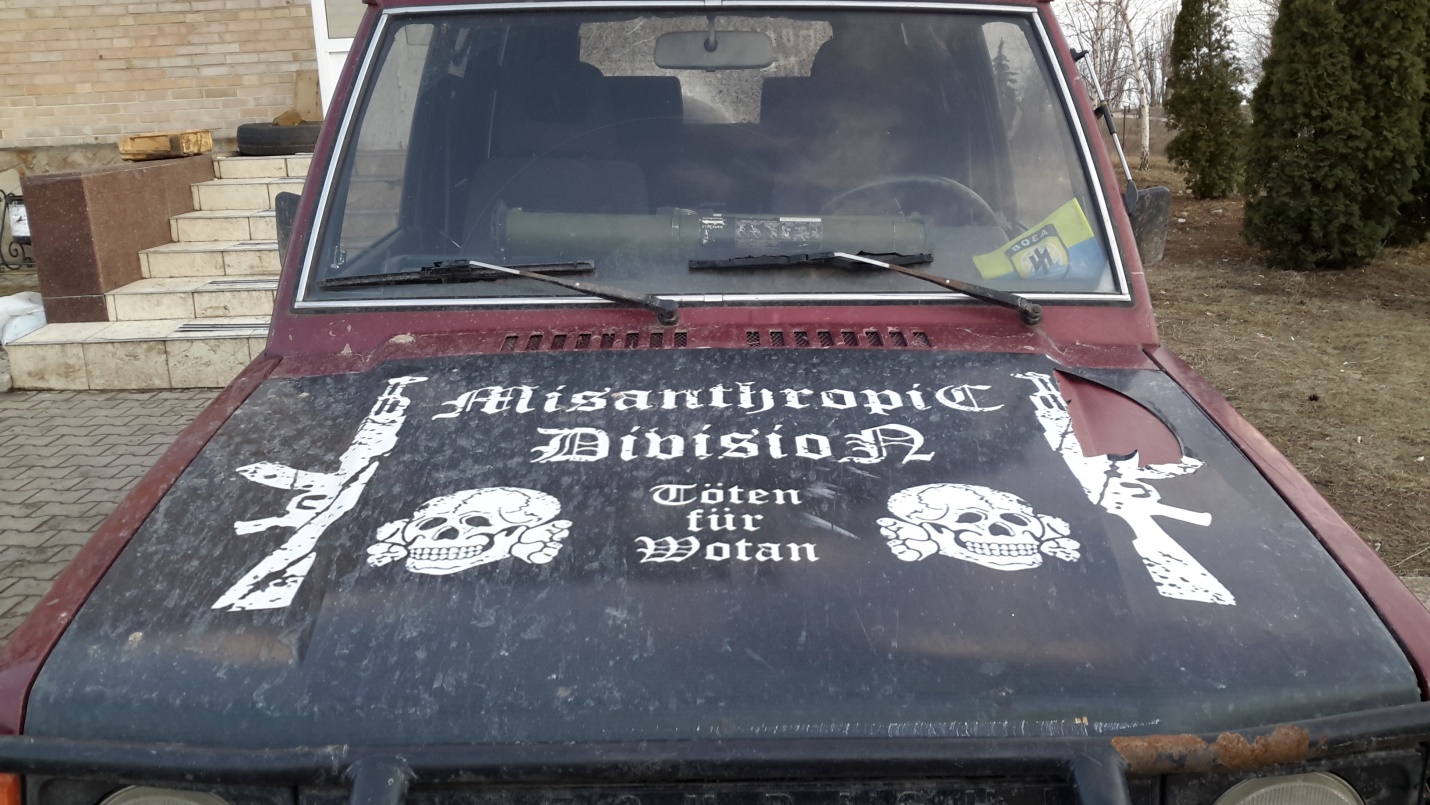
Western European nationals in Ukraine often end up as part of the Azov Battalion, as Azov is the only volunteer battalion currently accepting Westerners into their ranks. The bulk of Westerners and idealists fighting in volunteer battalions cannot offset the presence of the Misanthropic Division—a pan-European confederation of neo-Nazis. The Misanthropic Division is present in the Azov Battalion and is loosely tracked.
As for the volunteers from Ukraine, their principle concern is the defense of Ukraine, although there are politically motivated Ukrainians who toe the neo-Nazi party line for advancement and power. The actual number of true ideological hardliners appears, for now, to be the minority of the Azov Battalion. This is because Azov has slowly begun to marginalize its neo-Nazi roots, especially since the battalion reorganized under the national guard and is being scrutinized by the United States. Sources in Ukraine have stated that former Azov commander/politician Andriy Biletsky has made rounds at various Azov compounds and barracks demanding the removal of swastikas and other Nazi paraphernalia.
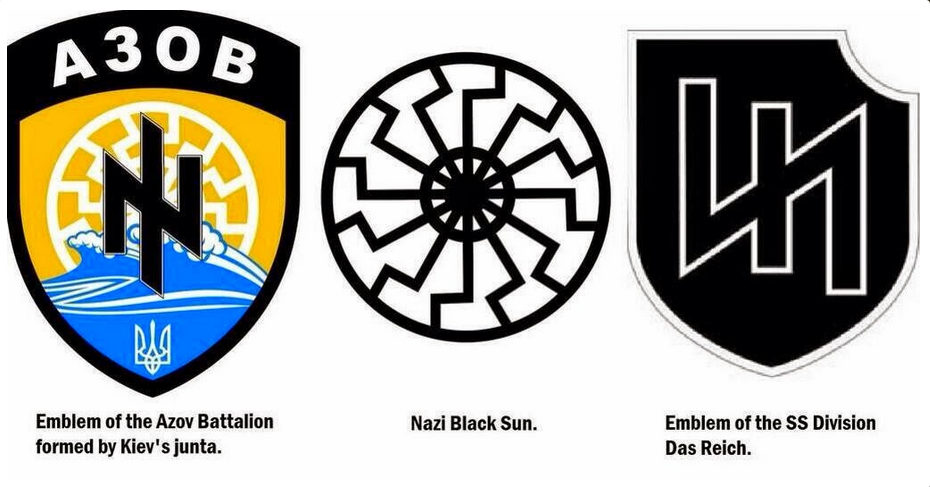
Azov Battalion’s unit crest is an extremely close copy of the Nazi Wolfsangel. Despite the resemblance, Azov Battalion remains adamant that the letters are simply a crossed N and I, representing the Modern Ukrainian National Idea, and that the design itself represents the coat of arms of Ukraine. Swastika tattoos are commonly displayed on a divergent group of volunteers and those extremists are often inclined to go into battle with SS insignias on their helmets, making it extremely difficult for other volunteers to repudiate any neo-Nazi associations.
(Featured image courtesy of thicktoast.com)








COMMENTS