

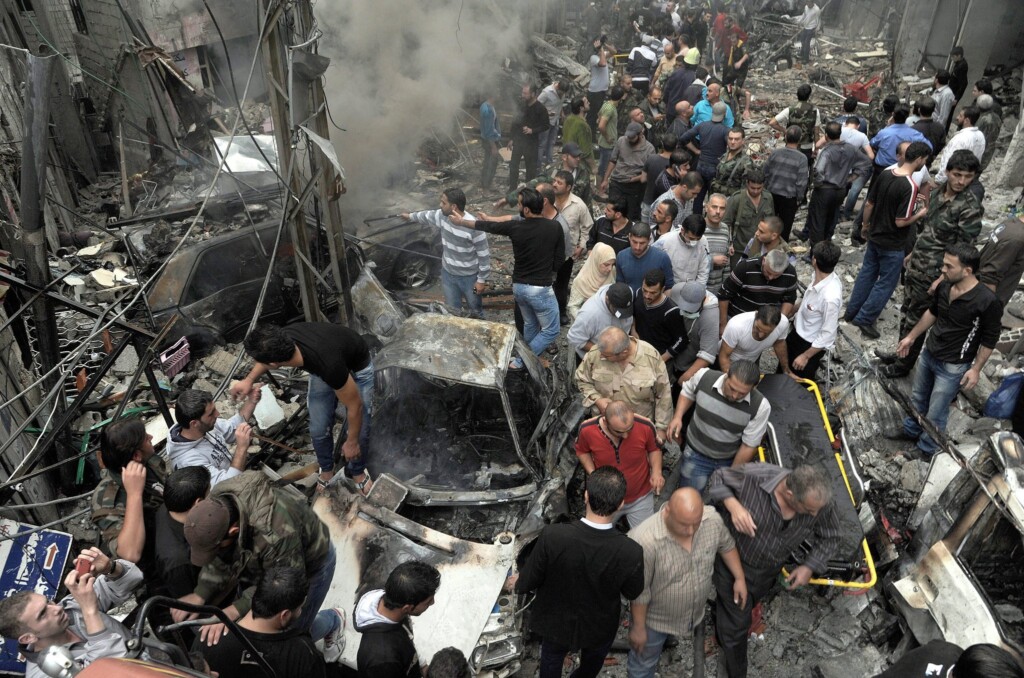
The Syrian economy is spiraling into collapse, with widespread protests in Daraa and Suweida provinces calling for the removal of Assad. The Kurdish-dominated SDF, which has elements of the YPG and PKK, faced clashes against Arab tribesmen in the East. The US mission in Syria has also come under scrutiny, as fears of another perpetual conflict in a foreign nation have reached the halls of Congress.
Turkish forces also continue to occupy the northern parts of Syria, and fears of renewed clashes against the Kurdish militant groups have heightened if conflicts against the Arab tribes continue and a potential US withdrawal were to happen. US forces shot down a Turkish drone that came increasingly close, deepening the drift in relations between Ankara and DC.
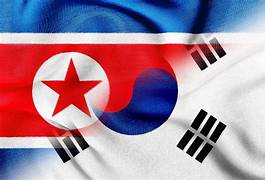
North Korea and South Korea
The Korean War was one of the most bloody conflicts during the Cold War. After millions of casualties, a plethora of massacres, and families torn apart by the 38th parallel, the war ended in an armistice, meaning it temporarily hasn’t formally ended.
Once a brutal dictatorship, South Korea has transformed itself into a democracy and global economic and military power. At the same time, North Korea is considered the world’s worst dictatorship and regressed into a hermit kingdom. Since the armistice in 1953, numerous ceasefire violations, including daring North Korean raids nearly reignited war, but tensions dissipated.
Over the past year, the Kim regime has not only heightened rhetoric against the South and America but also continuously launched missile provocations that could draw Japan into a new war. The Kim regime has reportedly prepared for mass conscription and threatens to restart the Korean War, including nuclear weapons.
Instead of Kim’s threats, the United States has solidified its mutual defense pact with Seoul and signed a historic nuclear sharing deal to combat the threat from Pyongyang. One of the deals includes the patrols of nuclear-capable submarines to the peninsula to combat the perils of war.
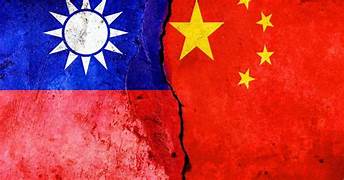
China and Taiwan
The Chinese Civil War occurred in the late 20s and was temporarily paused due to the Japanese invasion. Imperial Japan would weaken the nationalists considerably, particularly in Nanking, while the communists under Mao strengthened.
After Japan’s capitulation, the civil war continued with a communist victory on the mainland and the remaining nationalists fleeing to Taiwan, also known as the Republic of China. The People’s Republic, aka the communist-controlled continent, still holds territorial ambitions toward the island of Taiwan but has not attempted to attack it due to political and military ramifications.
Under the rule of Xi Jinping, fears of a potential Chinese invasion have heightened as the Chinese President has made it a top priority to unite Taiwan with the mainland, even by force if possible, to consolidate his legacy. Recent economic problems in China have been a plague on Xi’s rule. Throughout history, an autocrat could use war against a geopolitical foe to hide domestic problems among the population.
Washington has beefed up its military budget and emphasized the Asian Pacific to prepare allies such as Taipei against Beijing’s ambitions. Military advisors have been deployed to train Taiwan’s self-defense forces, and military aid packages have been allocated in preparation for a potential Chinese invasion.
A potential war between China, Taiwan, and the US could become a regional conflict or a Third World War as Japan has also prepared a contingency, and the alliance of AUKUS and India could also be involved if push comes to shove.
The aforementioned frozen conflicts are now at a critical point where any minor incident can lead to a renewal of hostilities. Other frozen conflicts could come to blows again in the future, and the international community, conducting its best to enact soft power, deterrence, and diplomacy, can work to prevent them.








COMMENTS