

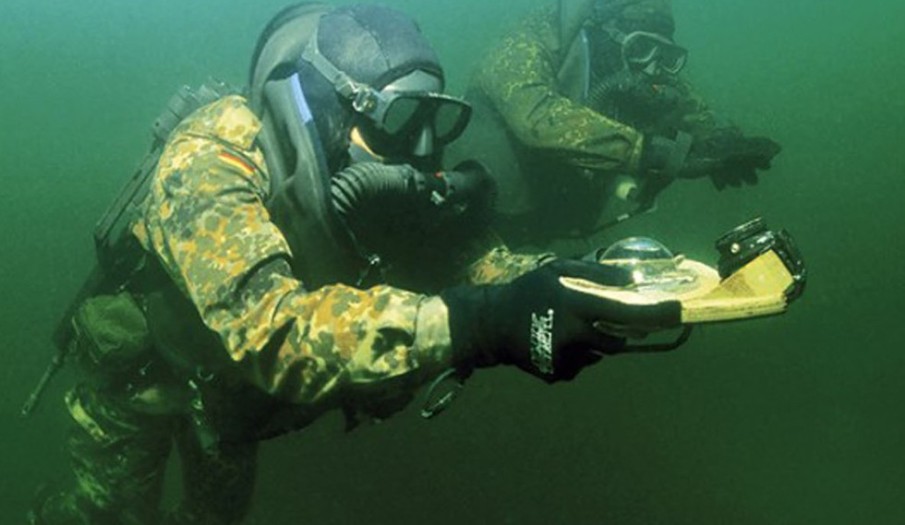
The NATO policy also included some fundamental statements regarding operational control, methods and cooperation with conventional forces etc. It also determined the three “Principle Tasks” which constitute the fundamental SOF mission categories. These include two which have already been discussed, i.e. “Special Surveillance and Reconnaissance” and “Direct Action,” as well as “Military Assistance.” The term Military Assistance refers to support missions which directly or indirectly improve the internal and external security of the receiving nations. In Germany, this type of operation became widely known in recent years through the German SOF engagement in Afghanistan.
The NATO Special Operations Policy also laid the groundwork for the “internationalization” of Special Operations Forces. It formalized the procedures for cooperation among the command and control of SOF. It enabled Special Operations Forces of various nations to be led by specially designated headquarters in the line of NATO operations. The requisite process of coordinating and harmonizing regulations, specifications, training etcetera became a stand-alone NATO task. The “NATO Special Operations Policy” is still continually updated to reflect lessons learned during operations and exercises.
One result of this process of “internationalization” was the establishment of the NATO Special Operations Headquarters, or NSHQ. The NSHQ is a multinational staff manned by the SOF of NATO members and partner nations of NATO, including two Kampfschwimmer officers. This staff constitutes the central point of contact within NATO for all issues which concern SOF and special operations. It is led by a three-star general. The NSHQ commander is dual-hatted as “Director of Special Operations.” He is the SACEUR’s direct and only advisor regarding special operations issues.
This process underscores the special significance of SOF within the alliance. NATO has a strong interest in SOF capabilities. The expansion of SOF capabilities, including command and control mechanisms and aerial support infrastructure, enjoy the highest priority within NATO.
What does this process mean for the Kampfschwimmer? It is pivotal for development of a new sense of purpose: the evolution of the Kampfschwimmer from a “maritime warfare asset” to the Maritime Special Operations Forces – or more accurately, to the SOF for operations in the maritime environment – with the concomitant impact on the perception of Germany’s role within the Alliance. And the steady rise of Special Operations Forces’ significance for the NATO alliance was accompanied by a national-level re-evaluation of the German armed forces’ SOF.
The principle allocation of responsibility among Germany’s SOF remains: the Army’s Special Operations Command (Kommando Spezialkräfte, or KSK) is especially qualified for operations on land. The Kampfschwimmer primarily cover operations in the maritime environment.
This is reflected in the allocation of Kampfschwimmer assets and their dedicated support forces to assist the KSK in national-command-authority level missions involving hostage-taking, hijacking or security threats in the maritime environment. At the same time, Germany has committed to providing SOF for NATO and European Union (EU) missions.
For this reason the Kampfschwimmer must always retain two operational units on standby. One is dedicated to national crisis response (in support of the KSK), and the other is on call for NATO or EU missions.
This leads to a significant reevaluation of the role and significance of the Kampfschwimmer. Their contribution is clearly delineated, both with regard to protecting our citizens overseas within the framework of national risk management, and in the context of their internationally recognized contribution to NATO and the EU. This places the Kampfschwimmer in the spotlight of our military leadership. Their triphibian capabilities are now significant both nationally and internationally.
Q. Sir, you emphasized the special significance of the NATO Special Operations Headquarters, or NSHQ. Twenty-five nations are currently represented in the NSHQ, including 23 NATO members and two partner nations. As you mentioned, two German Kampfschwimmer serve on the multinational staff. Working with multinational partners is nothing new for the German naval commandos. What is the significance of international partnerships for the Kampfschwimmer?
A. Lets turn back from the greater strategic level represented by the NSHQ and focus on the tactical level at the Kampfschwimmer Company. Cooperation at the tactical level, i.e. among operational units, has and always has had a major significance for Special Operations Forces. SOF are often so unique that they have difficulty finding training partners or units for peer-to-peer sharing and exchange of knowledge.
This is particularly true for the Kampfschwimmer. They are trained not only for airborne operations and ground combat (and in various other specialties), but also for tactical closed-circuit diving operations. No other unit in the entire German armed forces matches this skill set. Even within NATO, there are few service members or units with such a comprehensive portfolio of capabilities.
When the first Kampfschwimmer began their training a good 55 years ago, they learned from the French Commando Hubert. That is why the German Kampfschwimmer had a triphibian orientation from day one. Our French partners’ experiences in the Indo-China War also led to land warfare being incorporated into Kampfschwimmer training, then and now.
Our good relations with the Commando Hubert endure to this day. Our cooperation with the US Navy SOF, the SEALs, is equally close. In addition to the Personnel Exchange Program, which enables individual service members to serve for several years with the partner unit, we also conduct joint exercises and training throughout the year.
We also partner with other nations’ SOF, e.g. from the Netherlands. Our cooperation with the Special Operations Forces of the Nordic countries such as Denmark and Norway has become especially close and beneficial. These partnerships thrive on exchange of knowledge through joint training at the tactical level, the so-called Trooper-Level. This is where specialists such as Sharpshooters, Explosives Ordnance Specialists, or Medics come together; also the squad and team leaders or specialized support personnel. Through hands-on exercises, they demonstrate and explain how they have capitalized on lessons learned, where practices have been amended, or why new systems have been introduced.
Of course this cooperation at the lowest tactical level is continued at the daily working level up the chain of command all the way to the NSHQ.
Q. Back to the Kampfschwimmer Company’s home port in Eckernförde, in northern Germany. The Specialized Operational Forces of the Navy (SEKM) command was inactivated on 1 April of this year. The Kampfschwimmer and their dedicated command and support elements, which had been subordinate to the SEKM, now form the new Naval Special Operations Command (Kommando Spezialkräfte – Marine or KSM). What benefit does this restructuring bring?
A. When I first learned about the impending change, I felt transported back to my early days with the Kampfschwimmer. During the late 80s/early 90s, the Kampfschwimmer Company was an autonomous unit centered around the capabilities inherent in the company. When I was informed of the planned organization, composition and size of the new KSM, I had some reservations. The personnel strength of the operational and support personnel is similar to what it was circa 1990. But back then the mission statement – with regards to required capabilities, forces and resources – was not as multifaceted, precise or binding. So to my mind, the greatest challenge now lies in the level of ambition inherent in these requirements.
The KSM has four operational teams, a small organic support component. The goal of keeping two Kampfschwimmer operations groups available at all times seems extremely ambitious. But I assume that the specific challenges of this policy were considered during the decision-making process, and that the commander of the KSM will receive the best possible support from the Navy. It is essential that the Naval Inspector [note: equivalent to Chief of Naval Operations or Head of the Admiralty] can demonstrate to his military and political superiors that he is meeting his obligation to keep two Kampfschwimmer operations groups mission ready.
Q. Sir, you have discussed how the Kampfschwimmer image has evolved over the past fifty years. How do you see its future course?
A. The significance of Special Operations Forces has changed. Internationally, and especially within NATO, SOF have become more focused. Almost all NATO partners have followed this trend through their own respective unilateral measures, such as adapting command structures, increasing personnel strength, and prioritizing or granting SOF special consideration with regard to procurement planning. I believe that our own armed forces are headed in this direction. In the course of this process, the Kampfschwimmer will maintain their firm position as the SOF for operations in maritime environs, and will receive the necessary support.
Q. Birthdays normally mean gifts and the granting of wishes. Semicentennial anniversaries are rather special. What are your good wishes for the Kampfschwimmer?
A. First of all, I wish that our comrades-in-arms will always return safe and sound, both in body and in soul, from their missions and exercises.
For the coming journeys with the KSM, I wish my mates in Eckernförde the dedicated and focused support of our Navy. Only then will they have sufficient time to retain their internationally recognized, outstandingly high operational standards, and optimally prepare for their next mission.
For more information, see:
facebook.com/pages/KAMPFSCHWIMMERDE
(Featured Image Courtesy: Kampfschwimmer.de)








COMMENTS