Truck Camping 101 | Part 2 | Portable Power – Goal Zero Yeti 150 In a previous article, I discussed a great solution for portable lighting while truck or car camping. To keep those lights burning, a source of power is required. What better company to find portable power, solar and lighting solutions
Read the full article for more on:
Important insights and detailed analysis
Expert commentary on current events
Breaking developments and updates
Updating summary...
Goal Zero Yeti 150 | Portable Power
SOFREP News Team
Speed
1x
Listen
COMMENTS
Truck Camping 101 | Part 2 | Portable Power – Goal Zero Yeti 150 In a previous article, I discussed a great solution for portable lighting while truck or car camping. To keep those lights burning, a source of power is required. What better company to find portable power, solar and lighting solutions from than Goal Zero. They offer […]
Truck Camping 101 | Part 2 | Portable Power – Goal Zero Yeti 150
In a previous article, I discussed a great solution for portable lighting while truck or car camping. To keep those lights burning, a source of power is required. What better company to find portable power, solar and lighting solutions from than Goal Zero. They offer portable power stations ranging from 150 Wh to a massive 1425 Wh unit. Because we don’t camp heavy on electronics, I opted for the smaller Yeti 150 that weighs only 12 pounds. More than enough power to run the lights while cleaning up after dinner and topping off a few phones. On the other side of the spectrum, the Yeti 4000 tips the scales at 47.5 pounds. Certainly a consideration when choosing a power station.
Advertisement
Topping off the tank with the sun
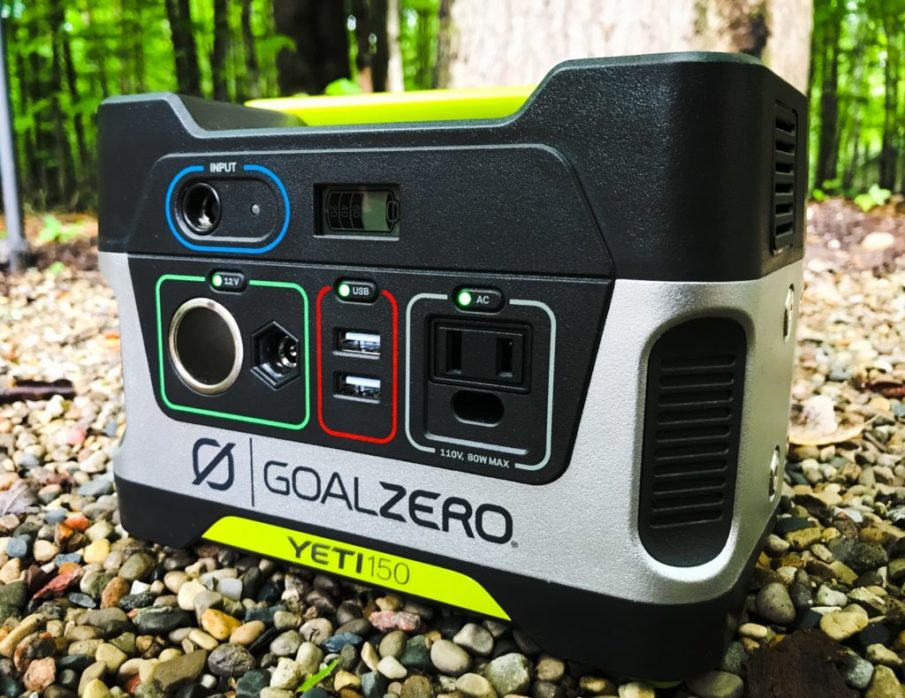
Another reason I selected the smaller Yeti 150 Power Station is because it can be recharged rather quickly with a solar panel. So don’t feel like you need the biggest power station for extended use. Just add one of the Goal Zero solar panels and it’ll be like buying a small drink at McDonald’s and continually refilling it. Located on the front panel of the Yeti 150 is everything you’ll need to get to. First is the input plug for recharging via wall outlet or solar. Just below that is a 12v car charger and a proprietary output for Goal Zero lighting. Followed by a pair of USB outputs for small handheld electronics. And finally, a single AC plug for additional flexibility.
Control Panel
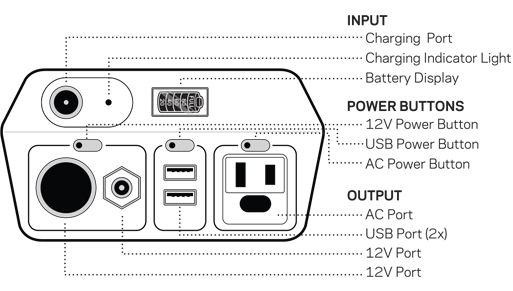
Each separate bank (12 volt | USB | AC) has an independent button to power up that particular output. Once the button is pressed, a small green indicator light illuminates and the LCD battery display shows the status of the entire power station. This was a useful feature on our last camping trip. With the power station located inside our roof top tent, I was able to shut off all the lights, both inside and outside by just turning off the 12 volt output. Rather than having to turn off each light independently.
Lake of the Clouds, Porcupine Mountains, Michigan
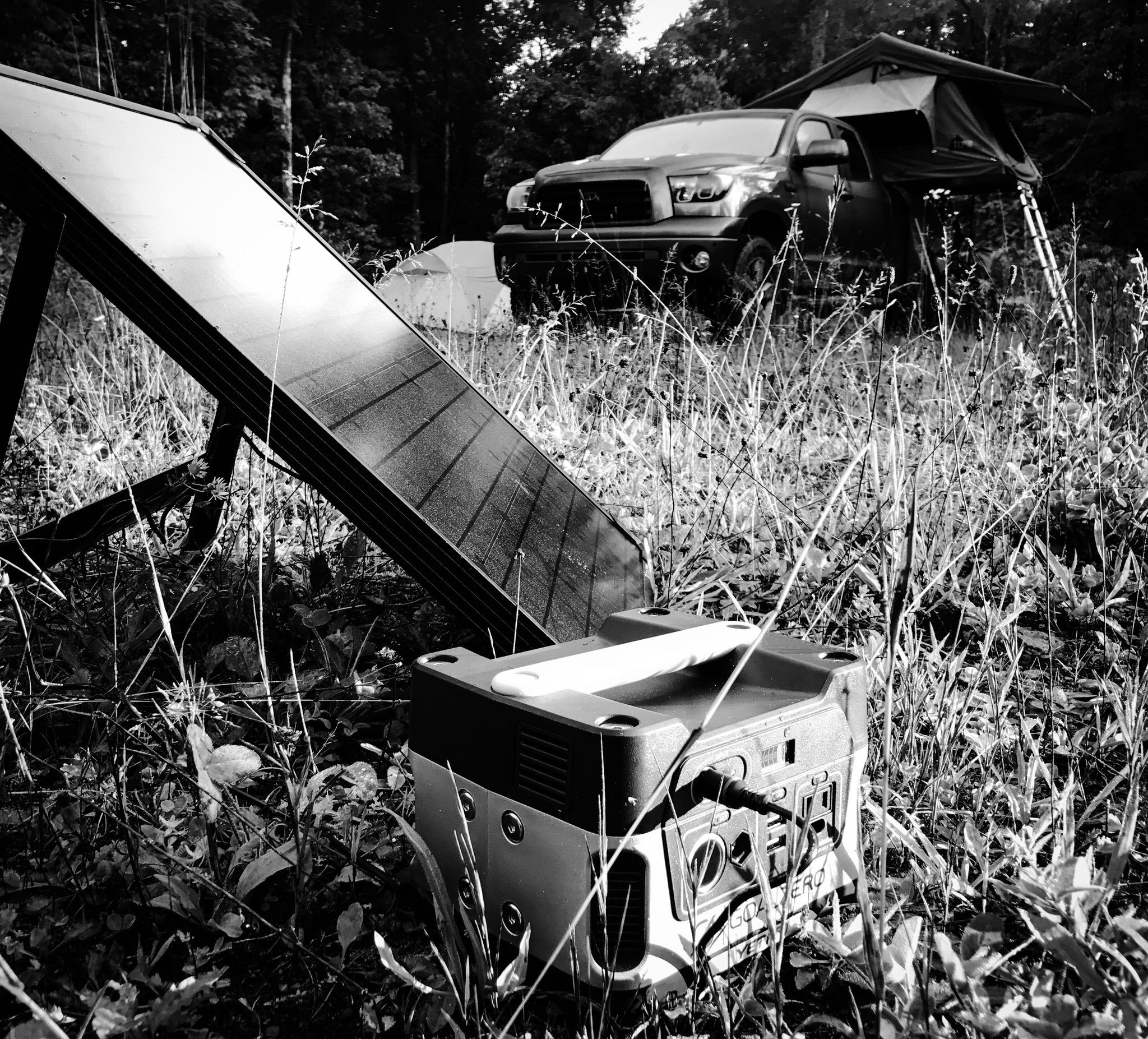
Final thoughts: Just like the Light-A-Life 350 lights, this product from Goal Zero impresses me. The build quality, materials used and ingenuity are impressive. Everything seems over-engineered and built to last. Great qualities for items that may see use in austere conditions. I even inadvertently water tested the solar panel and Yeti 150. When the sprinklers unexpectedly turned on while testing charge time in the yard on a sunny day. Fortunately, everything survived about 1/2″ of rain. In my next Truck Camping article, I will discuss solar panel options from Goal Zero and what you can expect from them.
Advertisement
Goal Zero Yeti 150 Specifications courtesy of goalzero.com
Charge Times
Wall Charger (45W): 6 hours
Car Charger (30W): 8 hours
Nomad 13 Solar Panel: 26-52 Hours
Nomad 20 Solar Panel: 17-34 Hours
Boulder 15 Solar Panel: 22-44 Hours
Battery Details
Cell Type: AGM Lead-Acid
Peak Capacity: 168Wh (12V, 14Ah)
Lifecycles: hundreds of cycles
Shelf-life: Keep plugged in, or charge every 3-6 months
Internal Battery Dimensions: 6.0in L x 3.8in W x 3.7 H
Fuses: 20A, user replaceable fuse
Management system Charging and low-battery protection built-in Ports
USB port (output) (2x): 5V, up to 2.1A (10W max), regulated
6mm port (output, 6mm, green, hexagon): 12V, up to 10A (120W max), regulated
12V car port (output): 12V, up to 10A (120W max)
AC inverter US (output, 60Hz, modified sine wave): 110V, 0.7A (80W continuous, 160W surge max)
charging port (input, 8mm, blue, circle):14-29V, up to 5A (60W max)
General
Chainable: No
Weight: 12 lbs (5.4 kg)
Dimensions: 7.75 x 5.75 x 6.75 in (19.7 x 14.6 x 17.2 cm)
Truck Camping 101 | Part 2 | Portable Power – Goal Zero Yeti 150
In a previous article, I discussed a great solution for portable lighting while truck or car camping. To keep those lights burning, a source of power is required. What better company to find portable power, solar and lighting solutions from than Goal Zero. They offer portable power stations ranging from 150 Wh to a massive 1425 Wh unit. Because we don’t camp heavy on electronics, I opted for the smaller Yeti 150 that weighs only 12 pounds. More than enough power to run the lights while cleaning up after dinner and topping off a few phones. On the other side of the spectrum, the Yeti 4000 tips the scales at 47.5 pounds. Certainly a consideration when choosing a power station.
Topping off the tank with the sun
Another reason I selected the smaller Yeti 150 Power Station is because it can be recharged rather quickly with a solar panel. So don’t feel like you need the biggest power station for extended use. Just add one of the Goal Zero solar panels and it’ll be like buying a small drink at McDonald’s and continually refilling it. Located on the front panel of the Yeti 150 is everything you’ll need to get to. First is the input plug for recharging via wall outlet or solar. Just below that is a 12v car charger and a proprietary output for Goal Zero lighting. Followed by a pair of USB outputs for small handheld electronics. And finally, a single AC plug for additional flexibility.
Control Panel
Each separate bank (12 volt | USB | AC) has an independent button to power up that particular output. Once the button is pressed, a small green indicator light illuminates and the LCD battery display shows the status of the entire power station. This was a useful feature on our last camping trip. With the power station located inside our roof top tent, I was able to shut off all the lights, both inside and outside by just turning off the 12 volt output. Rather than having to turn off each light independently.
Lake of the Clouds, Porcupine Mountains, Michigan
Final thoughts: Just like the Light-A-Life 350 lights, this product from Goal Zero impresses me. The build quality, materials used and ingenuity are impressive. Everything seems over-engineered and built to last. Great qualities for items that may see use in austere conditions. I even inadvertently water tested the solar panel and Yeti 150. When the sprinklers unexpectedly turned on while testing charge time in the yard on a sunny day. Fortunately, everything survived about 1/2″ of rain. In my next Truck Camping article, I will discuss solar panel options from Goal Zero and what you can expect from them.
Goal Zero Yeti 150 Specifications courtesy of goalzero.com
Charge Times
Wall Charger (45W): 6 hours
Car Charger (30W): 8 hours
Nomad 13 Solar Panel: 26-52 Hours
Nomad 20 Solar Panel: 17-34 Hours
Boulder 15 Solar Panel: 22-44 Hours
Battery Details
Cell Type: AGM Lead-Acid
Peak Capacity: 168Wh (12V, 14Ah)
Lifecycles: hundreds of cycles
Shelf-life: Keep plugged in, or charge every 3-6 months
Internal Battery Dimensions: 6.0in L x 3.8in W x 3.7 H
Fuses: 20A, user replaceable fuse
Management system Charging and low-battery protection built-in Ports
USB port (output) (2x): 5V, up to 2.1A (10W max), regulated
6mm port (output, 6mm, green, hexagon): 12V, up to 10A (120W max), regulated
12V car port (output): 12V, up to 10A (120W max)
AC inverter US (output, 60Hz, modified sine wave): 110V, 0.7A (80W continuous, 160W surge max)
charging port (input, 8mm, blue, circle):14-29V, up to 5A (60W max)
General
Chainable: No
Weight: 12 lbs (5.4 kg)
Dimensions: 7.75 x 5.75 x 6.75 in (19.7 x 14.6 x 17.2 cm)










COMMENTS