

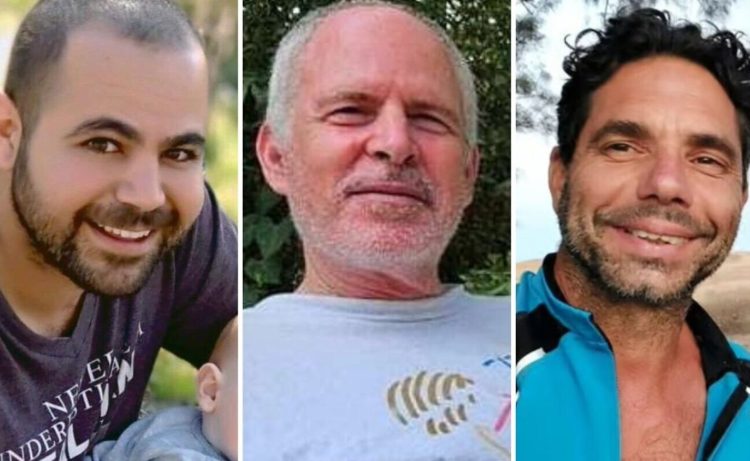
Ofer Calderon, a 54-year-old French-Israeli carpenter, was also taken hostage from Kibbutz Nir Oz. He was abducted alongside his two children, Sahar (17) and Erez (12). Fortunately, his children were released during the November 2023 ceasefire after spending 52 days in captivity. Since then, Calderon’s ex-wife, Hadas, has been a vocal advocate for the release of all hostages. Calderon’s family praised his extraordinary mental resilience, crediting his survival to his strength and determination. After being freed, he was handed over to Red Cross personnel in Khan Younis, southern Gaza, before being transferred back to Israel for medical care and reunification with his family.
Ceasefire Agreement and Prisoner Exchange
The Israel-Hamas ceasefire agreement is a major step in efforts to ease the ongoing conflict. The deal was brokered with the help of mediators from the United States, Egypt, and Qatar and is set to unfold over 18 weeks in three stages. The agreement aims to provide a temporary halt to hostilities, facilitate the release of hostages, and increase humanitarian aid to Gaza.
As part of the ceasefire, Hamas has agreed to release 33 Israeli hostages, primarily women, children, and elderly men who were abducted during the October 7, 2023, attacks. In return, Israel will release Palestinian prisoners, with a ratio of 30 to 50 Palestinian detainees per Israeli hostage freed. Additionally, humanitarian aid, including food and fuel, will be sent to Gaza to support civilians. The deal also requires Israeli forces to withdraw from densely populated areas of Gaza, though some exceptions apply.
The ceasefire is structured in three phases, each lasting six weeks. The first stage includes the initial pause in fighting, the release of hostages and prisoners, and the expansion of humanitarian assistance. The second phase is meant to work toward a permanent ceasefire while securing the release of the remaining living hostages, including male civilians and soldiers. Finally, the third phase focuses on recovering the remains of Israeli hostages who died in captivity.
While the agreement offers hope for de-escalation, its long-term success remains uncertain. The progress of the second and third phases depends on continued negotiations and both parties’ willingness to uphold the terms of the deal. There is also significant debate in Israel about the high number of Palestinian prisoners being released, with concerns over whether some of them pose security risks.
Despite these challenges, the ceasefire represents the most substantial effort toward peace since the conflict intensified in October 2023. Its sustainability, however, will depend on diplomatic efforts and the commitment of both Israeli and Palestinian leaders to maintaining stability.
International Reactions and Future Negotiations
The international response to the Israel-Hamas ceasefire agreement has been largely positive, with world leaders and organizations welcoming it as a step toward peace and stability in the region. In the United States, President Trump praised the deal, with former President Biden claiming partial credit for its success. European Commission President Ursula von der Leyen expressed her support, emphasizing the importance of reuniting hostages with their families and providing humanitarian aid to Gaza. German Chancellor Olaf Scholz urged both sides to fully implement the agreement and called for the release of all remaining hostages.
British Prime Minister Keir Starmer released a statement shortly after the announcement, while Spain’s Prime Minister Pedro Sánchez described the deal as a crucial step toward lasting peace and a two-state solution. Turkey’s President Recep Tayyip Erdoğan also welcomed the agreement, expressing hope that it would lead to long-term regional stability. Meanwhile, United Nations Secretary-General Antonio Guterres stated that the UN stands ready to support the deal and help deliver additional humanitarian aid to Gaza.
Negotiations for the second phase are set to begin by day 16 of the first stage and should be finalized by the fifth week. However, several key challenges remain. Hamas is demanding a full withdrawal of Israeli forces from Gaza, a condition that Israeli Prime Minister Benjamin Netanyahu has rejected. Discussions are also ongoing about strengthening the Palestinian Authority and improving Israel-Saudi Arabia relations in exchange for Saudi support for a future Palestinian state. Another point of contention is the potential exile of Hamas leaders, which Israel has proposed but Hamas strongly opposes.
The long-term success of the ceasefire will depend on continued diplomatic efforts and the willingness of both sides to uphold the agreement. Some analysts believe that President Trump’s approach to the situation could play a decisive role in maintaining stability. While the agreement presents an opportunity for sustainable peace, its future remains uncertain due to the complex political dynamics involved.
Summing Up
The release of these hostages marks a hopeful moment in the otherwise tumultuous Israel-Hamas relationship. While challenges remain, such actions provide a glimmer of optimism for a peaceful resolution to the ongoing conflict.
As of this writing on February 1st, 2025, 79 hostages remain held by Hamas in Gaza. As we celebrate the release of the men above, let’s not forgot those still in captivity.








COMMENTS