
Another major concern was the vast amount of military equipment left behind. While Milley claimed that all American-owned equipment was either taken back or destroyed, critics worried that U.S.-provided weapons and vehicles given to the Afghan military had fallen into Taliban hands or onto the black market. And, dear readers, that is exactly what happened. Millions of dollars worth of taxpayer-purchased American military might is now in the hands of our former enemy.
Ultimately, Milley’s handling of the Afghanistan withdrawal became part of a broader dissatisfaction with how the situation was managed. While multiple administrations contributed to the decades-long war, the final exit under President Biden’s leadership was disastrous. Milley’s admissions and criticisms have done little to quell the debate over what went wrong and who is to blame.
Strained Relationship With President Trump
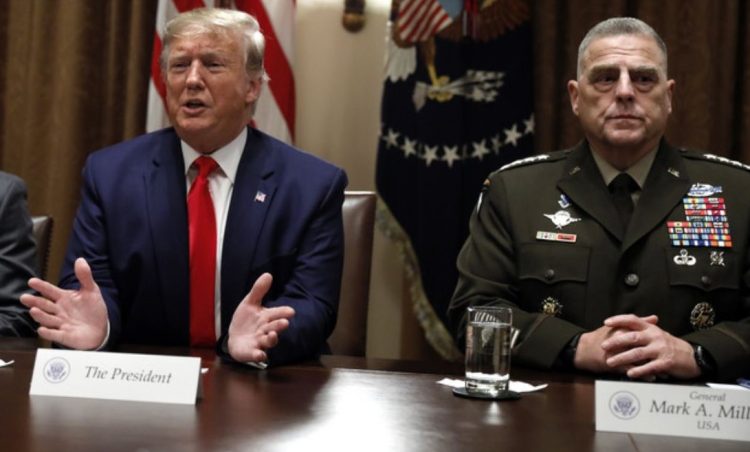
General Milley’s relationship with President Donald Trump started on solid ground during the first Trump administration but quickly unraveled, eventually turning into outright hostility. Milley was appointed as Chairman of the Joint Chiefs of Staff by Trump in 2018, but their relationship soured due to several major disagreements. One of the earliest points of contention came in 2020 when Milley resisted Trump’s suggestion to use military force to suppress protests following George Floyd’s death. His refusal to support such actions set the stage for growing friction between the two.
Later that same year, Milley made two backchannel phone calls to his Chinese counterpart, reportedly to reassure Beijing that the U.S. was not preparing for an attack. Trump later called these calls “treasonous,” while Milley defended them as routine and within his responsibilities. Following the January 6 Capitol riot, Milley again took steps to calm concerns abroad, further angering Trump, who saw these moves as undermining his authority.
Their conflict escalated when Milley publicly criticized Trump in his final speech as Chairman of the Joint Chiefs in 2023. He referred to Trump as a “wannabe dictator,” cementing the growing animosity between them. Trump, in turn, accused Milley of treason over his secret communications with China, even suggesting that in earlier times, “the punishment would have been death!”
The feud was further fueled by revelations in Bob Woodward’s book War, where Milley was quoted as calling Trump “fascist” and “the most dangerous person to this country.” These remarks solidified Trump’s belief that Milley had been actively working against him. Even after Trump left office, the hostility remained. With Trump’s return to the presidency, his administration wasted no time targeting Milley.
The Recent Decision
On January 29, 2025, newly minted Defense Secretary Pete Hegseth announced that Milley’s security clearance had been revoked and that his personal protective detail was being removed. These moves come alongside an investigation into Milley’s conduct during his tenure, with the possibility that his four-star rank could be downgraded.
The Pentagon justified these actions by citing concerns about Milley undermining the chain of command. Joe Kasper, the Pentagon’s chief of staff, emphasized that “undermining the chain of command is corrosive to our national security, and restoring accountability is a priority for the Defense Department under President Trump’s leadership.” With this decision, Milley becomes the fourth former Trump official to lose security protections, following similar moves against former Secretary of State Mike Pompeo, former National Security Adviser John Bolton, and former Iran envoy Brian Hook.
The White House has defended the decision, with Press Secretary Karoline Leavitt stating that President Trump does not believe these officials should “have lifelong security clearances and private details at taxpayer expense.” However, Milley had been under a protective detail due to credible threats against his life stemming from his involvement in the 2020 drone strike that killed Iranian commander Qasem Soleimani. Intelligence assessments as recently as 2024 confirmed that these threats remained active.
With the Pentagon’s Office of Inspector General now conducting a formal inquiry, Milley could face an unprecedented demotion from his four-star rank. Whether this is about national security, accountability, or political retribution remains a matter of fierce debate across the political aisle. However, one thing is certain—Trump’s White House is making it clear that former officials who opposed him are not untouchable.
Implications and Reactions
The decisions affecting Milley have sparked significant debate, with both political and institutional consequences. Critics argue that this move is an act of political retribution, targeting Milley for his open criticism of Trump, including his remark calling the former president a “wannabe dictator” during his retirement ceremony. This action follows a broader pattern of Trump’s administration taking similar measures against former officials who opposed him, such as Mike Pompeo and John Bolton. Trump’s supporters, on the other hand, see it as a necessary step toward restoring accountability in military leadership. Regardless of perspective, the decision has deepened political divisions, with some warning that it undermines the independence of military leaders and sets a dangerous precedent.
Institutionally, the Pentagon justified the action by citing Milley’s alleged undermining of the chain of command. One of the most controversial aspects of his tenure was his independent communication with Chinese military officials in 2020—a move Trump labeled as treasonous, but Milley defended as routine and necessary. In response, Milley could lose a star. This raises serious concerns about the politicization of military service and whether post-retirement accountability is being used as a tool for political payback. Or, perhaps, it is an overdue and just punishment for a man who is seen as bypassing his chain of command.
Beyond politics, there are real security risks tied to this decision. Milley is under credible death threats from Iran. President Trump has not denied this but has argued that the US taxpayers should not have to pay for Milley’s protection as a civilian.
In the end, this decision highlights the growing politicization of civil-military relations and raises difficult questions about the balance between accountability and political retaliation. Whether it strengthens military discipline or signals a dangerous shift in handling disagreements between civilian leadership and the military remains to be seen.
Looking Ahead
The investigation into General Milley’s conduct is ongoing. If the inspector general finds that he did undermine the chain of command, Milley could face a reduction in rank, which would be a significant blow to his distinguished military career.
Keep checking back with SOFREP for the latest in this ongoing news story.








COMMENTS