

Russia has sent humanitarian aid to the Islamic regime in Iran pic.twitter.com/jK6EGrvH1d
— Visegrád 24 (@visegrad24) March 27, 2026
Russia’s Emergency Ministry reported delivering hundreds of tons of aid to Astara, Iran, but officials could not confirm whether drones were included.
Shared Knowledge and Uneasy Alliances
Despite uncertainty, this cooperation between Moscow and Tehran is neither new nor superficial. The United Kingdom’s latest defense intelligence assessment indicates that Russia provided Iran with training and intelligence on drone types and electronic warfare before the current Middle East conflict.
Tehran, in turn, has shared information generously, including high-level intelligence such as the death of Iranian security official Ali Larijani before it became public knowledge.
Latest Defence Intelligence update on the situation in Ukraine – 26 March 2026.
Find out more about Defence Intelligence’s use of language: https://t.co/6vnU39dMgu #StandWithUkraine pic.twitter.com/0rZPfwP6lT
— Ministry of Defence 🇬🇧 (@DefenceHQ) March 26, 2026
Yet the relationship between the two nations is complicated. European officials note that Iranian authorities were “deeply disappointed” when Russia did not intervene during Iran’s 2025 conflict with Israel, a confrontation that prompted US strikes on key Iranian nuclear sites.
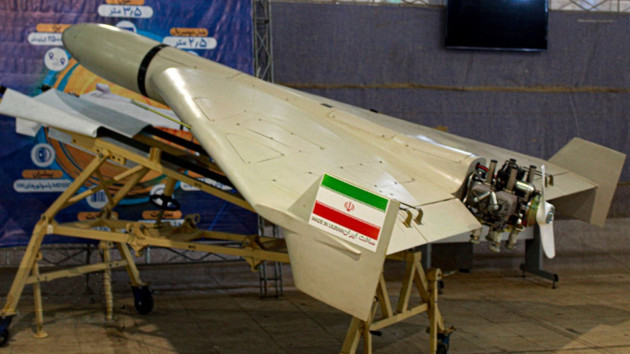
Even so, Moscow and Tehran remain bound by a $1.7 billion deal signed in 2022 for the transfer of Shahed drone technology, which Russia has since domestically produced and enhanced at its Alabuga plant in Tatarstan. The factory has expanded rapidly, reportedly employing migrant workers under controversial conditions.
Technological Upgrades and Risks
The technological upgrades are sobering. Russian engineers have transformed Shahed drones into decoys with no explosives to overwhelm air defenses, as well as jet-propelled variants capable of high-speed strikes and reconnaissance missions. Evidence from Ukraine indicates joint research on anti-jamming systems and advanced propulsion technology, underscoring the potential for these drones to challenge even modern air defense networks.
For US forces and allies, the strategic calculus is delicate. White House spokeswoman Olivia Wales emphasized that operational success remains unaffected, noting that US strikes have eliminated thousands of targets and destroyed over 140 Iranian naval vessels, reducing missile and drone attacks by 90 percent.
Still, officials acknowledge that faster, AI-enabled, or Starlink-capable drones would complicate defense efforts. Jet propulsion and autonomous flight could bypass existing interception systems, forcing reliance on scarce and costly high-end weapons.
The Strategic Warning
Whether the shipment is symbolic or operational, it sends a clear message: Russia is willing to share battlefield-tested technology with Iran, even as its own forces struggle to maintain command and control in Ukraine.
Intelligence assessments indicate that Moscow is not only transferring hardware but also know-how, including guidance on targeting and electronic warfare. Tehran may benefit immediately from these enhancements, and the ripple effects could extend far beyond the Middle East.
The Islamic Revolutionary Guard Corps is publishing footage of Shahed drone stockpiles in mountain bunkers, as well as videos showing these drones being launched at targets in Persian Gulf countries. pic.twitter.com/5LWwc6TRrh
— NEXTA (@nexta_tv) March 2, 2026
The US official put it plainly that the challenge here lies not just in intercepting drones already in the air, but in anticipating what Iran might do with advanced Russian technology. Faster drones, AI piloting, and enhanced electronic warfare could tilt regional calculations, forcing new countermeasures and raising the risk of miscalculation.
In warfare, small increments of technology can produce outsized consequences. The shipment of Russian drones to Iran may be limited in volume, but its symbolic and operational significance is considerable. For the United States, Israel, and Gulf allies, the calculus is no longer simply how many drones Iran launches, but how capable each drone has become, and who may control it next.








COMMENTS