We must make it difficult and dangerous to acquire the materials to make a nuclear weapon and the means to deliver them. We must hold at risk of capture or destruction anyone who has such weaponry, wherever they are in the world. The first order of business is to prevent any of these attacks from occurring. – EMP Commission Executive Report, 2004.
Just before the recent, U.S. and Israeli airstrikes on Iran, which began on February 28, 2026, U.S. Special Envoy to the Middle East Steve Witkoff reported that during his very latest negotiations with Iranian government officials, they arrogantly entered the room, and immediately stated that they possessed enough enriched uranium to construct 11 nuclear weapons within a very short period of time, probably just a few months.
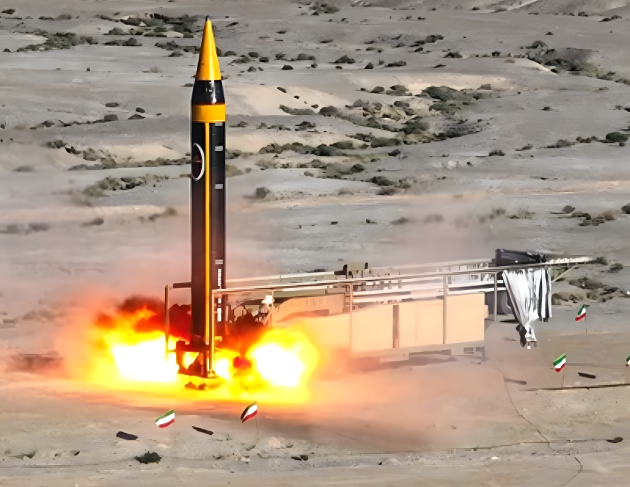
The means of delivery of these weapons would likely be one of Iran’s long-range. ballistic missiles, such as the Shahab-2, the Sejil, or the Khorramshahr-4 (since 2023), each of which has a stated range of 2,000 kilometers, or 1,240 miles. While this range is insufficient to reach the United States from a land-based launcher, there are other options available to the Iranian regime.
The most horrific and terrifying example requires only a single, unmarked, Iranian cargo ship, one missile launcher, and one of the three ballistic missile types stated above, with just one nuclear warhead. It’s incredibly simple, easy to accomplish, and could have been executed as early as May or June 2026, had we failed to take action now.
The EMP Commission, formally known as the Commission to Assess the Threat to the United States from Electromagnetic Pulse (EMP) Attack, was first established by Congress in 2001 and operated until 2008. As an expert advisory body, its primary mission was to evaluate the potential impact of EMP events, whether from nuclear detonations at high altitude or extreme solar storms, on U.S. military and civilian systems, and to recommend measures to protect critical infrastructure. They concluded that the U.S. bulk power system and other critical infrastructures are highly vulnerable to EMP events.
Due to the lack of implementation of its recommendations and growing threats, Congress re-established the commission in 2016, with its first meeting held in January 2017. They concluded that EMP events could disrupt or destroy large portions of the U.S. electric grid, telecommunications, and other critical systems, and that several countries, including Russia, China, North Korea, and Iran, have studied EMP effects and may consider them in military planning.
The EMP Commission’s Executive Report in 2004 concluded that, “EMP produces nearly simultaneous upset and damage of electronic and other electrical equipment over wide geographic areas, determined by the altitude, character, and explosive yield of the EMP-producing nuclear explosion.
“The EMP impact is virtually instantaneous and occurs simultaneously over a much larger geographic area. Generally, there are neither precursors nor warnings, and no opportunity for human-initiated, protective action. The early-time EMP component is the ‘electromagnetic shock’ that disrupts or damages electronics.
Functional collapse of the power system is almost definite over the entire affected region, and may cascade into adjacent geographic areas…about 70 percent of the total electrical power load of the United States is within the region exposed to the EMP.
“Virtually all American economic activity depends upon the functioning of the financial services industry. Today, most financial transactions that express national wealth are performed and recorded electronically. Virtually all transactions involving banks and other financial institutions happen electronically. Essentially, all recordkeeping of financial transactions involves information stored electronically…it would be impossible to operate without…electronic information technology.”
Simply stated, the worst-case scenario, and the easiest to achieve, by far, would have been for an innocent-looking, Iranian cargo ship, perhaps as close as 20 to 200 miles offshore from the East Coast of the United States, totally unsuspected and undetected, safely in international waters, to launch a single, nuclear-armed, ballistic missile into outer space, traversing westward about 1,000 miles, well within its own operational range, to a point in space approximately 250 to 300 miles above southern Illinois, where it detonates.
Already have an account? Sign In
Two ways to continue to read this article.
Subscribe
$1.99
every 4 weeks
- Unlimited access to all articles
- Support independent journalism
- Ad-free reading experience
Subscribe Now
Recurring Monthly. Cancel Anytime.
What happens next is incredulous and absolutely unthinkable. No American will see, hear, or feel the nuclear blast so far away. No one will be killed, injured, or blinded by it. Most of us will never know that it happened at all. Except that all electronic devices for up to 1,000 miles in any direction will instantly shut down, permanently, fried by the invisible EMP emissions from the dreaded Iranian weapon.
This includes nearly all cars made since the late 1980s, all cell phones, all banks, most cash registers, all credit cards, gasoline pumps, all power to your home, grocery stores, and pretty much every other facet of modern life. In the instantaneous blink of an eye, we will all return to the horse-and-buggy era of the 1800s, except that very few of us own horses or buggies anymore. And the power outages will quickly spread, even well outside the area directly affected by the EMP burst.
The end result is very grim, indeed. Without electricity, without transportation, money, food, or water, there will be utter chaos, looting, and rioting as people struggle to survive. The official projections are that as much as 90 percent of the U.S. population will die within just two weeks, largely from thirst and dehydration, especially in the overcrowded cities. As the unburied bodies pile up, sanitation and widespread disease and infection become growing issues.
In order to survive, you will need to live near a river, in a rural area, own a woodstove for cooking, perhaps an older vehicle, and have plenty of stockpiled food, firewood, survival training, outdoor skills, cash, weapons, and ammunition to account for almost any eventuality. Many people make fun of so-called “preppers,” or survivalists, but those are likely to be the only ones to survive such a catastrophic EMP attack.
So, how close did we come to near-total annihilation by an Iranian EMP weapon this time? Probably much too close. Instead of criticizing President Trump and the Israelis for taking decisive action in Iran, we should consider how narrowly we escaped such an instantaneous and devastating end to the United States of America, and be thankful for the swift, military offensive that crippled the brutal, theocratic, murdering, authoritarian regime in Tehran.
Iran’s terrifying nuclear ambitions could have literally destroyed us in an instant, which is why we must very tightly control any nuclear proliferation by adversary nations, and we must all learn to understand the extreme dangers posed by EMP weapons, not merely by normal nuclear weapons, in foreign hands. The world can be very reckless and unstable at times, so stopping Iran and its potential EMP weapon was absolutely critical for our national survival.









COMMENTS