

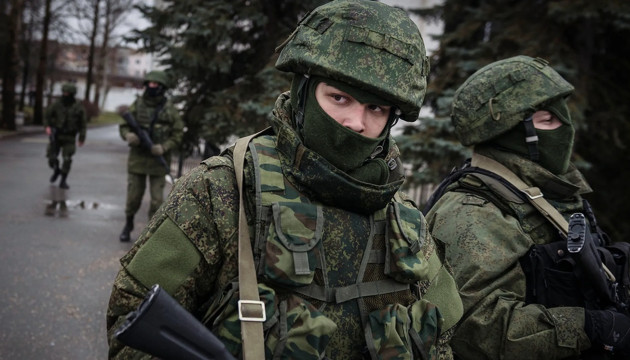
This is not a return to the Somme. It is something more constrained and more lethal. Positions are smaller, more dispersed, and constantly shifting. Movement is deliberate and often minimal. Open ground has become a killing zone shaped by sensors rather than sightlines.
I was told in training that trench systems were obsolete, that modern war had outgrown them. That assumption did not survive contact with Ukraine. The lesson is not that doctrine was wrong in its time; it is that doctrine decays faster than institutions expect.
An Iranian-backed militia carried out a successful FPV drone strike on Camp Victory in Iraq yesterday, successfully hitting multiple targets.
Seen here, one of the FPV attack munitions hits a parked UH-60 Black Hawk. pic.twitter.com/ngY8td9ONZ
— OSINTtechnical (@Osinttechnical) March 25, 2026
The Compression of the Kill Chain
First-person-view drones have altered the tactical equation. Inexpensive, adaptable, and increasingly precise, they allow small units to generate effects once reserved for artillery or close air support. A team with limited resources can now strike vehicles, positions, and personnel at range with high probability.
The implications are immediate. The kill chain has compressed. Detection, identification, and strike occur within minutes, sometimes seconds. Every level of command must account for constant exposure. Resupply, command posts, and even individual movement carry risk.
Countermeasures exist, but they are temporary. Electronic warfare can disrupt signals; fiber-optic drones bypass jamming. New variants appear faster than defensive systems can stabilize. The advantage is transient. Adaptation is continuous.
This dynamic extends beyond Ukraine. In the Middle East, unmanned systems are integrated into both state and non-state operations. In maritime environments, drones challenge traditional naval dominance. Across the Sahel, insurgent groups combine irregular tactics with commercial technology. Criminal organizations in Latin America field capabilities that approach paramilitary standards.
The pattern is consistent. Lethal capability is diffusing downward and outward. The monopoly on precision has eroded.
Cost as a Battlespace
A quieter feature of this conflict system is the role of cost. Not as a budgetary concern, but as an operational variable.
There is consistent evidence that adversaries are designing systems to force unfavorable exchange ratios. Low-cost drones illustrate the point. Platforms like the Shahed are limited in speed and precision, yet they compel responses that are disproportionately expensive. In multiple instances, high-end interceptors have been used to destroy targets that cost a fraction of the defensive system.
The exchange becomes the strategy.
Over time, this draws down stockpiles, complicates replenishment, and imposes cumulative pressure. The objective is not a breakthrough. It is erosion.
This logic is beginning to shape responses. Systems such as the LUCAS drone emphasize affordability, modularity, and scalable production. The focus shifts from technical overmatch to sustainable output. Similar trends appear in lower-cost interceptors and electronic warfare solutions designed to neutralize threats without replicating their cost structure.
Effectiveness is no longer measured solely by capability. It is measured by cost per effect over time. In a conflict defined by endurance, the ability to sustain pressure at manageable cost becomes a strategic advantage.
A Global System, Not a Set of Wars
The defining feature of this conflict is not intensity in any single theater. It is simultaneity across many.
Ukraine, the Middle East, the South China Sea, the Sahel; each is a node in a connected system. Actions in one theater affect resource allocation, signaling, and risk calculations in another. Munitions sent to Ukraine are not available elsewhere. Naval deployments in the Gulf shape posture in the Indo-Pacific. Cyber operations and information campaigns operate continuously, unconstrained by geography.
This is campaigning in its broadest sense. Continuous competition below and above the threshold of declared war, across domains and regions, without clear transitions between phases.
The system resists segmentation. There is no clean separation between peace and conflict, or between theaters. The war is distributed.
Manpower and the Politics of Loss
Manpower is not simply a question of numbers. It is a question of political tolerance.
Western militaries rely on all-volunteer forces drawn from societies with a heightened sensitivity to casualties. This sensitivity reflects a structural feature of democratic systems. Losses are visible, individualized, and amplified through media, giving each death political weight beyond the battlefield. Sustained attrition therefore carries not only military costs, but direct constraints on strategy at home.
Adversaries operate under different conditions. Russia has demonstrated a willingness to absorb significant casualties while managing public perception through controlled information space. China, while untested in large-scale modern conflict, maintains similar tools of narrative control. The asymmetry is not absolute, but it is consequential. It shapes how long each side can sustain high-intensity operations.
This raises difficult questions about force generation and risk distribution. Expanding recruitment pathways, including for non-citizens, has been proposed at various points in U.S. military history and remains a live policy option. The concept is not new. Foreign enlistment programs have existed in limited forms, and other states have institutionalized them more fully.
What has changed is the scale of the requirement. A prolonged, attritional conflict would place demands on manpower that current force structures are not designed to meet. Any attempt to address that gap must reconcile operational necessity with political legitimacy. Outsourcing risk without public accountability carries its own costs.
The underlying constraint remains. In a conflict system that rewards endurance, the ability to sustain losses—militarily and politically—becomes a defining variable.
Technology Accelerates; Institutions Lag
Artificial intelligence is entering intelligence analysis, targeting, and decision support. Cyber operations target infrastructure and public confidence. Commercial technology shortens development cycles and lowers barriers to entry.
Adaptation, however, is not purely technical.
Western militaries face constraints in industrial capacity and stockpiles. The provision of artillery and precision munitions to Ukraine exposed limits in production and replenishment. Timelines measured in years are misaligned with consumption rates measured in weeks.
Political systems add friction. Sustaining long-term commitments in polarized environments is difficult. Adversaries operating under centralized control manage information and absorb attrition differently. This does not guarantee success, but it alters the competitive landscape.
Manpower presents a parallel challenge. Western societies are less willing to absorb casualties at scale. Force structures built around small professional militaries are not optimized for prolonged attritional conflict. Proposals to expand recruitment pools or create specialized units reflect attempts to reconcile strategic demands with societal constraints. Their viability remains uncertain.
The result is a gap between the requirements of the conflict system and the structures designed to sustain it.
What Is at Stake
If this system continues to evolve unfavorably for the United States and its allies, the consequences extend beyond the battlefield.
A diminished role for the dollar would alter global finance. Alliance structures could weaken, creating space for regional powers to assert influence under different terms. Trade, investment, and information flows could shift toward alternative standards and norms.
These outcomes are not inevitable. They are trajectories shaped by relative performance over time.
The conflict does not hinge on a single decisive battle. It exerts pressure across domains, gradually eroding advantages. Military, economic, and informational instruments operate together.
A War Without Declaration
It is misleading to speak of a future great-power war as something yet to arrive. The conflict is already active. It is global, interconnected, and resistant to simple categorization.
Post-modern warfare rejects singular narratives and stable categories. It combines hybrid methods with conventional force, integrates emerging technologies that may not endure, and operates across domains without clear boundaries. It is defined less by decisive moments than by sustained pressure.
The assumptions that guided previous eras are no longer sufficient. The task is not simply to acquire new systems, but to understand the structure of the conflict itself.
The war will not announce itself with formal declarations or clear endpoints. It will unfold through accumulation.
The question is no longer whether it has begun.
The question is which side will prove capable of shaping what comes next.








COMMENTS