This fight is no longer contained to missile exchanges between Israel and Iran. The northern front is taking shape as its own campaign, one that is quietly redrawing the map of southern Lebanon in real time.
This is the part of the conflict that tends to get missed. Air defenses and missile counts dominate the headlines, but wars are often decided by who can move, who can resupply, and who can stay in place. In southern Lebanon, those conditions are starting to shift.
Iran Maintains Missile Pressure Amid Unclear Diplomatic Signals
Iran continues to launch missile volleys toward Israel, combining ballistic systems with lower-cost aerial threats to sustain pressure. Israel’s layered air defenses remain effective, but not absolute; some impacts on civilian areas have been reported. The tempo of launches has remained consistent enough to maintain disruption without signaling escalation into a broader strategic strike campaign.
U.S. officials have indicated the possibility of indirect diplomatic contact, though details remain unclear. Iranian officials have publicly dismissed such claims. The disconnect reflects a broader pattern: military operations continue at a steady pace while political signaling diverges. Israeli strikes inside Iran have focused on missile-related infrastructure and security-linked facilities. There is no clear indication that either side is reducing operational activity in response to diplomatic messaging.
The pattern suggests intent without commitment. Iran is applying steady pressure, but stopping short of the kind of massed strike that would force a broader regional response. It keeps the fight active, without locking itself into the next phase.
Southern Lebanon Operations Focus on Mobility and Infrastructure
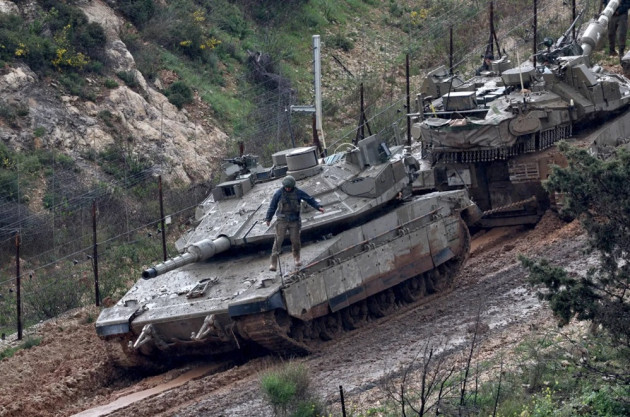
In Lebanon, Israeli operations have intensified in both scale and focus. Airstrikes have targeted areas in southern Lebanon and, at times, Beirut. Hezbollah has continued to launch rockets into northern Israel at a steady rate.
Reporting indicates that Israeli strikes have hit bridges across the Litani River and key transportation routes, while damage to structures along the border area has increased. These patterns suggest an emphasis on restricting movement and reducing the ability to move personnel and materiel in the southern zone. Civilian displacement has risen significantly, with large populations moving northward.
Displacement is not just a humanitarian byproduct here. It changes the density and distribution of the population, which in turn affects how and where forces can operate without friction.
The cumulative effect is a more constrained operating environment in southern Lebanon. Reduced mobility, damaged infrastructure, and population displacement alter how forces can position and sustain themselves. These outcomes are consistent with efforts to simplify the operational environment over time, rather than focusing solely on short-term target destruction.
This is not just about destroying targets. It is about making parts of southern Lebanon harder to use. Movement slows, resupply becomes riskier, and positions that were once viable start to erode over time.
Political Rhetoric Expands Toward a Deeper Security Zone
Political language in Israel has evolved alongside the operational shift. Finance Minister Bezalel Smotrich has stated that Israel’s northern boundary should extend to the Litani River, framing it as a necessary outcome of the campaign.
Already have an account? Sign In
Two ways to continue to read this article.
Subscribe
$1.99
every 4 weeks
- Unlimited access to all articles
- Support independent journalism
- Ad-free reading experience
Subscribe Now
Recurring Monthly. Cancel Anytime.
This position goes beyond the established language of deterrence and introduces the concept of a deeper security zone. At present, this remains rhetoric rather than formal policy. The language is not happening in a vacuum. It is tracking alongside conditions on the ground that could make a deeper security zone more feasible than it would have been weeks ago. Public discussion in Israel and international reporting continue to frame potential outcomes in terms of buffer zones or extended security arrangements rather than annexation.
The significance lies in the alignment between rhetoric and observable effects. Damage to infrastructure, increased displacement, and reduced access to southern areas create conditions that could support a more sustained security presence, should such a policy be adopted.
Strategic Implications
The Lebanon front is developing along its own trajectory. While linked to the broader confrontation with Iran, it reflects a distinct set of operational priorities.
Hezbollah faces growing constraints on movement and infrastructure, complicating resupply and positioning in the south. Lebanon itself is absorbing the downstream effects, as displacement and damage to transport networks introduce longer-term economic and humanitarian strain. Israel, by contrast, would take on extended operational commitments and continued exposure to rocket fire if it maintains a deeper or sustained presence in the area.
Beyond the immediate actors, external players—particularly the United States—face a coordination problem as the Iran and Lebanon theaters diverge. Diplomatic engagement with Iran does not directly address developments along the northern border.
What is emerging is a split battlefield. The Iran front remains a contest of strikes and signaling, while Lebanon is becoming a contest over space, access, and persistence.
Near-Term Outlook
Israeli strikes in southern Lebanon are likely to continue, with emphasis on transportation routes and structures near the border. Hezbollah is expected to maintain its current level of rocket fire into northern Israel.
If current patterns hold, southern Lebanon will continue to tighten as an operating environment. Movement will become more constrained, infrastructure more degraded, and displacement more pronounced. Hezbollah can continue firing rockets under those conditions, but sustaining positions and shifting forces becomes progressively harder.
At the same time, the political conversation inside Israel is likely to keep expanding toward a deeper security posture, especially if conditions on the ground continue to align with that outcome. Diplomatic signaling with Iran may continue in parallel, but it does little to address the reality taking shape along the northern border.
The missiles get the attention. The map is what’s changing.










COMMENTS