Gary Ivan Gordon, born in Lincoln, Maine, became a distinguished U.S. Army soldier who posthumously received the Medal of Honor for his bravery during the Battle of Mogadishu in 1993. His actions, alongside fellow sniper Randy Shughart, exemplified extraordinary courage and commitment to duty, ultimately leading to their deaths while defending a downed helicopter crew.
Key points from this article:
The article details Gary Gordon's early life in Lincoln, Maine, where he developed a strong sense of self-reliance and a passion for challenges, leading him to enlist in the Army at 18.
How Gordon's decision to request insertion into a dangerous situation during the Battle of Mogadishu ultimately cost him his life, but allowed fellow soldier Michael Durant to survive captivity.
Why Gordon's legacy is significant as it highlights the importance of preparation and clarity in decision-making under pressure, serving as a model for future soldiers in the special operations community.
Updating summary...
Medal of Honor Monday: Gary Gordon, Delta Force Sniper, Mogadishu, Somalia
Guy D. McCardle
Speed
1x
Listen
COMMENTS
When the second Black Hawk went down and the city closed in, Gary Gordon did not hesitate, he asked to be put on the ground, knowing exactly what it might cost and choosing it anyway.
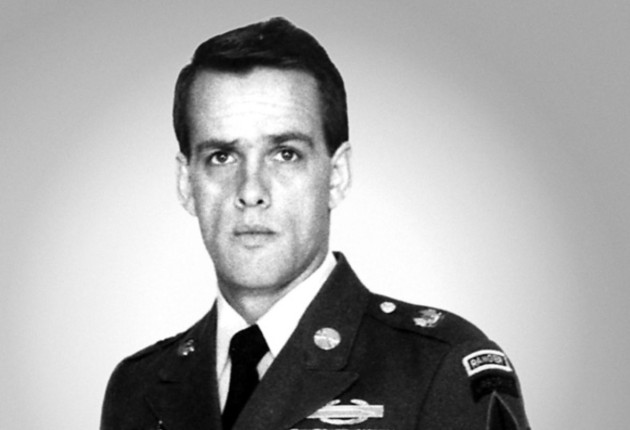
Master Sgt. Gary Gordon, years before Mogadishu, long before he asked to be put on the ground where the fight was closing in. Image Credit: US Army
Early Life in Maine
Gary Ivan Gordon was born on August 30, 1960, in Lincoln, Maine. He grew up in a working-class town where hunting, fishing, and self-reliance were part of daily life. Those who knew him early described a quiet, serious young man who preferred action over talk. He was not drawn to the spotlight. He was drawn to challenge.
Advertisement
Gordon enlisted in the U.S. Army in 1978 at age 18. Like most who eventually find their way into elite units, he did not start there. He began in the conventional Army and built a reputation for physical toughness and reliability. From the start, he leaned toward the harder path.
Early Army Career and the Ranger Regiment
Gordon attended Airborne School and moved into the Ranger pipeline, eventually serving with 2nd Battalion, 75th Ranger Regiment. The Ranger Regiment in the early 1980s was building the professional foundation that would shape modern U.S. special operations. Gordon thrived in that environment.
He later attended Special Forces training and served with 10th Special Forces Group. There, he developed the broader skill set required of a Green Beret: language training, unconventional warfare doctrine, and the ability to operate in small autonomous teams. He gained a reputation for discipline and steadiness rather than flash.
Advertisement
Selection for Delta Force
In 1986, Gordon was selected for 1st Special Forces Operational Detachment-Delta, commonly known as Delta Force. By then, the unit had matured into the Army’s premier counterterrorist and direct-action force. Gordon served as a sniper and reconnaissance specialist.
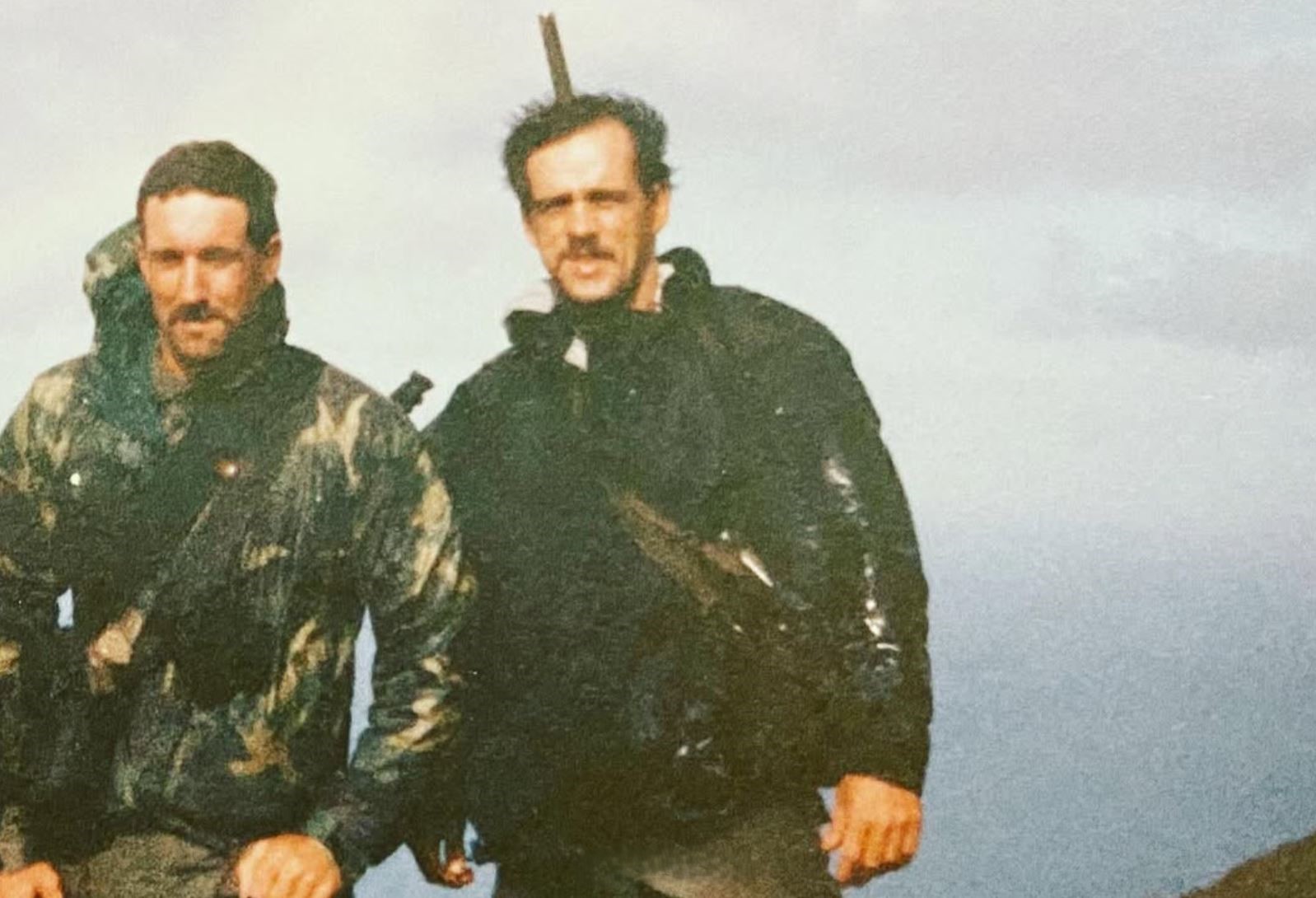
Gary Gordon (Right) is shown here during his days with the Unit alongside good friend and fellow Delta soldier Brad Halling. Image Credit: Brad Halling IG
Over the next few years, he participated in multiple deployments and contingency operations. Most remain classified. Within the unit, he was known as a calm professional, physically strong, technically proficient, and dependable under pressure. He was the kind of operator teammates wanted beside them when things went bad.
Advertisement
Mogadishu, October 3, 1993
On October 3, 1993, Gordon deployed to Mogadishu, Somalia, as part of Task Force Ranger. The mission was to capture key lieutenants of warlord Mohamed Farrah Aidid. What began as a daylight raid turned into a prolonged urban battle after two MH-60 Black Hawk helicopters were shot down.
Gordon and fellow Delta sniper Sergeant First Class Randy Shughart were providing aerial overwatch from a helicopter. When Super 64 crashed, they observed the site becoming surrounded by armed fighters and civilians. They requested permission to be inserted to defend the downed crew.
Command initially denied the request due to the extreme danger. Gordon and Shughart asked again. They understood the likely outcome. On their third request, permission was granted.
Advertisement
They were inserted near the crash site of Super 64, whose pilot, Chief Warrant Officer Michael Durant, had survived the impact. Gordon and Shughart moved to the wreckage, established defensive positions, and engaged attacking forces at close range. Vastly outnumbered, they held as long as possible. Both were killed in action. Durant survived and was taken prisoner, later released. He credited the two Delta snipers with giving him a chance to live.
Medal of Honor Ceremony
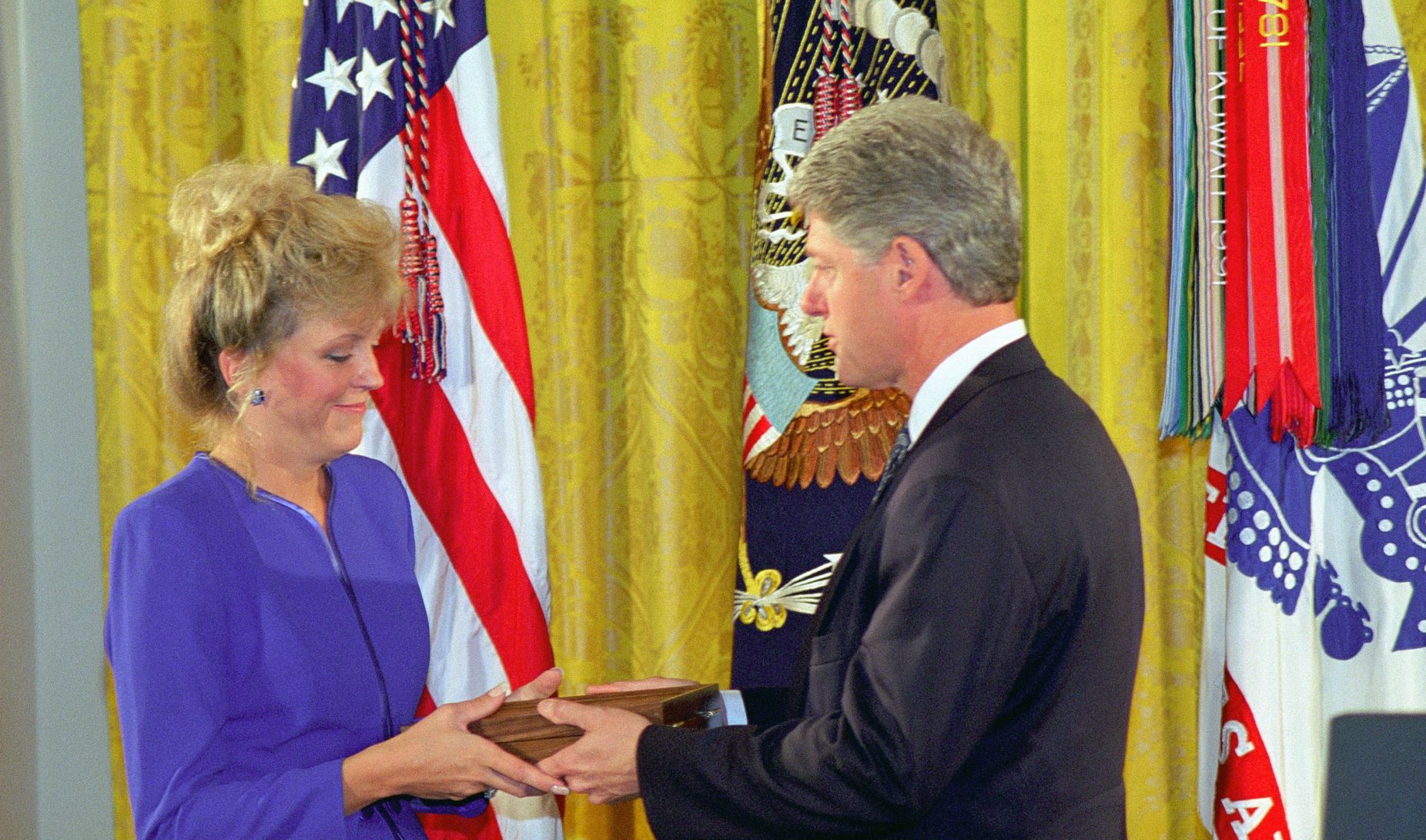
Gordon’s widow, Carmen, is presented with her late husband’s Medal of Honor in a 1994 White House ceremony. Image Credit: Wikimedia Commons
Gary Gordon was posthumously awarded the Medal of Honor. President Bill Clinton presented the medal to his widow, Carmen Gordon, during a White House ceremony on May 23, 1994.
The citation recognized his conspicuous gallantry and intrepidity at the risk of life above and beyond the call of duty. Those words are formal. The reality was simple. He volunteered for a mission he knew would likely end in his death to protect fellow soldiers.
Randy Shughart was also posthumously awarded the Medal of Honor. Their actions marked the first Medals of Honor awarded for combat since the Vietnam War.
How Gary Gordon Is Remembered
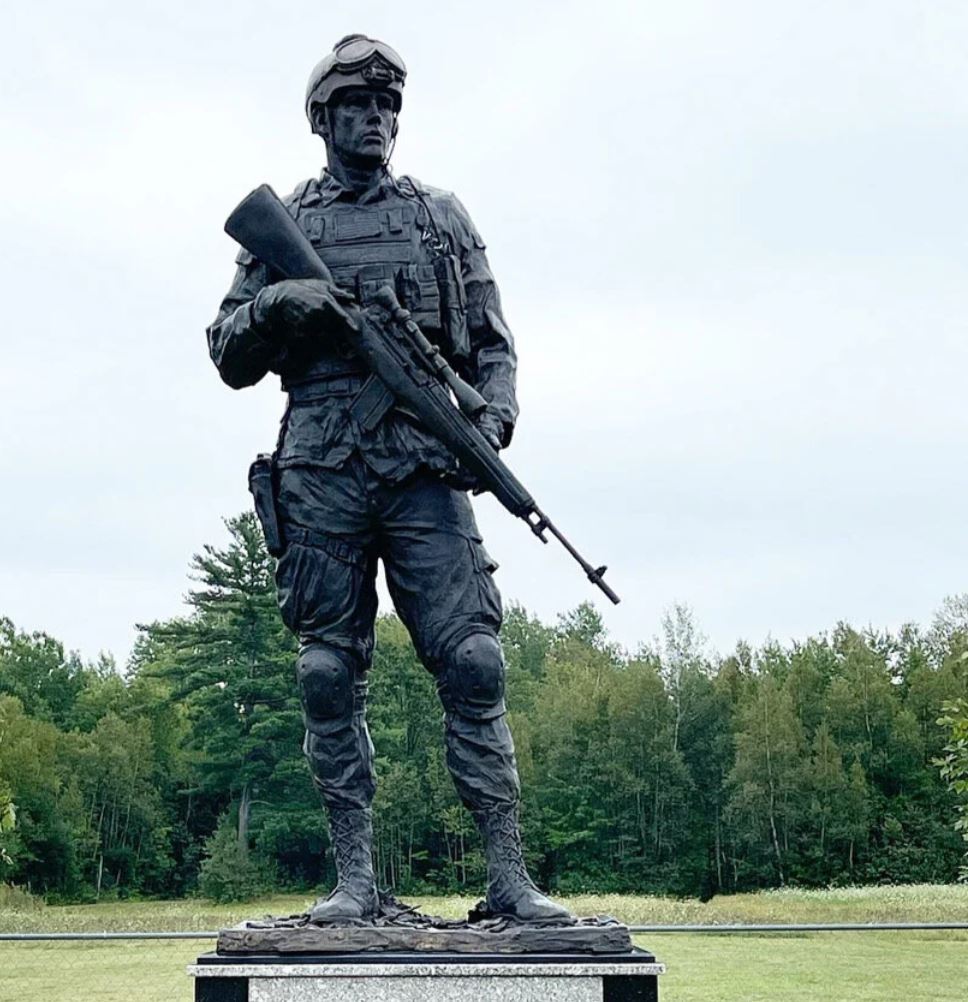
Statue of Gary Gordon in Lincoln Veterans Memorial Park, in Lincoln, Maine
Within the special operations community, Gary Gordon is remembered as a quiet professional who did his job without theatrics. Training facilities, memorials, and competitions bear his name. His story is taught not as mythology but as a case study in decision-making under fire.
He is often discussed alongside Shughart, as he should be, but Gordon’s individual path is important. He built himself up through years of steady effort, moving from conventional infantry to Rangers, to Special Forces, to Delta. Nothing about his career suggests a search for recognition. It reflects a search for mastery.
What His Legacy Teaches
Gary Gordon’s legacy is not simply about bravery. Many soldiers are brave. What distinguishes his actions is clarity. When he saw a downed crew surrounded by hostile forces, he did not hesitate or wait for someone else to act. He requested insertion knowing the odds.
That decision was not made in a moment. It was built over years of preparation, discipline, and professional identity. He understood his role and accepted its cost.
Medal of Honor Monday pieces exist for a reason. They are reminders that the standard of excellence is real and that ordinary men, through training and conviction, can meet it when required.
Gary Gordon did not seek recognition. He sought competence and responsibility.
When the moment came in Mogadishu, he acted in line with both and paid with his life.
Advertisement
What readers are saying
Generating a quick summary of the conversation...
This summary is AI-generated. AI can make mistakes and this summary is not a replacement for reading the comments.










COMMENTS