There are battles that blur into the endless churn of war, and then there are fights that refuse to stay buried.
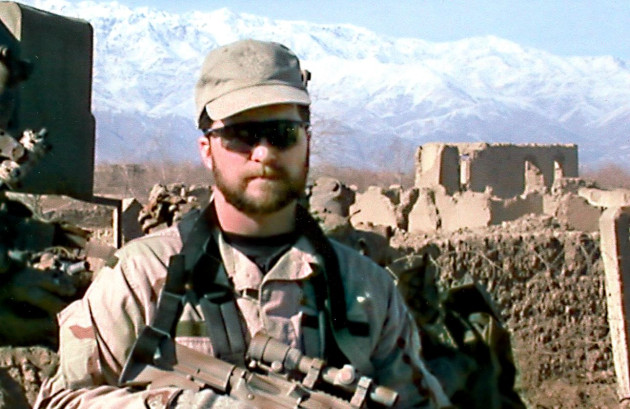
John Allan Chapman was born on July 14, 1965, in Springfield, Massachusetts, and raised in Windsor Locks, Connecticut. He graduated from high school in 1983, enlisted in the United States Air Force in September 1985, and started his career not as a door kicker, not as a legend in waiting, but as an information systems operator at Lowry Air Force Base in Colorado. Communications.
Wires and signals. The quiet arteries of a giant machine.
When he felt he needed to challenge himself a bit more, he volunteered for Combat Control.
In 1989, Chapman entered one of the most punishing pipelines in the American military. In March 1990, he earned the scarlet beret and became a Combat Controller, the rare breed tasked with bringing airpower to the ground fight under the worst possible conditions. Over the next decade, he served in Special Tactics units, including the 1721st Combat Control Squadron at Pope Air Force Base and the 320th Special Tactics Squadron in Okinawa. Eventually, he was assigned to the 24th Special Tactics Squadron, operating at the sharpest end of the joint special operations spear.
That is the résumé. The citation. The tidy arc.
The real story lives on a frozen Afghan ridgeline.
Takur Ghar, March 4, 2002
Operation Anaconda was already a brutal, high-altitude grind when Chapman found himself attached to a Navy SEAL team headed for Takur Ghar. The mountain was a white knife cutting into a dark sky, 10,000 feet of snow and stone and bad intentions.
As their MH-47 helicopter tried to insert onto the summit, enemy fire tore into it. In the chaos, Navy SEAL Petty Officer First Class Neil Roberts fell from the aircraft onto the mountain. The helicopter, damaged and leaking violence, withdrew.
They went back.
When Chapman and the SEAL team reinserted, they were met by entrenched al-Qaeda fighters who owned the high ground and were not inclined to share it. According to his Medal of Honor citation, Chapman advanced under direct fire to assault a fortified bunker. He closed with the enemy, engaged at close range, killed multiple fighters, and cleared the position, actions that protected his teammates from immediate destruction.
Already have an account? Sign In
Two ways to continue to read this article.
Subscribe
$1.99
every 4 weeks
- Unlimited access to all articles
- Support independent journalism
- Ad-free reading experience
Subscribe Now
Recurring Monthly. Cancel Anytime.
He was shot during the fight and rendered unconscious. Under withering fire, and believing him killed, the remaining SEALs withdrew from the position.
For years, that was the story.
Then the tape spoke.
Overhead intelligence, surveillance, and reconnaissance video later showed that Chapman had regained consciousness. Alone on the mountain, wounded and surrounded, he continued to fight. The footage captures him engaging enemy fighters who were maneuvering against his position. He moved, he fired, he refused to disappear quietly into the snow.
The ISR video became central to reconstructing the battle and understanding the final moments of his life. His case is widely described as the first Medal of Honor action in which overhead video played a decisive role in documenting what occurred on the battlefield. In a war defined by satellite feeds and drone orbits, valor was recorded in grainy, unforgiving detail.
Chapman was ultimately killed in action on that peak. His actions disrupted the enemy and contributed to the survival of other Americans engaged in the fight.
The Medal and the Reckoning
On August 22, 2018, at the White House, President Donald Trump presented the Medal of Honor for Technical Sergeant John A. Chapman. His widow, Valerie Nessel, accepted it on his behalf. Chapman became the first Airman to receive the Medal of Honor since the Vietnam War.
For the Special Operations community, the meaning runs deeper than ceremony.
Combat Controllers are trained to stand at the violent seam between air and ground, to impose precision on chaos. On Takur Ghar, Chapman did not simply perform his duty. He embodied it. He moved toward a fortified enemy position under fire. He fought after being gravely wounded. He kept fighting when he was alone.
His legacy now lives inside Air Force Special Tactics, in classrooms and on ranges, in young operators studying not myth but fact, not rumor but frame-by-frame evidence of what one man did when the mountain turned against him.
Modern war is a strange beast. It records everything and explains nothing. On Takur Ghar, the cameras were rolling, the drones were orbiting, and a single Combat Controller chose to stand his ground.
That is not a slogan. It is a fact written in snow, steel, and video stills.
And it is why, decades later, we still honor his name.










COMMENTS