
“Military fiction that doesn’t make you want to rip your face off.” – M.S.F.
“Nope!” How many of us have literally yelled, “Nope!” at a screen?
Our significant others just groan, “Not this again. Can’t you just enjoy the damned movie?”
“No! Not with all these inaccuracies. It’s just so simple to do a little research and get it right.”
Enter the Fiction of Michael Stephen Fuchs
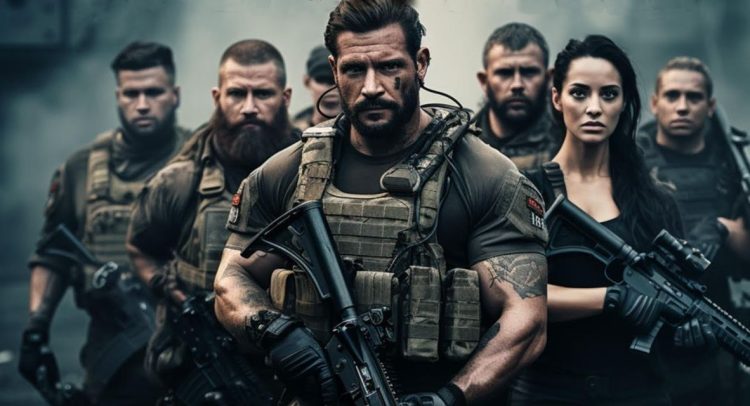
A mix between the realism of Tom Clancy, the accuracy of Steven Hunter, and the intensity of 28 Days Later – but on steroids, Fuchs throws special operations forces into an all-out cage match with the dead. Michael Stephen Fuchs simply speaks the language. If you think your tinnitus is bad now, just wait. His description of the gear and weaponry is spot-on, but he clips it to his characters in such a way that never upsets the flow of the story. Reading MSF is like urban combat with your best team. It flows hard, fast, and loud. You’re always down a man and damn near black on ammo, but through the spent brass and hauling ass, you’re getting it done. Just when you’re ready to call in the QRF, Michael has another book out, and you’re right back in the meat grinder.
Fuchs, initially stacking bodies collaboratively with co-author Glynn James, has gone on to develop a world where Britain is the last holdout for humanity as the rest of the world has succumbed to a devastating virus – the Earth repopulated with reanimated dead.
A major terrorist attack on Britain just prior to the outbreak – a blessing in disguise (as Churchill once said, “well disguised”) – has closed the borders of the island, shutting it off from the spread of the encroaching necrosis. A dream team of SOF operators has gathered at the SAS barracks in Hereford to deal with the threat of terror, when suddenly they find their mission pivoting to one of desperate survival, for themselves, and maybe everyone who remains among the living.
Just when you are wondering how Fuchs, not a veteran himself, writes so realistically about CAG, DEVGRU, MARSOC, SAS, Army Special Forces, and the Royal Marines – he takes you right into big Navy operations where you find yourself surrounded by the sailors and naval aviators of the aircraft carrier, USS John F. Kennedy.
Is that not enough to impress SOFREP readers? Fuchs gives you more! When fighting the dead becomes old hat – which it does not BTW – he throws Russian Spetsnaz and Wagner Group mercs at you.
Come on, my guy?! Can we not catch a break? Canadian police, light infantry, and even their top sniper also come into play. If that’s not enough, the wisecracks of one MARSOC master gunnery sergeant are funny enough to spawn two whole spin-off books of grizzled senior NCO humor, all of it profane as hell.
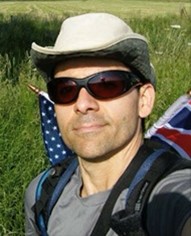
Welcome to this star-struck interview – Michael Stephen Fuchs!
-Michael… how are you, man…?
Oh, man, so happy and blessed, thanks, brother. Currently house- and dog-sitting for the in-laws on a cute little island just off the coast of the already pretty small island (Britain) my girlfriend and I live on. Turns out a big Victorian house, previously owned by a sea captain, with three wood-burning stoves, a golden retriever, and a shaded garden, makes the perfect writer’s retreat. Plus me and the pooch get to go running on the cliffs overlooking the sea every day.
-I am a much better writer than speaker, so I hope you don’t mind doing an interview like this.
I don’t know about your speaking skills, but that intro was fire. (Thanks for the very kind words. It’s fantastic to be interviewed by a real fan.)
-Having read all of D-Boys and ARISEN, I have to say that I am somewhat star-struck talking to you.
I get that every once in a while, and it always baffles me. People email or DM and they’re like, “I’m sure this won’t get to you” and “I can’t believe you wrote me such a long message right back!” First of all, they obviously think I’m a much bigger operation than I am. But, mainly, getting to interact with readers and fans – so many of whom are active-duty, deployed, or retired military personnel – is, by far, the best part of this job, and its greatest pleasure and privilege.
-To start with, what is the main thing you’d like to say to the door-kickers here on the Loadout Room?
That there are no books, by me anyway, without you – and also I wouldn’t have a writing career. Because it is, simply, the real-world superhero exploits of our real-life service people (mostly but not exclusively SOF guys) which are the inspiration for everything I write, and bring every line to life. (More on that later, no doubt.) So: THANK YOU VERY MUCH is what I’d like to say.
-I’ll be honest with you, although this interview is technically for the Loadout Room, man… I just selfishly want to get to know you. If you want to take this in a different direction or say things to my readers that I’m not bringing up, please feel free to fill in the blanks. This interview is about getting you and your work in front of the guys and gals of SOFREP and the Loadout Room.
Awesome. Like I said, I’ve got a lot of military readers, including people from a few different SOF units. But every time one of them writes in and says they love the books, and that I actually get the details right – TTPs, weapons, tech, lingo, mindset, black humor – that means everything, and is the only validation that counts… namely from those who’ve served and been downrange. SOFREP has also been a huge inspiration and information source for my work, since way back. (Ditto Brandon’s books. And everything Jack does.) Long-winded way of saying that getting in front of the guys and gals of SOFREP is an incredible honor.
-I would like to hear about what brought you to writing. What was that journey like? At what point in your life did you think, I want to be a writer… and was there a breakthrough moment when you said to yourself, I could actually be successful at this?
I think I probably always wrote. (Awards in middle-school creative writing class, blah blah blah.) In my early twenties (I turn 55 this month) I got this dumb idea in my head that there were two kinds of people: those who had written and published novels, and those who hadn’t – and that it was critical to any happiness or success I was going to have that I get into the first group. (Like I said, dumb, right?)
So right around then I spent two years writing my first novel, entirely in secret – because I wanted it to be something I did, not something I talked about – and then four more (even dumber) years trying to fix the thing. I mean, it was just a mess. (Why should anyone know how to write a novel, never having done it? I sure didn’t.) But, unfortunately for me, I got just enough positive reinforcement from the publishing industry to keep bashing away at it – when I would have been better served to stick it in a drawer and move on to something new. But the thing about first novels is, you’ve put everything (you think) you’ve got into it, so it becomes precious to you, and also your great hope for success. Of course, that all looks a little different now that I’m about to publish my 32nd and 33rd ones…
I did finally get that book published – ten years later – by Macmillan, one of the (then) big six publishers, along with my second novel. But it was only with ARISEN – and also the whole e-book/indie-publishing revolution – that I actually started earning enough from the books to live on and write full-time. I’ve been doing that now (thank you, God) for 13.5 years.
-For me… I grew up reading fantastic authors, folks I desperately wanted to write like, but honestly never felt like I could. I cut my teeth on the likes of Edgar Rice Burroughs, Tolkien, and C.S. Lewis, as I think we all probably did. Then, I found writers who painted with their words like Manet.
Folks like Tolstoy, Jane Austen, and T.E. Lawrence. As I got a little older, writers like Steven Pressfield, yourself, Craig Alanson, and Keith C. Blackmore brought writing to me in a way that I found descriptive on another level… like describing the dirt under your fingernails – you know, like the weight of the world on your back.
-Who were the writers that inspired you to write like that, telling the story of the dark and gritty reality of life, but in a fictional framework?
You’re going to hate this answer. (Everyone does.) Actually, wait, you’re going to be the one guy who doesn’t hate it. (Having cited Tolstoy, Lawrence, and Austen!? I once heard someone say the reason no man will ever like Jane Austen is because she expects us to care more about the weddings of fictional characters than any man will ever care about his own.)
Anyway, I constantly have readers writing in to ask, “Dude! I’ve run through all your books, and can’t find anything that compares. Please! Hook me up! What are some authors in your genre you recommend!?” And I have to tell them: Sorry, dude, I don’t read books in my genre. Well, okay, I read WWZ (twice) because it’s good. And I always recommend Steven Pressfield’s The Profession – if you like my s&^%, this is like that, but much better. (I recently re-read it myself. Damn. He’s also a super-cool and unassuming dude.)
But what I actually tend to read for my own pleasure – when I can tear myself away from the mountains of military history, nonfiction, and particularly (SOF) military memoirs that I need as constant inputs to my own work – is, like, mid-20th English literature (W. Somerset Maugham, Graham Greene) and contemporary literary fiction (David Foster Wallace is my all-time favorite, and right now I’m reading Gabrielle Zevin). Also a lot of popular science (a ton of AI books recently, and right now the new Steven Pinker).
But, to belatedly answer your question, I don’t think any fiction author inspired me… but the nonfiction authors of all those military memoirs sure as hell did – and still do, over and over again. I’m sure we’ll talk more about this, but for now suffice to to say I have no idea why we have or need ‘superhero’ movies – when we’ve got real-life superheroes walking around. And these guys are – to me, and definitely to my readers – just endlessly thrilling and fascinating.
-Michael, tell me a little about yourself as a kid? What did childhood look like growing up with this vivid imagination?
Traumatic, mainly. (You can tell because I can’t remember most of it.) Let’s maybe just move on without turning SOFREP’s poor readers into my unpaid therapists. Just suffice it to say that when I started to learn that virtually every Tier-1 guy I idolized was dealing with trauma – not just operational and combat-related, but in some cases childhood trauma as well – that was eye-opening, game-changing, and also had a huge impact on my work, particularly the latest book. (ARISEN : Operators, Volume II – Pipehitters)
-Okay… I’m going to rein myself in here and bring us back to the target audience – all too often, actual targets in our global war for the last however-many years.
-Michael, what got you so interested in writing specifically military fiction?
Yeah. Again. Not even just military, but SOF. For starters, I’m just really fascinated by this theme of the perfectibility of man. I mean, if you’re an antelope, you’re pretty much an antelope. But human potential is uncapped – in both directions. In terms of accomplishment, you can be Bill Gates, or you can be a drunk lying in a gutter. In terms of morality, you can be Gandhi or Hitler. And SOF guys, particularly at the highest levels, are basically John D. Rockefeller times Gandhi.
I mean, everyone knows these guys are supremely skilled commandos – who can shoot, move, and communicate better than all but a tiny fraction of people who’ve ever walked the Earth. But what absolutely blows my doors off is all these other high-level skills they have – tradecraft, language skills, cultural fluency, technical surveillance, extreme long-range shooting, advanced driving, small-boat handling, wilderness survival, urban survival, cyber operations, combat trauma care, combat diving, HAHO/HALO jumping, alpine warfare, mission planning, battlefield forensics, intel analysis, unarmed combat… I could go on and on and still not hit it all. I mean, these guys are just achieving and exceeding at a superhuman level of accomplishment.
That, plus physically training like professional athletes, and performing like minor gods, going out night after night to put it all on the line in defense of freedom and decency – all this makes them endlessly fascinating to me. (And, again, to my readers.) I mentioned I’ve read hundreds and hundreds of books on the topic – including probably every memoir by every SOF guy ever written – as research for my own work. But I’d honestly be reading these books anyway. They’re freaking amazing. So I’m just lucky enough to be working in a vein that I never get tired of.
Getting into that – how do you write so accurately about such a variety of stuff? I mean… when you’re talking about CAG and DEVGRU, I would imagine that you’re speaking from some kind of experience in that community, but then you go straight to shipboard life on an aircraft carrier. Soon after that we’re discussing the science behind a viral pandemic and you have your readers thinking you could probably cure the common cold if you put your mind to it. How do you do that? It’s like you’ve served in every branch of the military and obtained 15 college degrees. If your answer is just, “research” man… when do you have time to actually write anything?
Ha. Thanks again for the incredibly kind words. But, yeah, the answer is pretty boring. I am lucky enough to have a handful of friends in the SOF community – most, but not all, ones I’ve made after they contacted me from reading the books. (You’d be amazed – I sure as hell was – to learn what kinds of team rooms, gear cages, and low-vis aircraft cabins my books have been seen in.) And, yes, they are often able to answer questions that are totally unresearchable. (Coupla good stories there.)
But, alas, like the vast majority of fiction writers, I write mainly from research. Historically, this has involved reading everything I could get my hands on. The military memoirs are the most priceless – and what really allow me to get the details right – because so many of these guys, particularly in the really elite units, turn out to be incredibly literate and sensitive observers of the really extreme situations and environments they’ve found themselves in.
Then, later, came SOFREP – timely firsthand accounts from guys who’ve been there, which helped a ton.
More recently, there’s been another game-changer: podcast interviews, such as (and especially) the Shawn Ryan Show. Most of the people who’ve been at the highest operational levels are never going to write books. But it turns out a lot of them are willing to sit down for a few hours with someone they trust, and talk about what they can talk about. That has been priceless.
But, when you ask where I get the time, we haven’t even gotten into the mountain of storycraft books I have to read – fiction writing, screenwriting, teleplay writing, dramaturgy, storytelling theory and history, all the writer’s journey (i.e. mental) stuff. Military is just my vertical! I’ve also got to master my trade – which it turns out is a dizzyingly deep well – plus commit to constant re-learning. But I’m obsessed with both, and it’s just my path. And I’m lucky enough not to have to have a day job. So that’s my day: write all morning, head out to run and lift, write all afternoon – then usually spend the evening either reading or watching another six-hour podcast interview.
-When did you start to realize that this was your day job? About at what book release were you like, “Okay… I guess this is my full time gig”?
For all the years I had a day job – eighteen of them, during which I was a web developer – when people asked what I do, I’d still say, “In real life I’m a fiction writer.” It was ARISEN that delivered me from the curse of real, grown-up, productive, jobby-job work. (And, again, at about the same time, e-books and indie publishing both came along… specifically Amazon’s disintermediation of the whole gatekeeper oligarchy that had controlled publishing – and whether or not you could be read by anyone, never mind earn a living – for hundreds of years.)
Writing full-time, being a jobbing author, was always the dream. Just for a long time it was a seemingly unobtainable one. I was in the wilderness a long time. (Honestly, if I’d known at the outset how long it was going to take, or how much work, I probably wouldn’t have done it. But, of course, now, I wouldn’t trade it, even the hungry years.)
But there was this wonderful moment, when we had just written the first two ARISEN books, and were just about to publish them, and I’d just finished a really long IT contract (I did contracting and consulting for like the last ten years) and I ran off, as I often do, to go trekking – in this case, the Tour du Mont Blanc, a 170km multistage hike through the French, Swiss, and Italian Alps, around the Mt Blanc massif. And we were hiking through this absurdly gorgeous and idyllic valley, butterflies literally swirling around all the wildflowers, jagged mountains of stone behind, and out of the blue I had this weird certainty come to me – that it was going to happen.
I’d already started to achieve a trickle of income from publishing my earlier books on Amazon. And we were excited about ARISEN, but had no idea we were going to have a massive hit on our hands. But still, for some reason, this calm certainty just came to me. I thought: your income from writing is just going to keep quietly growing, until one day soon, without even noticing it, you’re going to be making a living from it. And you’ll never have to get another IT contract.
And that’s exactly what happened. (Did I mention how stupidly lucky I am?)
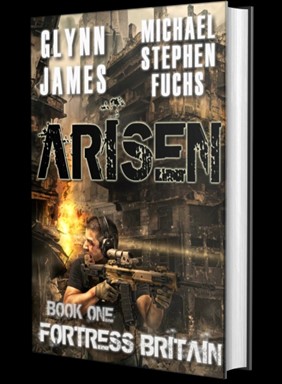
-The first eight books of ARISEN were co-written with Glynn James. What did that collaboration look like, and how did it come to be? What did Glynn offer to the world of ARISEN?
Yeah. Important point here: if it weren’t for Glynn, I’d be cooling my heels in a cubicle right now. I’ll try not to make this a tome, but basically: • He was a reader of my early, traditionally published books – and just sent me, basically, some fan mail. • It pretty quickly became clear he was not only a fiction writer himself… and not only publishing on Amazon via this newly possible mechanism… but he was making more money at it than me.
Then one day he wrote and said he had this idea for a novel – “one that would need both my horror/zombie-writing and your high-octane combat/thriller-writing to make it work well, with lots of space for the philosophical thoughts that you add to your novels and plenty of space for quiet, chilling moments that I like in mine.”
My immediate response to this proposition was: “No.” Then, after giving it about two seconds’ thought, my response became: “Sure.” I mean, really, what the hell did I have to lose? And the idea was kind of intriguing. We started tossing story and character ideas around, while we were both working on our own books, until we both got to a place where we could work seriously on it – and started (co-)writing like maniacs.
After twelve furious weeks we found we had finished not one but two books. Then, even more surprisingly, we found an audience – the series took off, the books got longer, harder, and better, and have now sold over 1.5 million copies, with the audiobook editions (narrated by the immortal R.C. Bray, who got his start around the same time with The Martian) having generated like $5m in sales, plus this really rabid fan base.
In short: I got stupidly lucky. (Okay, yeah, I also absolutely worked my ass off, for years on end. But that’s just the price of admission. I always say that to make it in this business, you’ve got to • be really good; • absolutely work your ass off; and also • get lucky.)
And working with Glynn was great fun. Before that, everyone was always like, Oh, you need to join a writer’s group and get some support and camaraderie! And I was always like, The last freaking thing I want to do is hang out with a bunch of other unsuccessful wannabe writers. But it turned out something really was missing: normally, when you write, it’s just you sitting alone in a dark room banging your head bloody on a keyboard. Then, if you’re lucky, maybe a year or two later something goes out and maybe you hear back from someone. But with Glynn, every day, instead it was me sending sparks striking off – which, instead of disappearing into the darkness, would then bounce back, in some crazy modified form. And that was pretty cool.
-What kind of response did you get from fans? Do you feel like you do things differently because of feedback? If so, what do you feel was some of the best feedback you got that helped you grow as a writer… or as a person?
The feedback from fans has been amazing. (If you go to the Amazon page for virtually any of the books, almost all of them start with blurbs from reader reviews. These just got more effusive and over-the-top as the series progressed – and, every time, cherry-picking the coolest ones to use on the page for the next book was one of the most fun parts of the process for me.)
In general, I don’t write (or pander) to the audience, or “write to market” as the expression goes these days. I write what I think is going to blow the doors off, and what excites me.
Though there was one conspicuous exception, where I sort of accidentally delved into politics in one of the books – unthinkingly violating my own rule that art and politics should stay a million miles away from each other, just because I thought I had kind of a cool idea for a twist at the end. Even worse than that, I also slightly blundered into America’s culture wars. And I can tell you I sure learned my f%$*ing lesson on that one. I got some reviews that just freaking savaged me (a little frustrating because they weren’t even really about the story, which every other reviewer seemed to think was the best thing they’d ever read). And, having been burned by that fire, I can tell you: I’m never doing that s&^* again. So, yeah – thanks, savage readers (now mostly ex-readers) with really strong political views. Received, five-by-five, and wilco.
A better answer is that my readers – in thousands of personal messages and comments – humble me and help me grow as a person every day. There’s actually a little micro-genre of people who were in life-threatening situations (most memorably, a heliborne paramedic who crashed in the Rockies, instantly killing the pilot, and badly wounding the other crew member, and he had to stay alive, plus keep his friend alive, long enough for rescue to get there) and who have written to tell me that “the lessons of the operators” in these books helped them survive. Or at least helped them get through really hard times, like multiple painful surgeries and rehab after injuries sustained in combat. All of that will really wake you up in the morning – or, rather, it will amaze, gratify, and humble you, and make you feel like your crazy-ass stories matter.
-There’s quite a lot of religious references in your books. One of your DEVGRU guys is deeply religious. How does religion play a part in your life?
At the risk of pissing people off – many, if not all, of these Tier-1 guys I idolize are really devout Christians – religion honestly doesn’t play a part in my life, except in an intellectual or cultural way. Making Homer (the team guy) a devout Christian was just a really interesting way to complexify his character. I also absolutely love using Biblical passages as opening quotations for the books – they’re not only dramatic as heck, but often so relevant to the apocalypse.
-What were some of the most fun scenes for you to write? Are there any specific events in your books that you just felt flowed perfectly or hit the hardest?
It’s always the gigantic, over-the-top, sprawling, explosive, action-spectacular set-piece sequences that do it for me. I get really hopped up on caffeine and raucous music (the music that powers the writing could be its own interview) and just bash away manically at the keyboard for hours. If I’ve designed the whole thing right (and my story-design process could be two interviews; but suffice it to say, if you want to write, for instance, a really big complex invasion sequence, you’ve actually got to plan the invasion – insertion, infil, scheme of maneuver, actions-on, TOT, PACES, command and signals, actions on compromise, exfil and extraction, primary & alternate LZs, contingency routes, ROE, IFF protocols, breach plan, rally points, abort criteria, NFAs… I could go on) – anyway, if I’ve story-designed the scene right, then actually executing it (writing it) is an adrenaline-fueled joy.
All that said, if I’m doing my job as a storyteller (i.e. dramatist), there will also be scenes – and there are – with two guys talking in a room that are also as exciting as a thrill ride.
-What were the worst scenes? And by that, I don’t mean as a finished product. I mean the hardest to grind your way through as a writer.
I don’t know, man. Exposition, probably. There’s a certain amount of information you have to get across to the reader for things to make sense. (If you’re me, there’s also a ton of cool shit you learned in research that you want to get across.) At least in the former case, it can feel really sloggy to just have to make critical information come out of characters’ mouths.
This should be my first clue that I shouldn’t be doing it. (It’s an old, good principle that if your scene is pure exposition, it’s DOA – you should cut the scene and find a way to slip the info elsewhere, while something actually interesting is going on. In an ideal story, every scene 1) pushes the story forward; 2) reveals and develops character; and 3) exposes and elaborates theme, while staying very relevant/close to it. But that’s a high ideal to reach for.)
-Are there any deleted lines that you wish you didn’t clip? Funny lines that cracked you up, but you felt were just too… maybe juvenile for your audience? We can be pretty juvenile, so if you have a favorite one, hit us with it… if not, hit us with your favorite not-so-deleted line.
As you note above, I’ve got a Marine Raider master gunnery sergeant, who also happens to be indispensable to the war effort, so he can literally say any damned thing he wants. If I had any lines too juvenile to include, you wouldn’t guess it from his dialogue. It’s also definitely worth stressing here: eighty percent of his most priceless lines were completely stolen – almost all from real-life Army and USMC DIs and DSes. Five percent I wrote. Fifteen percent were just him coming up with the shit on his own, I swear to God. Nothing to do with me. Here are a few ones readers seem to like, and which I admit do still sometimes crack me up.
“Stick a dick in your ear, and fuck what you heard. Over.”
They were in a genuine emergency. And the men needed him panicking like they needed magic marker dicks drawn on their faces.
“Hey! I’m still fuckin’ this monkey. She’s just here to take pictures.”
“You better put that dirty dick-beater back in your pocket. And then shut your cock garage. Before I park my Lamborghini in that bitch.”
Actually, what R.C. Bray did bringing him to life is priceless and immortal, and if you want the Master Guns’ greatest hits, you can get a curated selection here.
-You speak of hitting a pretty low point in your life and reference propping up the sales of JD and Diet Coke at one point. Some of us can relate to that maybe more than we’d like to admit. Can you talk a little bit about that time, and specifically how you saw your way through it?
Yeah, another whole interview there. (Whatever else we can say, I’ve lived a bit. Or, maybe put another way: life is a lot.) But suffice it to say, at a certain point – ironically, the point where I was within grasping distance of finishing a startlingly successful series of books, with me actually making it as a jobbing fiction writer – I more or less blew up my life. I left a nine-year relationship, as well as the city and neighborhood I’d lived in for twelve, and jetted off to the south coast of Spain – with a woman half my age, like this perfect ridiculous middle-aged cliché.
Also suffice it to say it all went horribly wrong – I was crushed with grief and guilt over the end of the relationship, disoriented by the complete change of surroundings and people, all while trying to write the two hardest books of my life (at that point). Every day become this huge emotional struggle just to stay afloat – and an even bigger struggle to write. I decided the material I’d produced was utter unsalvageable crap. Then I convinced myself I’d never produce any decent material ever again. And soon after that the money would run out. And then I would literally be out on the street. A failure. Broken. Homeless. And totally alone. I was screwed. And I’d done it to myself.
So – what did I do? What could I do? Nothing but follow the lesson of the operators again. I just had to dig down and find a way through – somehow. At first, I just spent a good couple of days drinking and crying. (Yeah, as you note, I could at least be proud of the boost I gave to to Jack Daniels and Diet Coke sales in Andalusia.) Then I spent a couple of days trying to pull it together. I said to myself: “Okay. I have absolutely no idea how to fix this. I only know that I have to. Because if I don’t, I’m dead. Pretty much literally.” And then, after that, I spent a couple of days going back and forcing myself to look at the material so far, trying to figure out what the problems actually were. And, mainly, I began to screw my head back on straight, 1/64th of a twist at a time. I battled my way back.
-You say that the best book you ever wrote came right after that time. What are your insights about that?
Ha. Yeah. First of all: what at the time were the hardest two books of my life sure didn’t end up that way. Funnily enough, I had another epiphany about the series – on yet another trek, this time in the Himalayas, between that writing cycle in Spain, and the one that would conclude (or fail to conclude) the series. We were heading from, I think, Gorak Shep (jumping-off point for Everest Base Camp) toward the pass at Kongma La, and the Imja River Valley beyond that – not incidentally, the most beautiful place I’ve ever seen, by far, and the best trekking day (or probably day of any sort) of my life – and I had the following thought, very clearly.
Prior to that moment, I’d honestly been thinking – with how hard the prior two books had been – that I could kind of just wrap up. And, having pulled those off successfully, it was mine to lose. But – no. The reality was I had to prove it again, and take it up multiple notches – every time out.
Here’s what I scribbled in my little trekking notebook:
I can’t phone this in. It’s got to be huge; and its going to take all year. Every surviving character has to arc. The action & peril have to equal or exceed what’s come before. People have to die. I have to work seriously, and steadily, and for a long time, on story design. It’s going to hurt. I’ve got to finish it RIGHT.
Then, when I got home, I basically put myself in isolation for a year, to develop the focus I needed to do work of that complexity and quality. And that nearly killed me – putting me in a mental-health trough deeper than I’d ever been in before, or ever want to be in again. But I did it.
-I know the struggle continues for you as I think it does for a lot of us.
I finally went to see a VA shrink about a year ago. Knowing that I was only scheduled for a 45-minute appointment with the guy, and being a writer, I wrote the doctor out about a five-page list of all the reasons why I was jacked in the head. I’m exaggerating a little, but not much.
Can you share a little about what you struggle with and how you cope?
First, thanks for sharing your own struggle. As so many veterans have learned and expressed and made clear – D.J. Shipley absolutely springs to mind – breaking this veil of silence and shame about mental health is absolutely critical. So, great job. As for me, probably the usual shit: depression, some anxiety, all too often freaking the fuck out about things that most people just roll with. (Most or all of which comes from childhood trauma, specifically severe emotional – and occasional milder physical – abuse.) But I’ve got it pretty easy in the scheme. A decent case can be made that everyone needs therapy.
–Operators is a deep dive right back into the ZA (zombie apocalypse) as a follow-up series for those of us who didn’t get enough mayhem and debauchery in the original ARISEN books and Raiders. There are now some 30 books out pitting Tier-1 folks against… well everyone and everything, including other Tier-1 folks.
Can you tell us a little about the Operators series?
Sure. Yeah, so the main (fourteen-book) series, unusually, starts two years into the Zulu Alpha. (I’ll let your readers work that one out for themselves.) Alpha team, the heroes of that story, are TDY’d to something called USOC (the Unified Special Operations Command), based out of Hereford. It’s understood they’re surrounded by lots of other teams of SOF guys, survivors from all kind of units around the world, who made their way there in the wreckage. (This becomes really clear when they all come together at the climax of the series, and its lowest moment, to fight the final battle that will either save humanity for good or doom it forever.)
But the fact that there were all these teams of international operators running missions for two years, trying to keep everyone left alive in Britain afloat, plus find a cure to bring humanity back from the brink, means there are are an awful lot of really compelling and thrilling stories from that period. There was also a deeply human story I wanted to tell, about one elite operator whose uniquely awful trauma becomes a lethal roadblock to saving the world, not to mention saving their own soul. Finally, whereas the main series had hundreds of characters from all over the place – conventional guys, civilians, LE, random survivors – this series is all SOF all the time.
-What’s next for you? Maybe a nice cup of hot cocoa and a children’s story? Are you going to wipe the mud and blood off of your keyboard and share a hidden story that you’ve been wanting to tell but haven’t yet?
Ha. Yeah. Pretty good idea. Funnily enough, Operators ends right where the main series does – at the climactic, apocalyptic, final battle to save humanity – just telling those events from the POV of other characters, and finishing their journeys. So it feels like, and will be, the perfect conclusion to it all. And while the universe of ARISEN is limitless – I’ve always felt I could tell any kind of story I wanted to tell in this world – there is still an All good things aspect to it.
So I’ve been planning a whole new series, one that’s more straight spec-ops military thriller fiction, but with high-stakes global conflict, and definitely some post-apocalyptic aspects. Basically, after 13 years, I’m letting the Zulus go – but I don’t think I’ll ever get free of the operators… or want to. (These guys – including, I’m thrilled to think, many of those reading this – are the abiding inspiration for everything I write.)
Anyway, Michael… this is a list of questions I came up with. They were fun for me to write and wonder how you were going to respond. Again… my first interview ever, so please take this, rewrite it, beat it up with hammer and drive nails into it, use it for target practice, but please understand that it comes from a place of deep respect.
Thank you so much for your time,
Galen








COMMENTS