
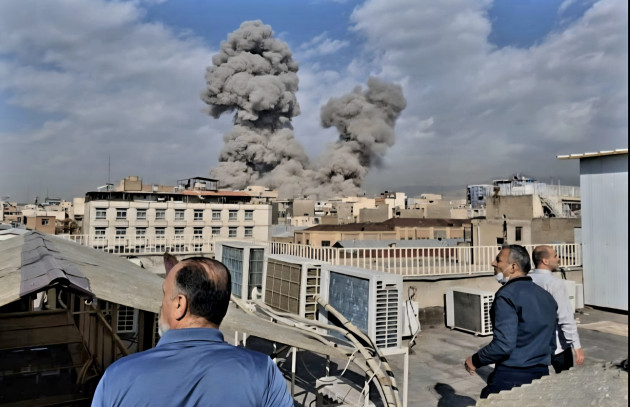
US and Israel Open Strike Campaign on Iran as Trump Announces “Major Combat Operations” and Tehran Retaliates Across Israel and the Gulf
Before dawn on Saturday, February 28, President Donald Trump announced that the United States had begun what he called “major combat operations” in Iran, confirming that Washington and Israel have moved from pressure and limited exchanges into a coordinated strike campaign that is already pulling the entire region into the fight.
Trump delivered his statement in a video posted to social media. His opening line set the tone: “A short time ago, the United States military began major combat operations in Iran.” He said the objective was to “defend the American people by eliminating imminent threats from the Iranian regime,” and he framed the operation around Iran’s nuclear ambitions, ballistic missiles, and Iran’s long history of attacks and proxy activity. Trump warned that American casualties were possible, calling it a “noble mission,” and he told Iranians to stay sheltered because “bombs will be dropping everywhere.” He also issued a direct call to the Iranian public after the strikes, telling them, “When we are finished, take over your government. It will be yours to take.
“This will be probably your only chance for generations.”
The Pentagon has named the U.S. campaign Operation Epic Fury. U.S. officials have described it as multi day combat operations, not a one night raid.
Israel confirmed it launched a preemptive strike against Iran. Israeli Defense Minister Israel Katz said Israel attacked to remove threats to the state. An Israeli defense official said the operation had been planned for months in coordination with Washington, with the launch date set weeks ago. Israel activated nationwide alerts and moved into emergency footing, shutting schools and most workplaces outside essential sectors and closing its airspace to civilian flights. Iranian media reported explosions in Tehran, and imagery from the capital showed smoke rising above parts of the city.
What we can confirm right now is that strikes hit targets in Iran, that Israel says it launched the opening strike, that the U.S. has joined under Operation Epic Fury, and that Iran has already retaliated with missiles and drones not only toward Israel, but also toward Gulf states that host U.S. forces. What we cannot confirm yet is the full target list inside Iran, the scale of battle damage, or definitive results from leadership targeting claims being pushed by both sides.
What was hit inside Iran and what is still uncertain
Early reporting indicates the first waves focused heavily on leadership and command targets. A source familiar with the strikes said the first wave mainly targeted Iranian officials. An Israeli official said Iran’s Supreme Leader Ayatollah Ali Khamenei and President Masoud Pezeshkian were both targeted, but the results were unclear.
A source with knowledge of the situation said Khamenei was not in Tehran and had been moved to a secure location. That is as far as credible reporting goes at the moment. Social media claims about Khamenei being killed or critically wounded are circulating fast, but there is no verified confirmation. There has also been reporting from an Iranian source close to the establishment claiming several senior IRGC commanders and political officials were killed. That claim has not been independently confirmed.
Beyond Tehran, there have been reports of explosions near Kharg Island, a serious data point because Iran exports the overwhelming majority of its crude oil through Kharg for shipment via the Strait of Hormuz. At this hour, there is no confirmed battle damage assessment for Kharg. It is also too early to claim any decisive effect on Iran’s ability to move oil, only that blasts were reported in that vicinity and the timing aligns with the opening strike sequence.
Trump’s statement described the mission in big system terms, saying U.S. strikes were aimed at destroying Iranian missiles and “annihilating” Iran’s navy.
Iran is still firing missiles and drones as of this writing, which means Tehran retained enough capability to respond quickly, even if key nodes were hit.
There is also a gap between public rhetoric and confirmed nuclear site damage. There were recent talks between Washington and Tehran about Iran’s nuclear program, and those talks failed to produce a breakthrough. That diplomatic failure is part of the context for why this went hot now. But at this hour, there is no verified, detailed public listing of which nuclear related sites were hit, if any, and what exactly was destroyed versus degraded.
Iran’s response so far
Iran moved to retaliation within hours. Iran’s Revolutionary Guards announced that a first wave of missile and drone attacks had been launched toward Israel, and Iranian officials said U.S. bases and interests across the region were within Iran’s reach. The Revolutionary Guards said Iran’s retaliation would continue until the enemy is decisively defeated.
Israel has been running air defenses and intercepts since the opening salvos. The size of Iran’s initial response appears large enough to stress air defense and civil systems, but not yet the kind of full inventory dump that would indicate Tehran has decided to empty the magazine on day one. That may change quickly if Iran believes leadership losses occurred, or if Tehran concludes that restraint is pointless.
The bigger regional escalation came when Iran fired missiles toward Gulf states that host U.S. forces. Kuwait, Qatar, the United Arab Emirates, and Jordan all reported intercepting incoming missiles. Bahrain confirmed an attack inside its territory and said a service center tied to the U.S. Fifth Fleet was struck. Witness video from Bahrain showed a thick plume of gray smoke rising near the coastline as sirens sounded.
In the UAE, state media reported one person was killed in Abu Dhabi. Witnesses reported loud booms across the city, and residents received phone alerts telling them to shelter in the closest secure building and stay away from windows due to missile threats. Blasts were also reported in Dubai. Fighter jets were seen patrolling over parts of Abu Dhabi during the alerts.
In Qatar, the military said it intercepted incoming missiles before they reached Qatari territory, describing joint coordination. Multiple waves of blasts were heard in Doha. After an initial shelter warning, public activity continued for a time, and then thinned out once a broader shelter in place alert hit phones.
This is the shape of the fight at the regional level. It is no longer contained to Israel and Iran. Iran has signaled that bases and partner states are part of the battlefield, and Gulf capitals are now running defenses and civil protection in real time.
Neighboring countries and outside powers
Across the Gulf, multiple governments moved quickly to restrict airspace and warn citizens. Israel closed its airspace early and asked the public not to go to airports.
Regional aviation has been disrupted, with airlines canceling or rerouting flights away from the Middle East corridor.
China issued a warning to its citizens ahead of this strike, urging Chinese nationals to avoid traveling to Iran and telling those in the country to leave as soon as possible due to the security situation. That advisory landed before the shooting started, which tells you Beijing saw the ramp building and did not want people trapped inside when it broke.
Russia has condemned the strikes, calling them a preplanned and unprovoked act of armed aggression and demanding the campaign stop. Moscow also warned about humanitarian and radiological consequences and criticized strikes near nuclear facilities under international monitoring. Russia has not announced direct military intervention, but politically it has aligned its message against Washington and Jerusalem.
The United Kingdom has been explicit that it did not participate in the opening strikes. Prime Minister Keir Starmer convened an emergency COBRA meeting to manage the crisis and reiterated the UK position that Iran must never be allowed to develop nuclear weapons while also warning against wider escalation. British messaging has centered on protecting British nationals in the region and coordinating defensive posture, not joining the offensive strike package.
Proxies and secondary fronts
Iran’s state response is only one layer. The proxy network is the other, and it has already started signaling.
In Iraq, one of the most prominent militias, Kataib Hezbollah, issued a public warning ahead of the strike urging fighters to prepare for a war of attrition that could be prolonged and exceed U.S. expectations.
Iraqi militia posture matters because attacks on U.S. personnel and facilities in Iraq and Syria have historically been the easiest pressure valve Tehran can turn without firing directly from Iran.
In Lebanon and Yemen, Iranian aligned groups have signaled support for Tehran in the past during periods of high tension. At this hour, the key question is whether those groups move from rhetoric into coordinated launches against Israel, Red Sea shipping, or U.S. positions. The first hours of a conflict like this often look like controlled salvos until somebody crosses a line that forces full escalation.
What is confirmed, what is unconfirmed, and what to watch
Here is the clean truth as of early Saturday morning Pacific time.
It is confirmed that Israel launched a preemptive strike on Iran and that the United States has joined under Operation Epic Fury. It is confirmed that Trump publicly described the fight as “major combat operations” and warned there could be U.S. casualties. It is confirmed that Iran has launched missiles and drones toward Israel, and it is confirmed that Iran has fired missiles toward multiple Gulf states with U.S. forces present, with interceptions reported in several countries and a confirmed strike in Bahrain on a facility linked to the U.S. Fifth Fleet. It is also confirmed that at least one death has been reported in Abu Dhabi amid the missile activity.
It is not confirmed that Iran’s top leadership has been killed or wounded. It is not confirmed that Khamenei was struck, beyond the reporting that he was targeted and that he was moved from Tehran. It is not confirmed which senior commanders, if any, have been killed. It is not confirmed that Iran’s missile inventory, missile production system, or naval forces have been destroyed at the level implied by political statements. It is also not confirmed which nuclear sites were struck in this opening wave, and what damage was done at those facilities.
What to watch next is straight forward. Watch for a Pentagon target list and early battle damage assessment. Watch for Iranian confirmation or denial of senior leadership losses, because that will drive how hard Iran escalates. Watch for a second wave of Iranian missiles, because the first wave often probes defenses and the second wave tries to saturate them. Watch Iraq and Syria for militia launches, because that is where U.S. personnel are most exposed to indirect fires and drones. Watch the Gulf for any signs of disruption around Kharg Island or the Strait of Hormuz, because that is where global pressure spikes fastest. Watch Israel for signs of a sustained missile campaign rather than a limited exchange.
Watch for any internet restrictions in Iran, because Tehran often clamps down communications when internal stability becomes a concern.
This is moving fast and it is already regional. The first day has turned into a multi front exchange that touches Israel, Iran, Iraq, the Gulf states, and the air corridors over the entire Middle East. That is the battlefield as it exists right now, and it is still expanding.
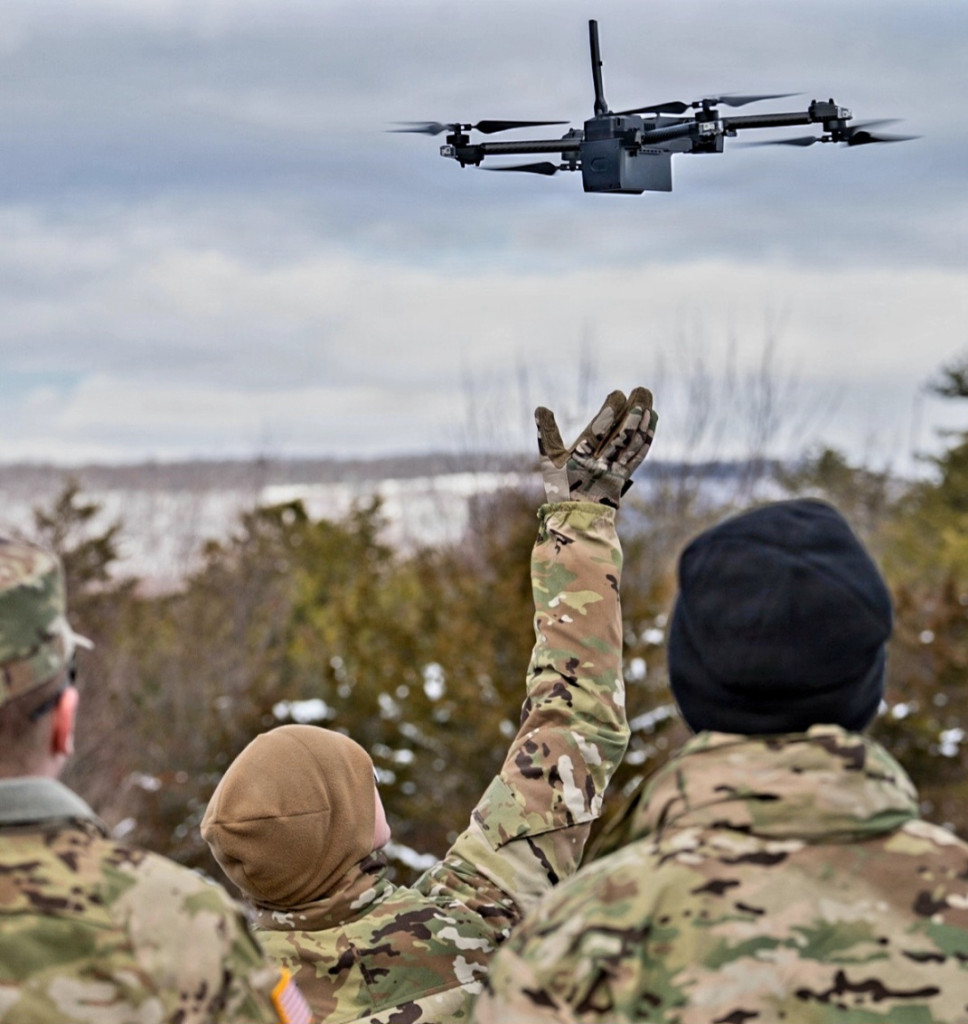
Army Orders $186M in Switchblade “Kamikaze” Drones from AeroVironment
Under the order, the Army will receive the Switchblade 600 Block 2 and the Switchblade 300 Block 20, both part of AeroVironment’s growing family of autonomous strike platforms. These systems blur the line between small unmanned aircraft and guided missiles. Often referred to as “kamikaze drones,” they can loiter over a target area before diving in and detonating on command.
The larger Switchblade 600 Block 2 was developed in collaboration with U.S. Special Operations Command and is designed for use in contested and remote environments. The system offers extended range, improved endurance, and enhanced targeting capabilities. According to the manufacturer, it incorporates artificial intelligence-driven features that accelerate target detection and engagement. The 600 variant is built to engage armored vehicles and hardened positions, giving small units a precision strike option without relying on traditional air support.
The more compact Switchblade 300 Block 20 is designed for dismounted troops and can be carried in a backpack. In this latest order, the Army has requested it be equipped with an Explosively Formed Penetrator payload for the first time, increasing its effectiveness against armored targets. The 300 variant is intended for engagements beyond line of sight, allowing small units to strike threats they cannot directly observe.
Army units have already begun integrating the system into training cycles. Soldiers from the 1st Cavalry Division conducted live-fire testing of the Switchblade 600 at Fort Hood last October, marking one of the first operational evaluations by conventional armored forces.
Brian Young, AeroVironment’s Senior Vice President of Loitering Munitions, said the order reflects the Army’s confidence in the system’s relevance to modern battlefields and noted that the company is expanding manufacturing capacity to meet demand from U.S. and allied forces.
The move underscores a broader shift in U.S. doctrine, as loitering munitions, once seen as niche tools, become standard kit for conventional formations operating in contested environments where precision, speed, and autonomy are increasingly decisive.
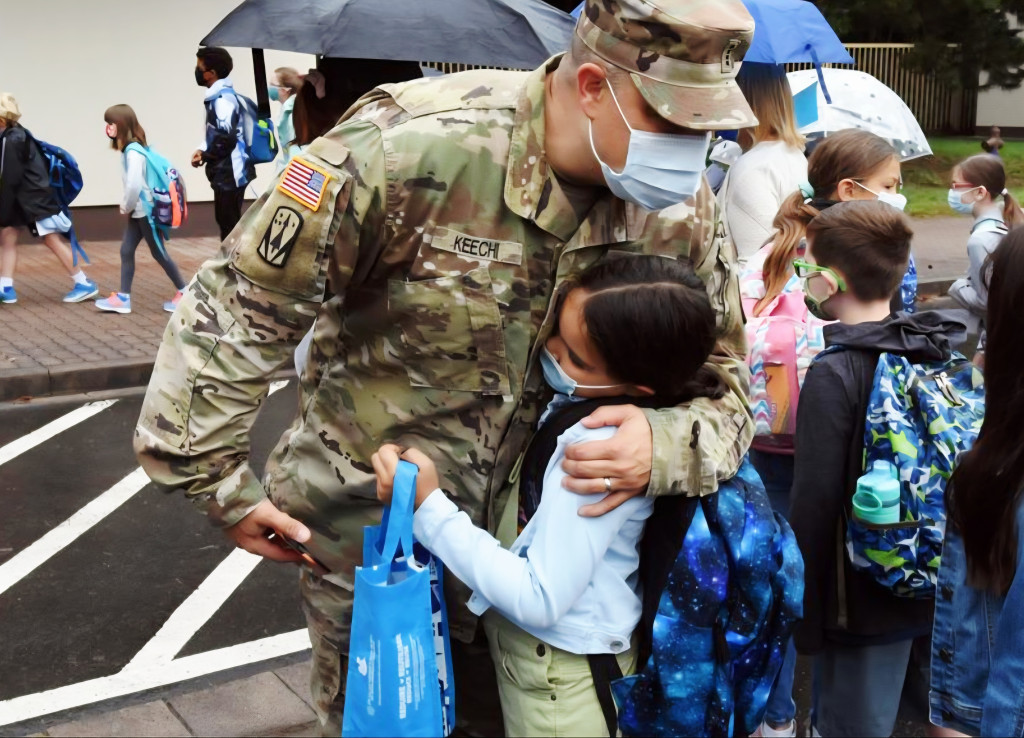
Department of Defense Education Activity Leadership Change Draws Attention from Military Families
Defense Secretary Pete Hegseth has replaced the director of the Department of Defense Education Activity, the school system that serves more than 67,000 military-connected children worldwide.
Defense officials announced February 20 that Beth Schiavino-Narvaez will step down as DODEA director on March 6. Retired Army Col. Paul Craft will assume the role effective March 9. No specific reason was provided for the leadership change.
In announcing Craft’s appointment, Hegseth said he is “the right leader to swiftly reorient [DOD] towards patriotic values and classical learning, consistent with the Department’s focus on merit, standards, and excellence.”
DODEA operates 161 schools across 11 countries, seven states, and two U.S. territories, serving K-12 students and offering universal pre-K in nearly all elementary schools. The system has consistently posted strong academic results.
In recent years, DODEA students have ranked at or near the top nationally on the National Assessment of Educational Progress in reading and math.
Some military family advocates say they are watching the transition carefully. Libby Jamison, a founding member of Military Families for Free Expression, told Military Times that military-connected students “don’t need to be taught patriotism; it’s their lived experience every day alongside their parents in uniform.” She added that families want steady leadership that protects academic freedom and ensures students feel supported.
Craft brings a mix of military and education experience to the role. He served 31 years in the Ohio Army National Guard and most recently held the position of superintendent for public instruction in Ohio, overseeing licensure for more than 350,000 individuals. He previously worked as a physics teacher, coach, and superintendent in multiple Ohio school districts.
Under Secretary of Defense for Personnel and Readiness Anthony Tata thanked Schiavino-Narvaez for her service and support during the transition. Schiavino-Narvaez joined DODEA in 2016 and had more than three decades of experience in education, including prior superintendent and principal roles.
Craft becomes at least the second retired military officer to lead DODEA in recent years. The leadership shift comes as the Pentagon signals an emphasis on standards, transparency, and what it describes as a renewed focus on foundational educational principles for military families.

Stephen Hawking Photo Resurfaces in Epstein Document Release, Sparks Online Firestorm
A photograph of renowned physicist Stephen Hawking has gone viral after appearing in a newly released batch of documents tied to Jeffrey Epstein, fueling speculation online despite no new allegations connected to Hawking.
The image shows Hawking seated at what appears to be a Caribbean resort setting, smiling and holding a drink while positioned between two women in bikini-style swimwear. The photo’s resurfacing has prompted social media claims implying misconduct. However, the image itself is not tied to any formal accusation, investigative finding, or criminal allegation involving Hawking.
Hawking’s name does appear multiple times in emails and materials contained within the broader Epstein document releases. That inclusion has added oxygen to online speculation. But the presence of a name in Epstein-related records does not automatically equate to wrongdoing, and on the current record, no allegation of misconduct has been made against Hawking in connection with Epstein.
According to prior reporting from outlets including CNN, the photograph dates back to 2006 and was taken during a science conference in the U.S. Virgin Islands that Epstein hosted. The event reportedly included approximately 20 prominent scientists and academics. The photo has circulated publicly before and is not newly discovered evidence.
Hawking’s family has publicly addressed the viral reaction, clarifying that the two women pictured were caregivers assisting him due to his advanced motor neurone disease, also known as ALS. Hawking had lived for decades with the degenerative condition and required extensive daily care.
His family has rejected suggestions of impropriety, calling such interpretations misguided and inconsistent with both his medical reality and professional focus at the time.
The renewed attention stems from the Department of Justice’s broader release of Epstein-related documents, which has reignited scrutiny of high-profile individuals whose names appear anywhere within the records. In the current media environment, archival material can quickly be reframed as a “new bombshell,” even when the underlying facts have not changed.
As it stands, there is no indication in the public record that Stephen Hawking was accused of or charged with any misconduct related to Jeffrey Epstein. The viral nature of the photo appears driven more by timing and online amplification than by new investigative findings.
The broader Epstein document releases continue to generate headlines, but in this specific case, the resurfaced image does not represent new evidence of wrongdoing.
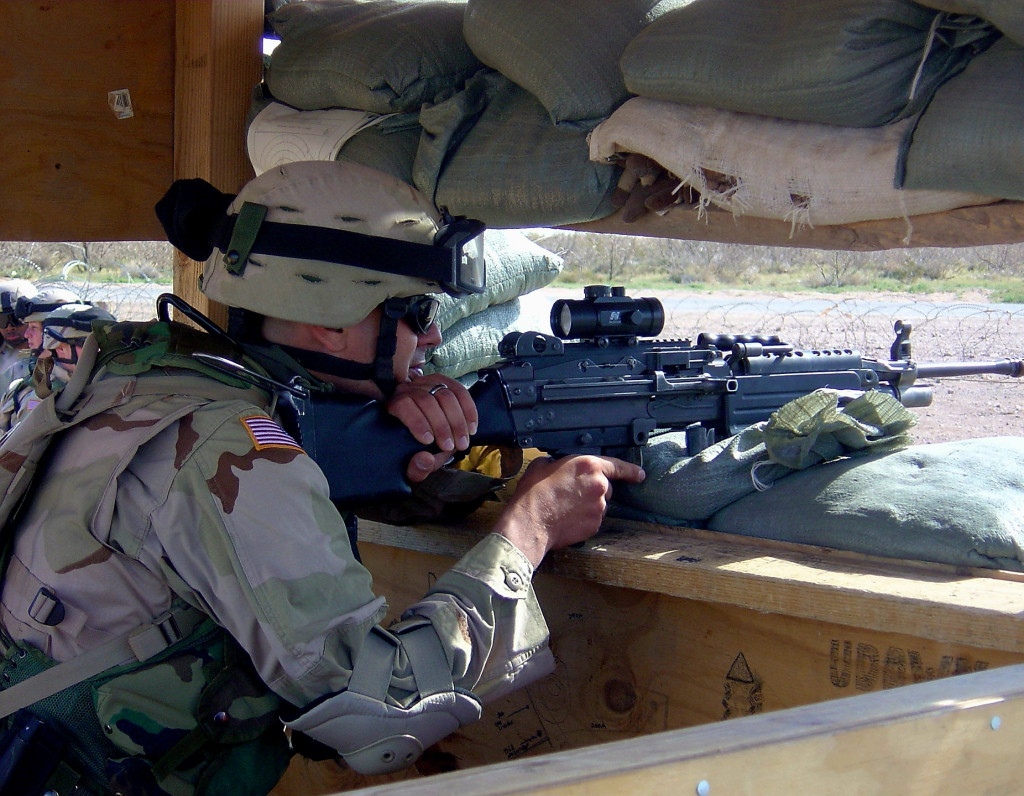
West Virginia Machine Gun Bill Dies in Committee After Brief Surge
A bold Second Amendment proposal in West Virginia is effectively dead on arrival.
On February 23, 2026, State Senators Chris Rose (R-Monongalia) and Zack Maynard (R-Lincoln) introduced Senate Bill 1071, legislation that would have created a state-run Office of Public Defense tasked with acquiring and selling machine guns to qualified civilians.
The bill leaned on a narrow but controversial reading of federal law. Under 18 U.S.C. § 922(o), often referred to as the Hughes Amendment, civilians cannot possess machine guns manufactured after May 19, 1986. However, the statute contains an exemption for machine guns transferred “by” or “under the authority of” a state.
Supporters, including Gun Owners of America, argued that West Virginia could lawfully acquire post-1986 machine guns and transfer them to residents through a state-controlled process.
Under SB 1071, the state would have procured firearms comparable to those used by law enforcement and the U.S. military, including M16-pattern rifles, M249 light machine guns, and MP5-type submachine guns. Distribution would have occurred through West Virginia State Police troop headquarters. Buyers would have paid the base price of the firearm plus a $250 surcharge earmarked for a Public Defense Fund and up to $50 in administrative fees.
Private transfers would have required the firearm to be returned to the state first, triggering a $275 fee.
The bill immediately drew national attention from both gun rights advocates and critics. Backers framed it as an aggressive attempt to restore what they see as full Second Amendment parity with government forces. Critics viewed it as a legal end-run around long-settled federal restrictions.
The legislation never made it to a hearing.
On February 27, Senate Judiciary Chairman Tom Willis pulled SB 1071 from committee consideration, effectively killing the measure before debate. As of February 27, the bill remains listed as “To Judiciary” with no further action, and the session’s committee deadlines have passed.
Even if it had advanced, the measure would almost certainly have faced immediate federal litigation over the scope of the Hughes Amendment exemption. West Virginia’s strong pro-Second Amendment posture allowed the bill to be introduced, but internal political calculations within the Republican-led Senate ended the effort early.
For now, SB 1071 joins the long list of state-level challenges aimed at testing federal firearms law, this one stopped before it ever reached the floor.








COMMENTS