

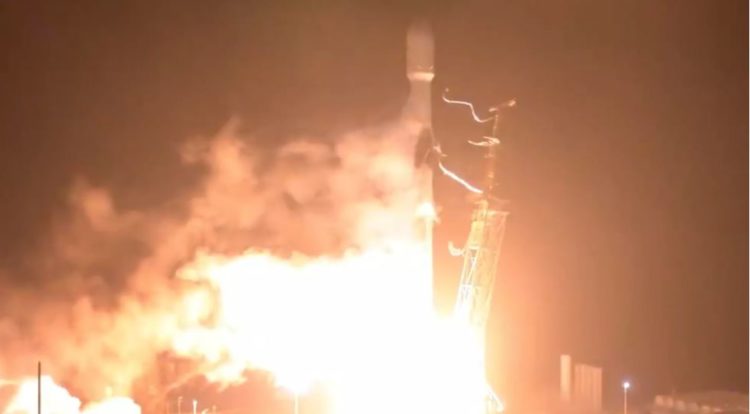
The DART spacecraft will fly a long mission. Its collision with Dimorphos will occur 10 months from now. The kinetic impact of the collision is meant to change the velocity and path of the moonlet’s orbit around Didymos.
The test isn’t expected to make dramatic changes in the course of Dimorphos. Currently, Dimorphos orbits Didymos in 11 hours and 55 minutes. DART’s collision into Dimorphos is expected to change its orbital time to 11 hours 45 minutes. However, NASA said that due to the test being the first of its kind, the actual effects of the kinetic crash could vary.
Ten days before the impact with Dimorphos, DART will release an Italian-built CubeSat known as LICIACube, which will send video images of the impact and the far side of Dimorphos. Sixty minutes before impact, DART’s single instrument, a camera called DRACO (Didymos Reconnaissance and Asteroid Camera for Optical navigation), will start.
The surface of Dimorphos could be either rocky rubble or solid rock. The cameras of DART will relay back valuable information about the body. The DART will autonomously maneuver into the position for the collision and transmit images to NASA until the end.
The LICIACube will video the collision and measure how forceful the impact was. Ground-based telescopes will be used for NASA scientists to learn if the orbit of Dimorphos around Didymos will change. NASA chose the trajectory of DART so that any debris from Dimorphos is not expected to hit the larger asteroid.
NASA chose Didymos for this mission due to its close proximity to Earth although it is no threat to us. Its close proximity allows NASA to test whether nudging a body’s orbit using a not particularly powerful launch vehicle is possible.
According to the Philadelphia Enquirer, in 2013, Ukrainian astronomers found a minor planet that has a one in 63,000 chance of hitting the earth with a force of 2,500 megatons of TNT, or 50 times the size of the largest nuclear bomb ever detonated. Scientists determined that the asteroid will return to our planetary vicinity approximately on August 26, 2032. NASA has said that they will have a better understanding of how close or far that asteroid will come to Earth in 2028.
If the DART test is successful, maybe Bruce Willis and his crew won’t be needed this time.








COMMENTS