

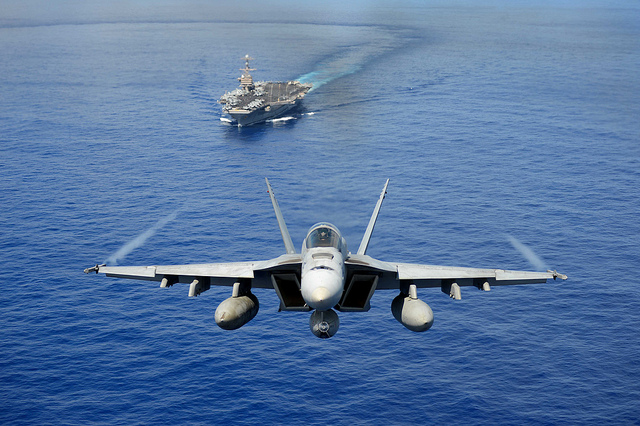
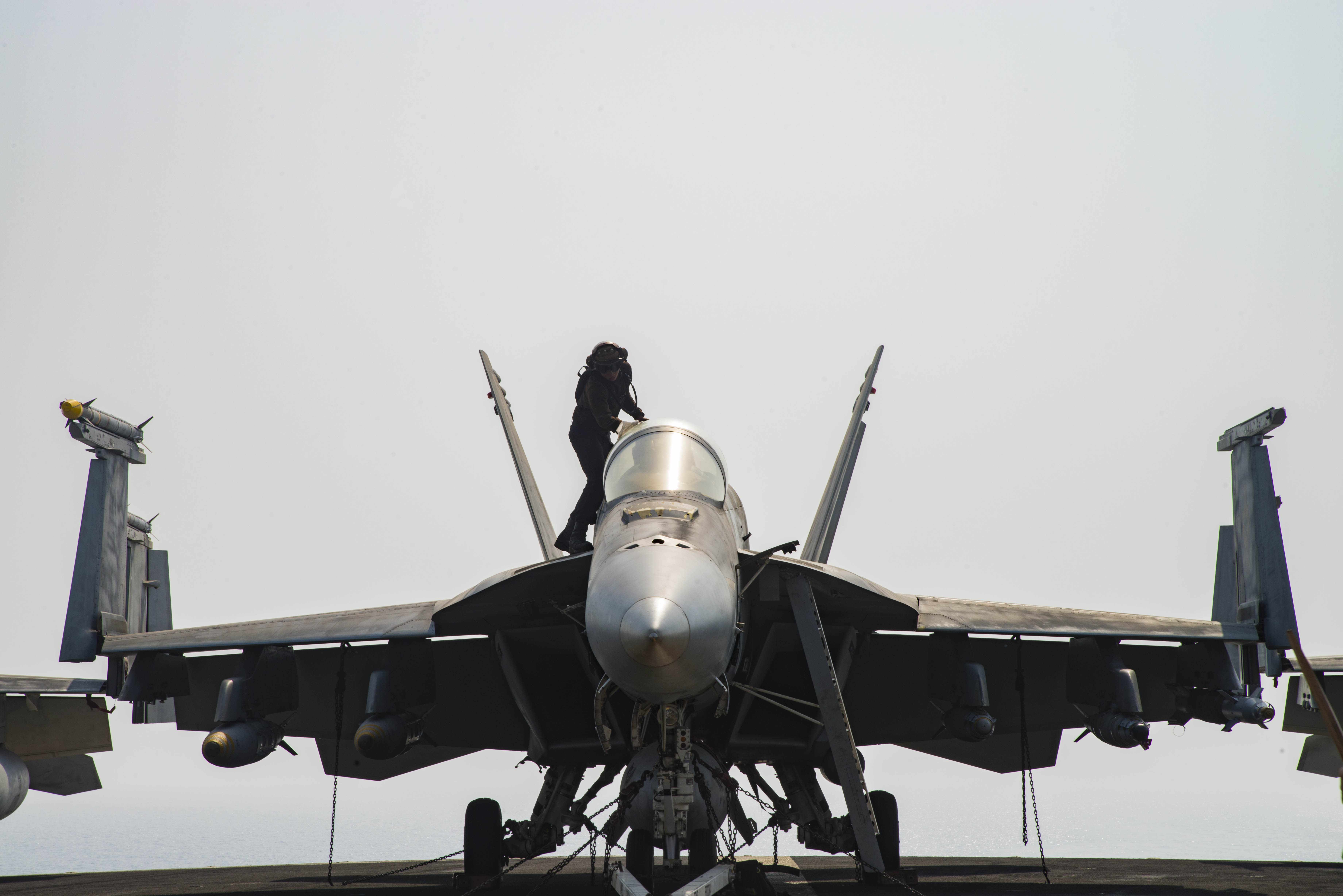
Airspeed: Mach 1.8+.
Ceiling: 50,000+ feet.
Range: Combat: 1,275 nautical miles (2,346 kilometers), clean plus two AIM-9s
SUKHOI 22 (Su-22)
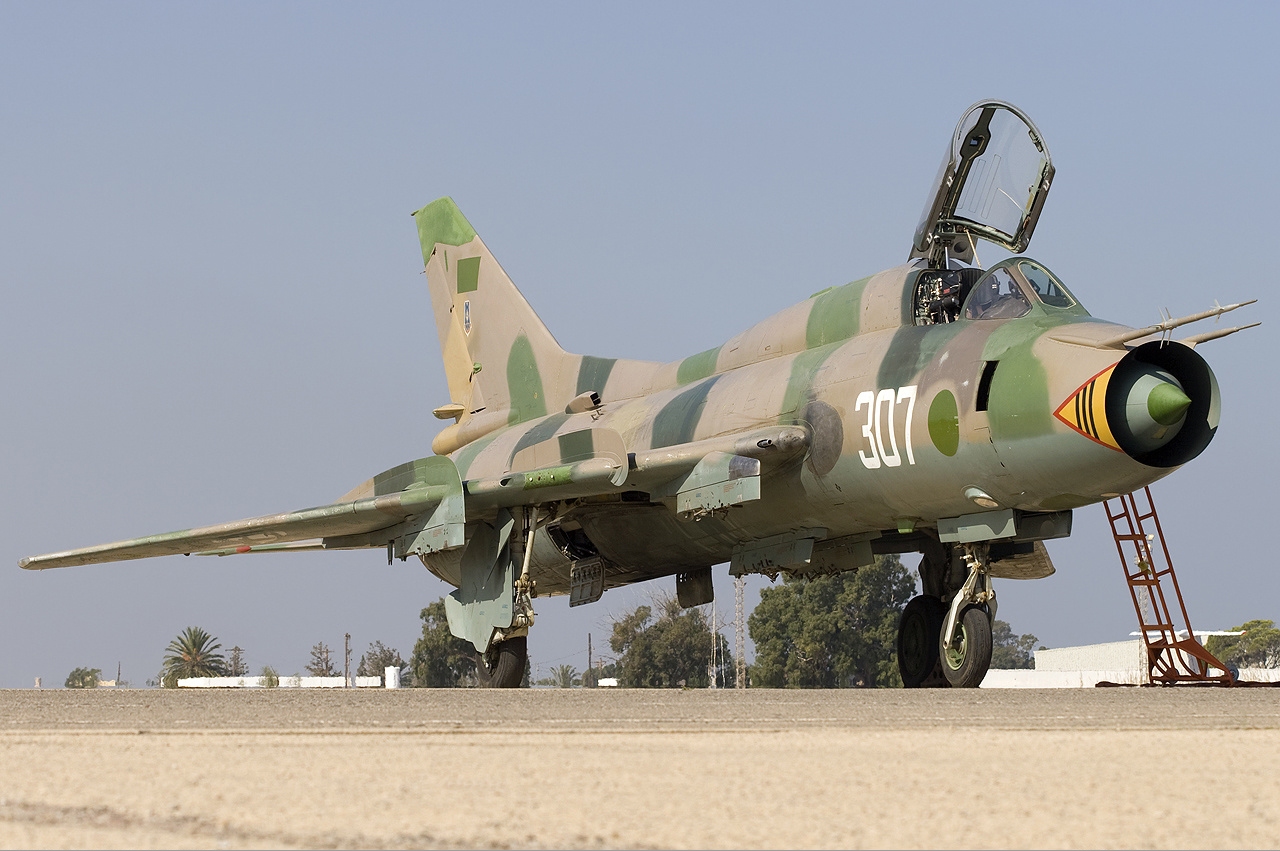
The Su-22 is also the updated version of an older fighter, the Su-17, first fielded in 1969, then upgraded by a joint Russian/French venture. It was designed to serve as a medium range ground attack aircraft, but was upgraded to include more air-to-air equipment, such as rockets, guided missiles, and extensive updates on its chaff and flare systems.
The Su-22 has seen export from its home country in Russia to nations throughout Europe, Asia and the Middle East, serving in national militaries for countries ranging from Poland to Vietnam. It has proven reliable, as it was designed to operate with minimal maintenance support in even the most challenging of environments, though it is important to note that the Su-22 is considered lacking in all-weather operations capabilities when compared to a jet like the F/A-18 Super Hornet.
Despite the air frame being similar in age to the F/A-18, the latest update to the Sukhoi platform came more than ten years before the Hornet’s upgrade to Super Hornet Status.
Length: 26ft 5in
Height: 16ft 5in
Wingspan: 44ft 10in
Weight: Maximum Take Off Gross Weight is 41,887 lbs
Airspeed: Mach 1.74
Ceiling: 59,000+ feet.
Range: Combat: 1,242 miles
Analysis
When looking at these numbers, the F/A-18 Super Hornet seems to have a clear advantage in terms of payload capacity, but otherwise, the two jets seem fairly evenly matched. That analysis, however, can be extremely misleading. These two aircraft have similar ranges, top speeds, and the F/A-18 even falls short of the Su-22’S operational ceiling, but the nuances of their differences can best be summed up by comparing your average two-hundred-pound man to a UFC fighter. Their dimensions may be similar, but what they can do in a fight is what really matters. That requires an understanding of weapon systems and training – and American combat pilots are among the most highly trained in the world.
The Super Hornet comes equipped with the latest in weapons technology, and a significantly more advanced targeting system than the Syrian Air Force could muster. Although, it’s worth noting that when the U.S. Navy F/A-18E Super Hornet first engaged the Su-22, it fired one of America’s most advanced air-to-air missiles ever conceived, the AIM-9X Sidewinder, and promptly missed.
The Su-22 deployed flares, which successfully confused the AIM-9X Sidewinder, which was designed not to be tricked by the infrared signature of such defenses. The Navy pilot in the Super Hornet, however, had a few other tricks up his sleeve, firing the radar-targeting AMRAAM missile next, which successfully destroyed the enemy jet.
So why did our top of the line anti-aircraft missile miss a Cold War era Soviet jet employed by the Syrian Air Force? Potentially, it was because the new missile was designed specifically not to be fooled by our own, top of the line, anti-missile flares. After designing this missile against the best our own aircraft had to offer, the missile was also tested against a recovered flare dispenser off of a Su-25 shot down over Afghanistan in the 1980s. In that test, the AIM-9X also failed to reach its target.
According to John Manclark, the commander of the U.S. Air Force’s now defunct 4477th Test & Evaluation Squadron, flares built for the Sukhoi aircraft, specifically between 1985 and 1987 were “dirty, and none of them looked the same.”
In effect, the crappy, old flares employed on some of these old jets are just crappy and old enough to fool our top of the line tech, honed specifically to engage other advanced fighters.
Nonetheless, the result of the engagement was the same: victory for the Super Hornet and confirmation that our fighters still have what it takes to engage with opposing airborne forces. Nonetheless, the Su-22 was never designed to be an effective dog fighter, and although its old gear managed to trick some of our latest and greatest tech, it truly only delayed the inevitable.
So, to summarize the comparison – the Super Hornet could and should win every engagement against the ground-attack oriented Su-22, just as it did, but the failure of its advanced AIM-9X missile platform still offers an important opportunity to learn from, and adjust our strategy in future engagements.
After all, chances seem likely that this won’t be the last time fighters adorned with Old Glory will find themselves engaging jets under the name Sukhoi – but in the future, it may be the extremely capable Su-35 they’re forced to contend with, and if that’s ever the case, let’s hope the AIM-9Xs can find their mark.
Feature image courtesy of the Department of Defense








COMMENTS