

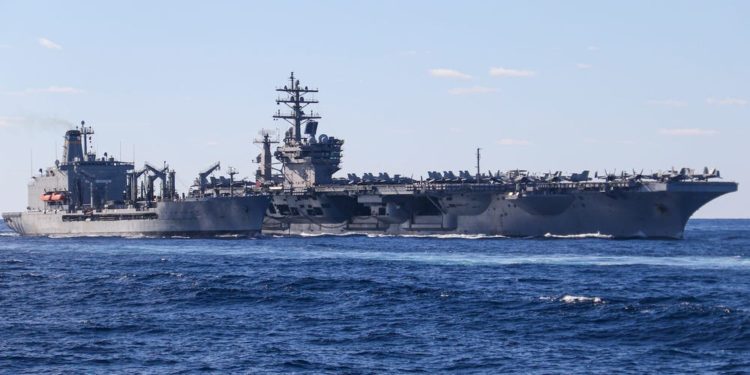
Logistical and operational demands mean the Navy is “metering” distribution, according to Rear Adm. Douglas Beal, vice commander of U.S. Fleet Forces Command.
“When it comes to getting the vaccine to the ships, because of storage reasons and handling reasons, we went ahead and selected the Moderna vaccine for the majority of the strike group,” said Beal, who has the led vaccination effort.
One ship was able to get the first dose of the Pfizer vaccine “a few weeks back,” Beal said. “So we’ll end up getting them their second dose when they pull into port, and then first doses of Moderna for every other ship in the strike group.”
Navy directives bar aviators from flying for 72 hours after receiving the vaccine, “so we’re going to make sure that we get those folks metered in the correct way so that the ships remain operationally effective,” Beal said. “Mission assurance is the main reason we did this, so we’re going to [have] to meter the vaccine accordingly.”
“I’m very excited that they’re going to get to go downrange and at least achieve some sense of normalcy,” Beal added. “This is a leading indicator, I think, of what’s in store for the country soon.”
“We’re Probably Going to Make it Mandatory”
The tight confines of Navy warships are conducive to the coronavirus’s transmission. The aircraft carrier USS Theodore Roosevelt spent more than 10 weeks sidelined in Guam in spring 2020 due to a breakout in which more than 1,000 of its sailors contracted COVID-19.
Lewis told Insider that before the Eisenhower sailed for training, the Navy went through lessons learned from the experience of ships on the West Coast that had dealt with breakouts, as well as past experiences on East Coast-based ships.
Some measures, such as adjustments to meal times and work schedules, will remain, and sailors won’t leave the ships on future port calls, Lewis said.
“We have to be very careful about maintaining what we call a bubble, where we don’t have a vector getting introduced into the the strike group ships,” Lewis told reporters.
“We’re not going to relax any of the practices that we’ve used to this point, [not] anytime soon anyway,” Lewis said. “A lot of this stuff we should have been doing anyway.”
Lewis wouldn’t say where the strike group was going, though it spent much of it last deployment in the Middle East. But the commanders located where the ships are headed are “fully committed” to getting sailors their second vaccine, which will have to be administered in port.
Sailors won’t be fully immunized until two weeks after receiving the second dose, and sailors who’ve already contracted and recovered from the illness have some level of immunity.
“We don’t know a lot going forward in regards to what this means for changes [to health restrictions],” said Capt. Laurence Kuhn, Naval Air Force Atlantic medical officer. “We have folks that are embedded with the CDC from the Navy that are researching this and looking to inform the senior leadership… so that we can look forward to making appropriate changes.”
Kuhn said steps were also being taken to address the mental strain and effect on morale, including events to promote resiliency and increases in medical staff, among them mental-health professionals.
Vaccines will remain voluntary for military personnel as long as the Food and Drug Administration has an emergency-use authorization in place. But officers on Friday touted the efficacy of the vaccines and said they were working to dispel any unfounded concerns.
“In terms of education, this is an all-hands effort,” Beal said.
“On a personal level, I could not wait to get a vaccination because… the experts have proven themselves to know their business,” Lewis said. “I can tell you we’re probably going to make it mandatory as soon as we can, just like we do with the flu vaccine.”
This report was written by Christopher Woody and originally published on Insider.








COMMENTS