

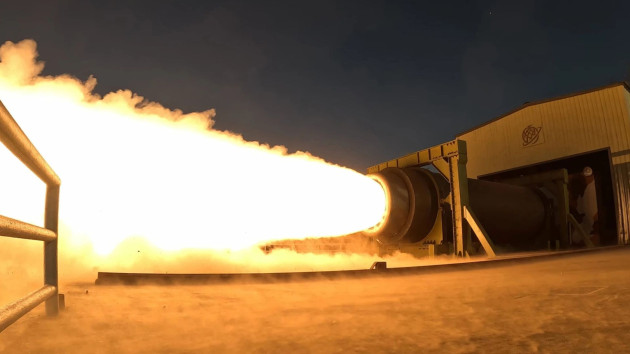
Yet raw thrust figures alone do not define capability. Military tractors, detonators, guidance systems, and re‑entry vehicles must all work in concert for an effective ICBM.
Experts caution that Pyongyang still faces hard physics in ensuring warheads survive the searing heat and forces of re‑entry. Without that, a missile that reaches the US mainland might not deliver a nuclear payload intact.
Past North Korean claims, notably a 2024 multi‑warhead missile test, drew skepticism from Seoul analysts who suggested the announcement masked a failed or incomplete launch
Geopolitical and Technical Dimensions
There is also a geopolitical vector to consider. Over the past year, ties between Pyongyang and Moscow have strengthened, with multiple reports pointing to deeper technical exchanges.
Russian support could tilt the balance on complex technologies such as high-performance solid-fuel engines or multiple independently targetable re-entry vehicles (MIRVs). If Moscow’s missile expertise is indeed being shared, it complicates assumptions about how quickly North Korea can iterate its designs.
That’s where the strategic calculus becomes murky.
A truly operational solid-fuel ICBM with robust guidance and survivable re-entry would change regional defense equations. US and allied missile defenses, centered on layered radar and interceptor networks, are optimized to engage single-warhead threats.
A push toward engines with higher thrust, lighter materials, and MIRV capability suggests Pyongyang is thinking not just about range but about saturation and penetration. The ability to overwhelm or evade defenses.
Uncertainty as Strategy
But North Korea’s track record tempers that concern with caution. The hermit state often announces developmental breakthroughs that are either premature or not followed by demonstrable operational deployment. The engine claimed today may be real; the strategic integration of that technology into a viable long-range missile system may be years away.
Defenders in Seoul and Washington are watching for a flight test that would confirm performance under real conditions — not a static ground firing.
Until then, the line between propaganda and progress remains thin.
BREAKING — 🇰🇵 North Korea tested a new large solid-fuel rocket motor nozzle made with carbon-fiber composite material
Kim Jong Un personally observed the ground test. pic.twitter.com/YvkpDElcDS
— Strategic Affairs News (@PabanSingh82441) March 29, 2026
And yet, even with uncertainty, the trend is unmistakable. Pyongyang is relentlessly focused on shrinking its technological gaps and expanding its strategic footprint. Kim’s recent parliamentary speech, delivered amid global tensions tied to conflicts in Ukraine and the Middle East, underscored North Korea’s view of itself as a permanent nuclear power, brazenly accusing the United States of “aggression” while doubling down on missile advancement.
North Korea’s announcement could be a message wrapped in missile talk, a psychological signal meant to influence diplomatic leverage.
But while the rhetoric plays out, engineers in Pyongyang continue to build. And in weapons development, words eventually give way to hardware. When that balance shifts from claims to confirmed capability, the strategic stakes will change — not incrementally, but perhaps in a single successful launch.
North Korea has now test-fired cruise missiles from its newest destroyer twice in one week — and Kim Jong Un ordered the second launch remotely, watching via video link as six missiles flew nearly 169 minutes before striking island targets. @ColinZwirko: https://t.co/MSS8JdxaWf pic.twitter.com/h0FM9qfjuX
— NK NEWS (@nknewsorg) March 11, 2026
In this contest of deterrence and deception, the absence of clarity is itself a form of ambiguity with real consequences.
North Korea’s fence-sitting between demonstration and deployment forces its adversaries to prepare as if the worst is possible, even when proof remains elusive. That makes every engine test more than news. It becomes a tactical layer in a broader strategic game where uncertainty is a tool and escalation can come without warning.








COMMENTS