

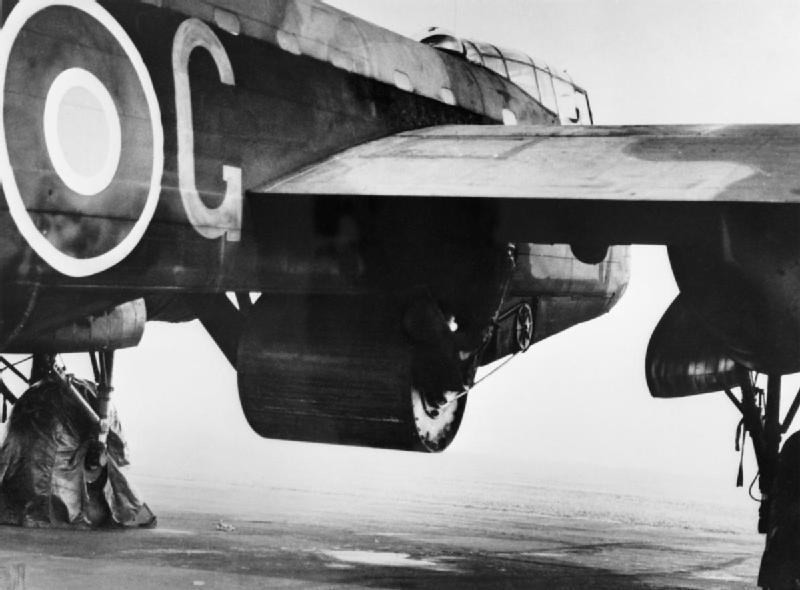
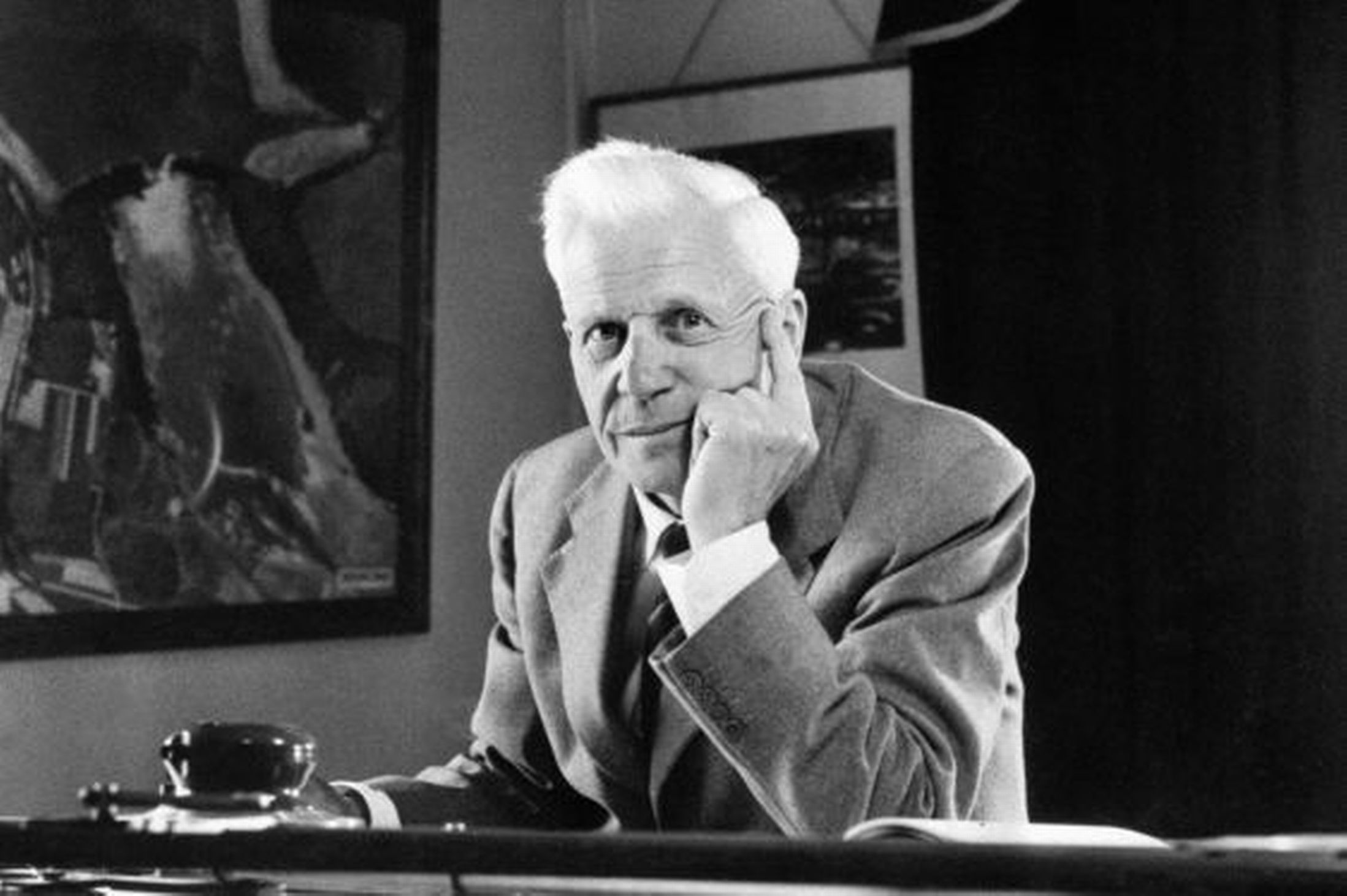
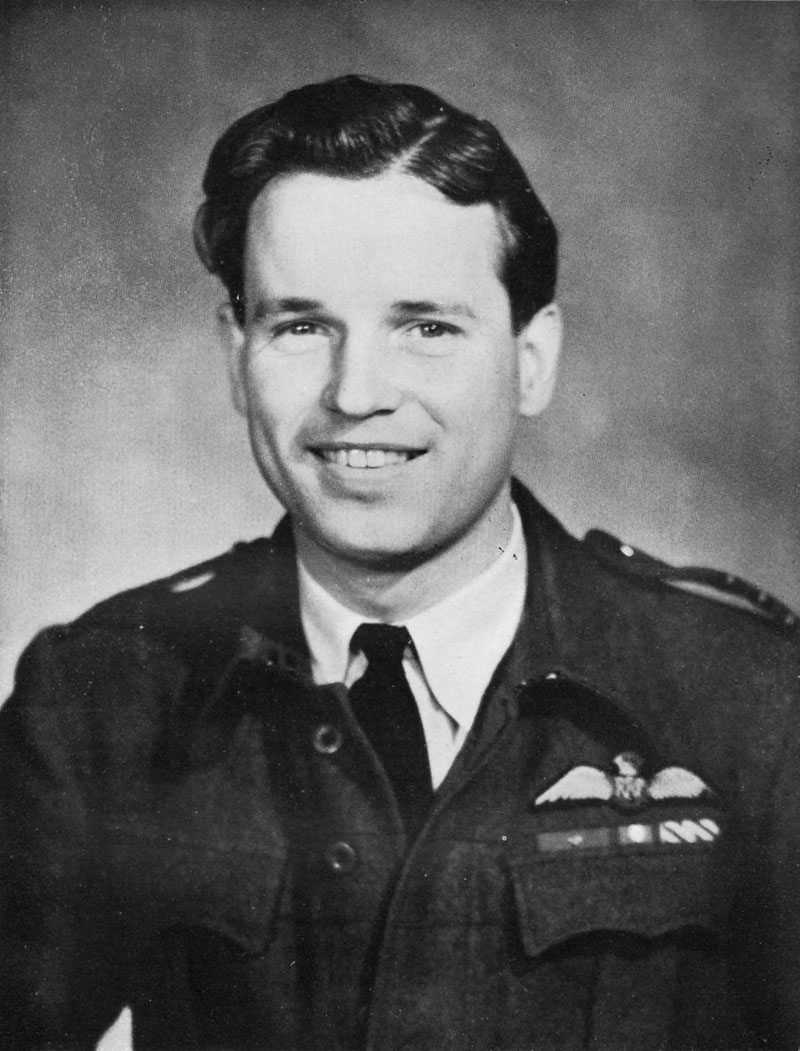
Led by a true pilot’s pilot, Wing Commander Guy Gibson, 617 Squadron consisted of 30 Avro Lancaster four-engine heavy bombers, specially modified with an appendage to carry the bomb under the fuselage. A Ford V8 engine, carried inside the bomber, provided the power to spin the bomb to over 500 rpm prior to release.
Gibson and his men soon set out practicing against various dams in the British countryside. They roared in at full throttle and at low level, becoming comfortable with handling the big plane at such speeds and altitudes. During the practice runs, though, a vexing problem emerged that stumped the crews: it was difficult to know the altitude and distance to release the bomb to ensure it hit the dam at the right speed. They found their drops often caused dummy bombs to run out of steam because they were released too far out, or that the bombs skipped over the dam’s edge due to being released too close.
They set about coming up with answers as unorthodox as the bomb itself.
To determine the release point, a V-shaped device with prongs on the end that lined up with twin towers on each dam was devised and later replaced for the actual raid by other devices performing a similar function. This guaranteed that the bombardier would know the sweet spot of the bomb release point.
For the proper altitude, two spotlights were mounted, one in the nose and one in the fuselage, which converged when the ideal altitude of 60 feet was reached.
These new methods were tried in practice and worked wonders, allowing consistent hits and reassuring Wallis, who often attended squadron briefings, that success was possible.
On May 13, with the real bombs delivered to the squadron, Wallis and Gibson briefed flight leaders about the targets for which they were training.
The plan involved flying three formations. The first, with nine aircraft led by Gibson, would attack the Mohne dam, the largest of all the targets, and also the Eder. The second, consisting of five aircraft, would attack the Sorpe. The third formation with the remaining aircraft would hit any of the three large dams if necessary, or focus on the smaller dams named Ennepe, Lister and Diemal.
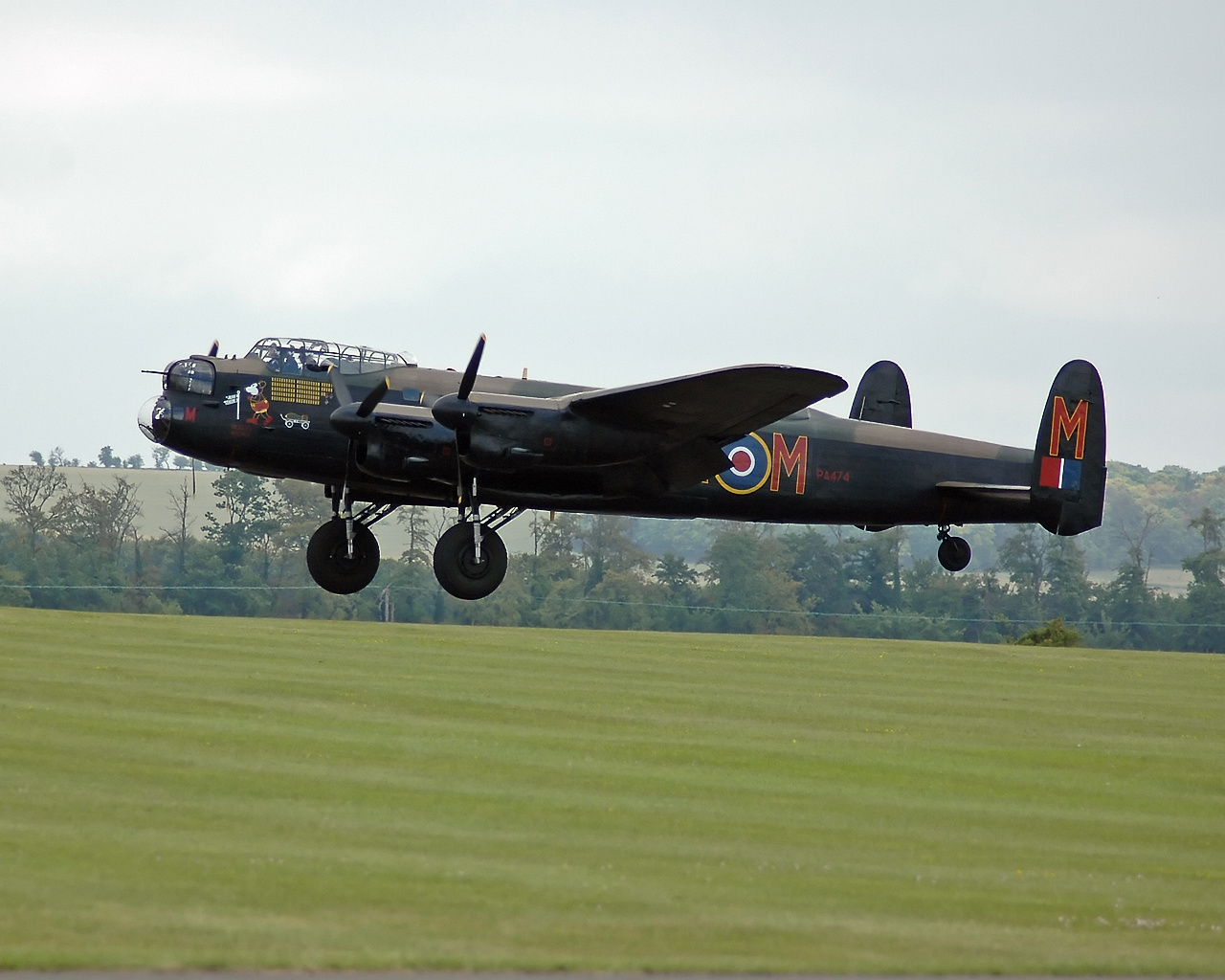
Two days later, the bombs, each carrying 6,000 pounds of explosive and looking like oversized oil barrels, were affixed to the Lancasters as the crews went through final preparations. For Guy Gibson, the day was somber as he had to bury his beloved black Labrador retriever, who also served as the squadron mascot. Somehow, he buried his emotions as he and the others climbed into their Lancasters that evening. A spurt of smoke from the planes’ Rolls-Royce engines turning over signified the flight line coming to life for a mission that Wallis hoped would change the course of the war.
Formation 2 took off first at 8:28 P.M., flying a longer northern route than Formation 1, which began take-off at 8:39 P.M. in groups of three, leaving in ten-minute intervals. The reserve formation stayed behind and left 9 minutes after midnight on the 17th.
Flying over the ocean at 100 feet to avoid radar, the planes of Formation 2 ran into trouble just after crossing the Dutch coast, when four of the five bombers were damaged or shot down by flak, leaving one aircraft to press on.
Formation 1 also lost a plane after crossing into Germany, when it hit power cables, causing it to slam into a field. Regardless, the formation, spooked somewhat, pressed on at low level and soon began following the moonlit river toward the target.
The Ford V8 engines began winding up the bombs as Gibson raced in, steadying at 60 feet when the two light beams on his plane converged and the dark outlines of the Mohne grew in the windscreen. A quick flip of a switch and the bomb fell free as tracers and spotlights reached out to him.
The bomb skipped over the anti-swimmer nets stretching the breadth of the dam and slammed into its side. Because of its backspin, it hugged the structure as it descended to 30 feet and detonated, shooting a column of water hundreds of feet high.
The dam held.
Another bomber came in, peppered by fire, as its nose gunner blazed away, trying to suppress the multitudes of flashes ripping the plane apart. A wing caught fire and the plane sped over the dam and veered into a forest, exploding in the trees.
Gibson flew near the dam again, trying to draw fire as more planes sped in. More geysers of water shot skyward from hits, until the last bomb from the last aircraft breached the sides and thousands of tons of water cascaded from the collapsing wall. An artificial river with a tsunami-like like surge began to sweep over the valley.
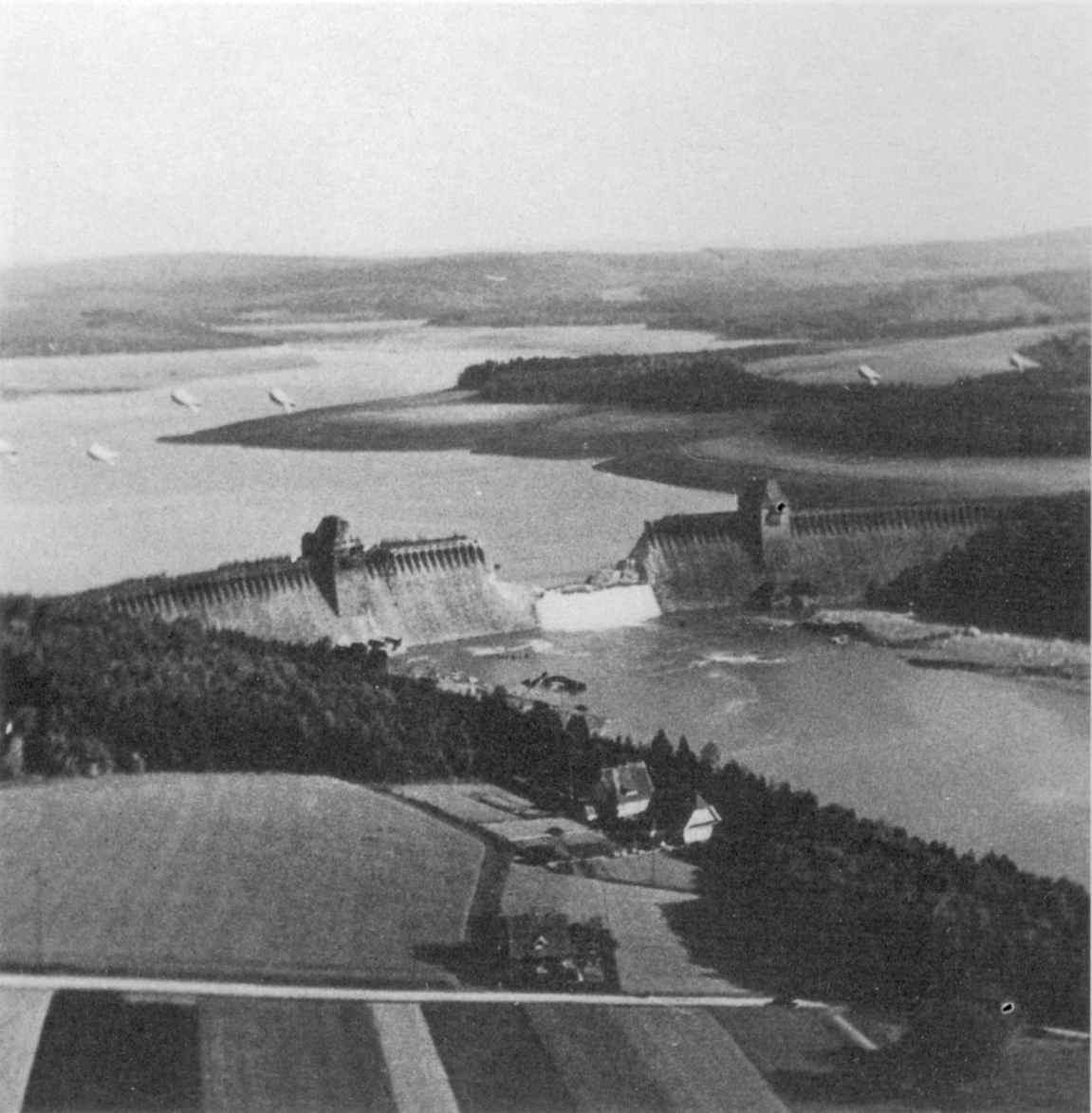
The codeword for success was sent, and Gibson and his men sped away into the night, on the lookout for any sign of night fighters tracking them.
At the Eder damn, British attackers found the target undefended but the terrain problematic for successful runs, with one aircraft making six approaches before releasing. Another aircraft’s bomb exploded on the rim of the dam and severely damaged the plane, before a third plane’s release successfully breached the dam. Water spurted forth and began swallowing up the countryside.
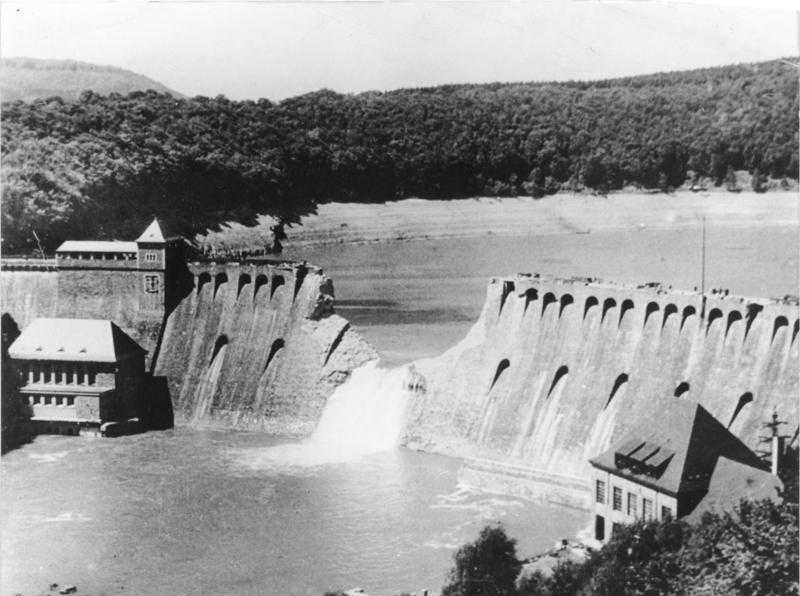
Sorpe dam came under attack, but because the bomber crews used the length of the dam instead of a frontal approach, they did not spin their bombs. After several unsuccessful runs through anti-aircraft fire, their attacks finally bore fruit when the top-most portion of the structure breached, though it didn’t collapse like the Mohne or Eder.
3rd formation planes arrived later over the Sorpe, but fog proved too dense and secondary dams were targeted, with resulting attacks against the Lister and Ennepe coming up short before the last Lancaster winged off into the night.
Anxious minds, among them Barnes Wallis, waited in the darkness for the approaching planes. The first set down at 3:11 A.M., with continuous arrivals until the last at 6:15 A.M. It was a bunch of weary crews that stepped from their planes as estimates of their casualties began. In all, of the 19 aircraft sent, 8 were missing, along with 56 men.
Upon hearing this news, Wallis was shocked. It took Gibson to console him, saying “We all knew when we took off there was a chance we wouldn’t come back. It was a chance you took on all operations.”
Back in Germany, villages disappeared, bridges were swept away, and all hydroelectric power in the Ruhr was cut as the confluence of water redefined the landscape. The attack surprised the Germans, who began working round the clock even before the tides calmed.
Within a few months they managed to get the dams functional again, but not before seeing their coal production fall by 400,000 tons in May. Thousands of laborers were shifted to repair the damage. Hopes for a war-changing mission were dashed, however, as the German recovery was quicker than expected, and weapons flowed from the Ruhr before summer was over. In all, it sized up to be a minor British victory.
Victory or not, something unusual happened after word of the attacks reached the British public. Papers proclaimed the daring mission, and soon its participants were courted as heroes by a population longing for the first real good news of 1943. The aircrews were invited to Buckingham Palace and personally decorated by King George, only to return and fly more missions right up to the end of the war, while the squadron itself, now called ‘The Dam Busters,’ was destined to live on beyond the conflict to where today it finds itself waiting to transition to the F-35 Joint Strike Fighter.
Quite a legacy.








COMMENTS