

What the Bombs Achieved
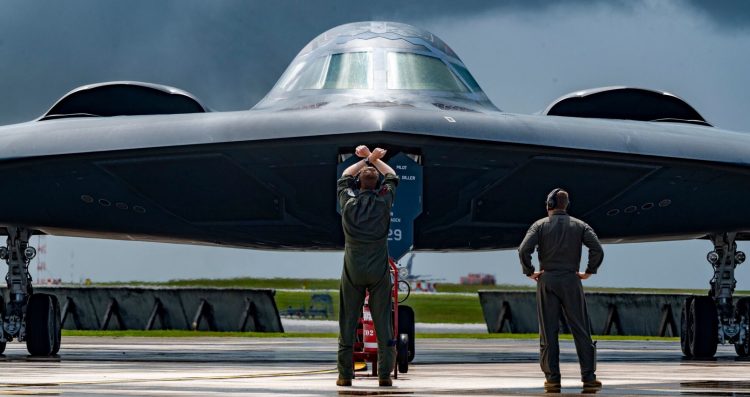
Early bomb damage assessments suggest catastrophic disruption to Iran’s nuclear facilities. Satellite imagery shows Fordow’s entrances collapsed, the surrounding rock blistered by precision strikes. What lies beneath that collapsed stone is anyone’s guess—but experts estimate the cascade halls were either destroyed or rendered inaccessible. At Natanz, key surface-level installations were obliterated, while deeper structures were severely damaged. Isfahan’s grid and surrounding support infrastructure were hit hard, though its deeper nodes may have survived the initial strike.
Notably, no radiation spikes were recorded—suggesting Iran removed fissile materials ahead of time. Whether that was preparation or pure luck remains unclear.
Last week, I wrote about WC-135R “Constant Phoenix” aircraft taking off from its home in Nebraska. At least one was deployed to the Middle East amid the recent escalation involving Iran and Israel. The Air Force even released photos of the aircraft, confirming they operated out of Al Udeid Air Base in Qatar and Diego Garcia. The deployment was precautionary, and the results of their atmospheric monitoring missions have not been publicly disclosed.
General Dan Caine, speaking from CENTCOM, called the operation a “devastating blow to Iran’s weapons capability.” He wasn’t wrong.
🚨MUST WATCH: Dan “Razin” Caine just gave the most detailed description of last nights attack. It has been named “Operation Midnight Hammer.”
America completed something under the cover of darkness and NO ONE saw it coming.
There wasn’t a SINGLE shot fired at our men on the way… pic.twitter.com/ycZMpDN0IW
— Gunther Eagleman™ (@GuntherEagleman) June 22, 2025
The Next Moves on the Board
Iran’s relative silence in the immediate aftermath isn’t peace—it’s calculation. Tehran is likely weighing asymmetric options against US interests: cyber attacks, proxy strikes, oil tanker sabotage, maybe even political assassinations in the region. Retaliation is expected, though not guaranteed to be immediate. The regime has mastered the art of slow burn payback.
The broader Middle East braces for secondary shockwaves. Israeli defenses are on high alert. Gulf States quietly applaud behind mirrored glass. European leaders—left in the dark—scramble for statements of concern. China and Russia condemn, as expected, and begin leveraging the chaos for diplomatic capital.
Back home, Washington walks a tightrope. The administration claims it acted to prevent nuclear escalation. Critics scream about war powers, congressional oversight, and unilateral action. For now, the American public, still gun-shy from two decades in the desert and mountains, remains watchful but eerily quiet.
Oil markets hiccup. Defense stocks rise. Cable news foams at the mouth.
Putin was asked why he is not assisting Iran.
His response: “Israel today is almost a Russian-speaking country, two million people from the Soviet Union and Russia live there. We take that into account.” 👇 pic.twitter.com/bgzNqNUdES
— Dr. Eli David (@DrEliDavid) June 21, 2025
The Bigger Picture
This wasn’t merely a strike—it was a message carved into the crust of the earth. The U.S. reminded the world it still owns the long reach, the biggest stick, and when necessary, will swing with closed fists. The implications go beyond Iran. North Korea’s looking over its shoulder. Russia notes the precision. China watches the public response.
But the gamble is real. If this decapitation strike fails to permanently cripple Iran’s nuclear ambitions, then what? Another round in six months? A full-scale regional war? Or does the regime fall back, bruised and buried, and start digging again?
The U.S. may have avoided casualties this time, but the cost could still come—slowly, quietly, and from angles we haven’t yet seen.
🚨BREAKING: 🇰🇵🇮🇷💥🇺🇸🇮🇱 North Korea’s Kim Jong Un declares:
“Tehran does not stand alone.”
“The Korean People’s Army is on high alert .” pic.twitter.com/nHKgplVYJj— Defense Intelligence (@DI313_) June 17, 2025
Final Thoughts
We buried bombs in the mountains and came home untouched. The earth still trembles from the hit, but the political fault lines are shifting faster than satellites can track.
This was a tactical win, no doubt. But whether it buys long-term peace or triggers a wider war remains to be seen.
Either way, the clock is ticking louder now.








COMMENTS