


McCarley said, “Mike was standing beside me. I was wiping the blood and my crushed teeth from my mouth. Then Mike said, ‘We’ve got people in there. We have to get them out.’ I could smell the aviation fuel, there was blood everywhere, there were hydraulic fluids, the helicopter was broken by the severity of the crash and it was smoking. How it didn’t explode, I’ll never know. How that young Marine pilot landed, albeit a hard landing, I’ll never know.”
Then McCarley had one of those unique, inexplicable moments in wartime: In the middle of all the rubble, the smoke, the dazed confusion at the crash site, he looked to his right and observed First Sgt. Morris Adair standing in water with a smile on his face, holding his CAR-15.
After four days of intense combat that killed three Montagnard team members and wounded all 16 Green Berets—some more than once during fighting in the jungles of Laos—after barely escaping from the LZ on the last helicopter a few minutes earlier with hordes of communist North Vietnamese Army (NVA) soldiers rushing the aircraft, after having double engine failure and losing all power over the mountains of Laos, and after surviving a crash landing deep inside Laos, there was a smiling Adair standing in the water.
“That scene was unreal beyond description,” McCarley said. “Of all the times that I had been in Laos, I had never seen a scene like this: a body of water, a nice white sandy beach. It looked just like Hawaii. And there’s Adair standing in the water as though he hadn’t a care in the world.”
“To this day, I can’t explain what exactly happened that day,” Adair said. “I came out on my own, but I’ve been trying to figure out how ever since. When I came to my senses, I was standing in the water. Gene later told me I was standing there smiling. Can’t tell you why I was smiling. Maybe I was just happy to still be alive after getting my bell rung. We were batted around like BBs in that chopper when it crashed. At the time, I didn’t realize how much damage had been done to my nerves on the left side of my body—my head, neck, shoulder, arms, and hip.”
Back to reality
The brief reverie ended when Rose and McCarley headed back into the smoking helicopter. Mike helped to carry out SF 1st Lt. Pete Landon, who had only been in-country one week when Operation Tailwind launched. Landon, the platoon leader, had a bad gash on his head that Rose had to tend to quickly—there was a lot of blood flowing from the wound. McCarley gathered the intelligence materials B Company had collected. “That was the first thing I did: recover the intel documents, maps, currency, etc. that we had seized from that NVA base camp. No way were we going back to Kontum without them.”
After setting up a hasty perimeter at the rear of the broken Sikorsky helicopter, McCarley returned to help SFC Bernie Bright get untangled from wires and debris inside the aircraft. They exited the helicopter to strengthen the perimeter around the back side.
In the pilots’ compartment, Persky unstrapped Battey, who had a bad back compression stemming from the crash. “I kinda pulled Bill from the helicopter. He was mobile, but still stunned.”
When Persky set Battey down on the ground in front of the helicopter, he didn’t see any SF men on that side of the bird. “My infantryman tactics kicked in. We circled the wagons, set up a rough perimeter [in front of the Sea Stallion],” Persky said.
In the back of the helicopter, Rose, McCarley, and Mike Hagen helped the stunned troops to exit the broken bird. “Before I’d let any of the injured get off of the helicopter, I draped their weapons, or any weapon near them, around their neck so that when they set up in the perimeter, they’d be able to defend themselves,” said Rose. By that point in time, “We were strictly working on adrenaline,” he said.
“It’s funny how the mind works. On day three, I started to feel tired and felt the pain in my foot (from the hot metal shrapnel wound that cut through his jungle boot and into his foot on day one) when I saw the [Marine CH-53D] helicopter coming in to pick up our wounded. However, when that chopper got shot down, the adrenaline kicked in again. The same thing happened on day four: I started to feel tired, my foot started registering pain in my mind. Then we got shot down. Then, we were working on adrenaline, helping to get everyone off of the smoking bird.”
A-1 Skyraider pilot Lt. Tom Stump, who remained over the target area, said, “They went down hard. Real hard. I was amazed that the pilot found that boulder to land on and that people survived that crash.”
As soon as the A-1 Skyraider pilots determined there were survivors at the crash site in the canyon valley, “We set up a weave pattern, using four A-1s around that downed chopper,” said Air Force Lt. Col. Mel Swanson, the squadron leader of the Skyraiders based in Da Nang and Thailand. “Believe me, we stayed low and slow to figure out the best approach for the (rescue) chopper.”
Recouping, regrouping
As the remaining dazed and wounded Green Berets and their Montagnard counterparts from B Company gathered their collective wits, strengthened their perimeter at the rear of the CH-53D, and consolidated whatever ammo was left, Lt. Col. H. E. Sexton, the lead Marine Corps HML-367 Scarface Cobra pilot and unit commander, made radio contact with the backup Marine Corps HMH-463 CH-53D co-piloted by Lt. J. Tucker and Lt. R. Arnold and gave them a vector to the crash site.
Once again, time was working against the men on the ground.
“I forget how long it took from the time that we crashed until I received radio contact either from [Lt.] Col. Sexton or Covey (the forward air controller),” said McCarley. They told him that the back-up helicopter’s fuel levels were getting low and that, when he came into the LZ, we’d only have five minutes or less to get the hell out of there or we might not have enough aviation fuel to make it back to Dak To,” the launch and refueling site for SOG missions run out of CCC in Kontum.
After dodging Russian-assisted NVA anti-aircraft weapons, including ack-ack weapons that exploded in mid-air in the fashion of anti-aircraft weapons of World War II, and hundreds of enemy ground forces firing automatic weapons and rocket-propelled grenades at them, pilots in the first Scarface Cobras that lead the rescue helicopter toward the LZ were surprised to receive no enemy ground fire.
The heavy-lift Marine Sea Stallion followed closely behind the Scarface gunships. Given the heavy enemy ground fire throughout Operation Tailwind and to provide extra defensive firepower for the big helicopter, Capt. H. Cipolla was on the rear ramp with a M-60 machine gun, in addition to right door gunner SSG T. McBride, left door gunner Sgt. T. Winnicki, and crew chief Sgt. Smith.
Maggots help medics
“Even though we had our bells rung, when that chase ship (backup) landed, we didn’t waste time getting aboard it,” said Rose. “I remember Mike (Hagen), Gene, and First Sergeant (Adair) helping people up the ramp.”
Marine Pilot Persky knew that he had bitten through his lip upon impact, but he didn’t realize how severely damaged it was until he moved up the ramp of the CH-53D and one of the door gunners pointed out that his lower lip was merely hanging by a thin piece of skin. “He told me that I better hold on to my lip or I’d likely lose it…I do remember they changed my call sign afterwards to ‘Lip’.”
As the Sea Stallion lifted off with the wounded and extremely fatigued men of B Company, Rose made another surprising discovery: Maggots had helped to treat the two most seriously wounded team members, who had been carried since the command post was struck by an RPG round on day one. When that RPG hit, Rose had suffered serious wounds in two places, McCarley in several places, and two indigenous team members had been seriously incapacitated.
“The one thing that I never thought about or planned for,” said Rose, “was for the use of maggots, which in the end proved to be the most likely lifesaver for the two most critically wounded team members.” During those four days on the ground, Rose and the Montagnard medic trainee Koch were kept busy caring for the wounded, giving them extra fluids, morphine shots, and IVs. But, during those days, “Flies laid their eggs in the wounds of the most seriously injured and a few other Yards (Montagnards), and they hatched,” Rose said. “According to the doctors at the evacuation hospital, the maggots got to the necrotic flesh before infection could set in, and in fact did a better job debriding the wounds than a surgeon could do. Who would have thought of it?”
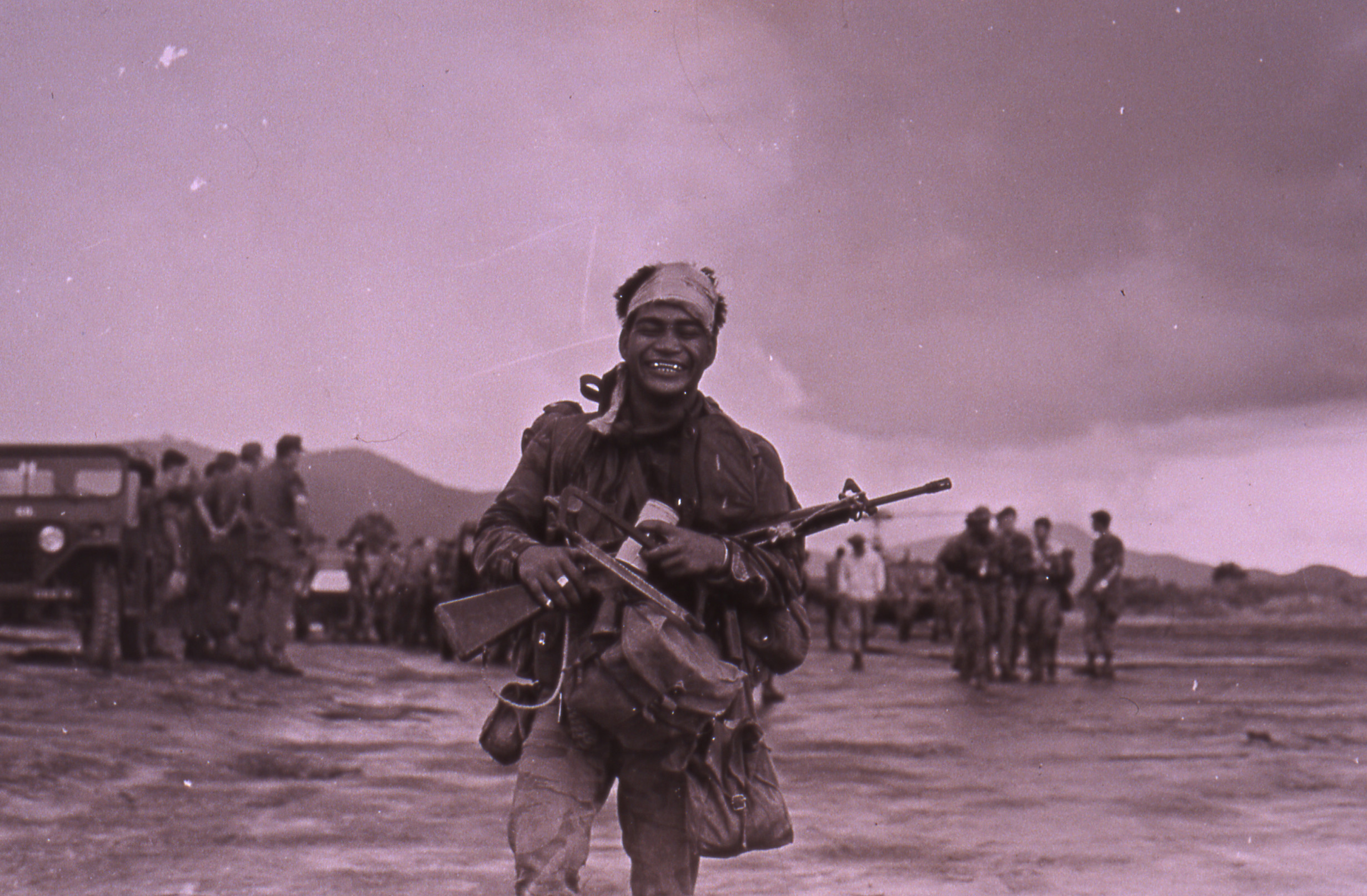
The CH-53D returned to Dak To to refuel while A-1 pilots Swanson and Stump destroyed the crashed CH-53D. The Sea Stallion then returned B Company to the LZ outside the top-secret SOG compound in Kontum, Command and Control Central (CCC). An S-2 officer approached McCarley and took his rucksack, which contained the enemy currency and some of the intelligence documents collected from the NVA command post in Laos.
“I never saw that rucksack nor the NVA currency again,” McCarley lamented. “Regardless, the mission was dubbed a success by the folks in Saigon and at SOG headquarters. We were told that thanks to our efforts, the CIA’s Operation Gauntlet was able to regain control of the strong point atop the Bolovens Plateau 10 days after we were extracted on the final helicopter. We had tied down an estimated regiment of NVA and Pathet Lao forces while destroying one major enemy ammo dump and an enemy base camp after we removed the enemy documents and maps.” A subsequent DoD report confirmed McCarley’s final analysis that Operation Tailwind was SOG’s deepest penetration into Laos during the eight-year secret war.
The final count: Three Montagnards were killed in action, 33 were listed as wounded in action. A total of 33 Purple Hearts were awarded to the 16 Green Berets who served on Operation Tailwind for wounds they received during the four-day mission. McCarley required nine months of dental repair and surgery for his crushed teeth. To this day, Rose can’t touch the thumb on his left hand with his little finger due to the serious nerve and muscle damage he received when wounded on day one. For more than two years, his wife pulled puss-coated shrapnel and bamboo shards from his body, stemming from the many times he was hit while on the ground. Adair still suffers from nerve damage to his neck, left shoulder, and left arm.
Postscript: Twenty-eight years later, CNN and AOL/TimeWarner broadcasted a “news program” that told a remarkably different story about Operation Tailwind, falsely describing the mission as intended to kill American defectors by using sarin nerve gas, an internationally banned chemical weapon. The facts on the ground remain that Operation Tailwind served as the most successful cross-border SOG mission of the war, resulting in extremely important intelligence discoveries, at huge cost to the enemy. The men of Operation Tailwind hold their heads high with justifiable pride in their heroic and remarkably successful service. These brave men fought to support the Constitution of the United States, which guaranteed CNN the right to broadcast anything not intentionally false, only to fall victim to a “news program” which, if not intentionally false, at minimum leads one to believe there is clearly no limit to stupidity.
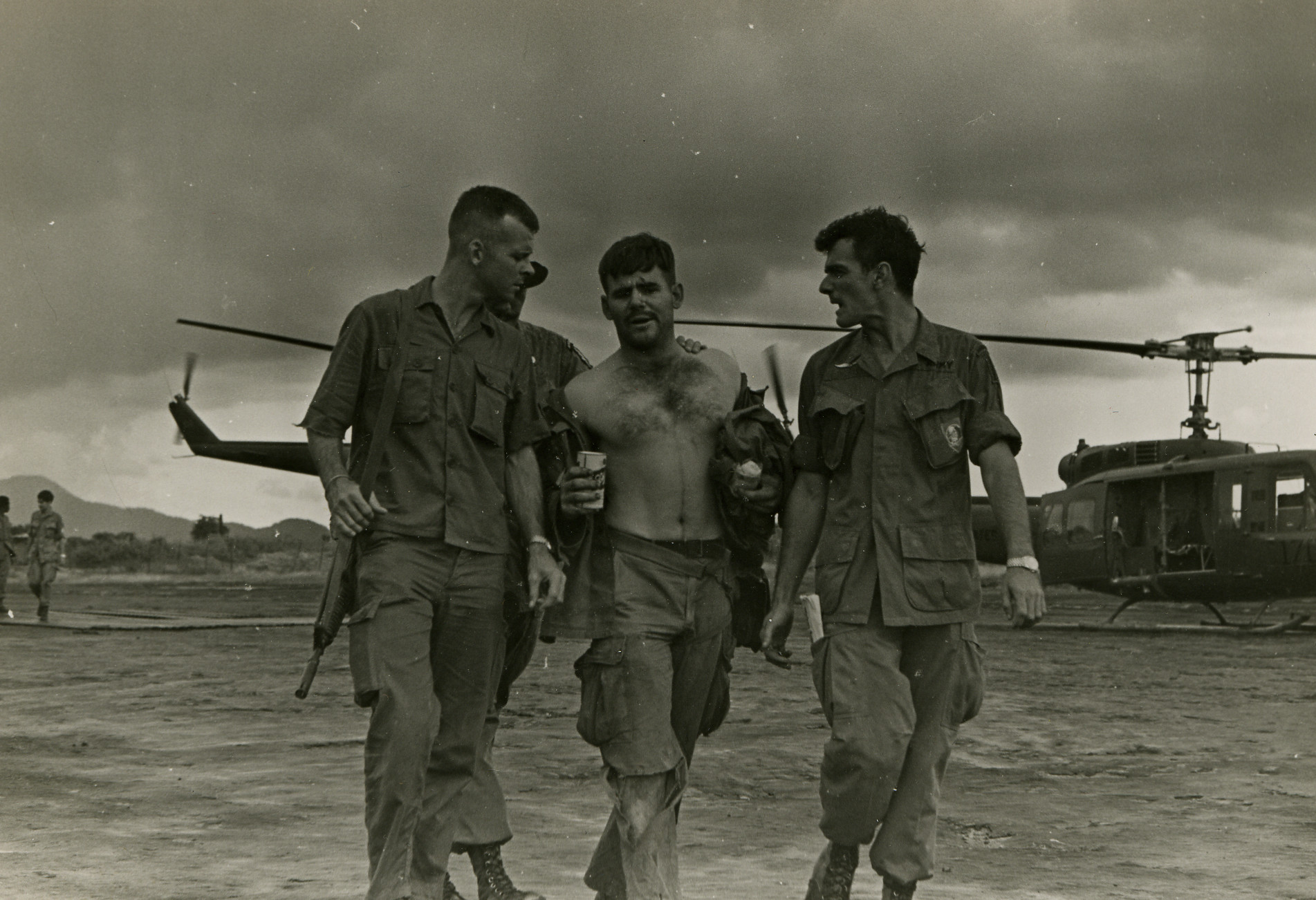
(Featured image: Moments after exiting the CH-53D helicopter in the background following the extraction from Laos on Operation Tailwind, Sp.5 Mike Schmidt, center, holds a portrait of North Vietnam’s communist leader Ho Chi Minh that was seized when B Company overran an enemy base camp deep in Laos. On the left is Sgt. Manuel Orozco, with SSG Donald Boudreau on the right. The SF trio is standing on the helipad at CCC Kontum. Photo courtesy of Gene McCarley)








COMMENTS