

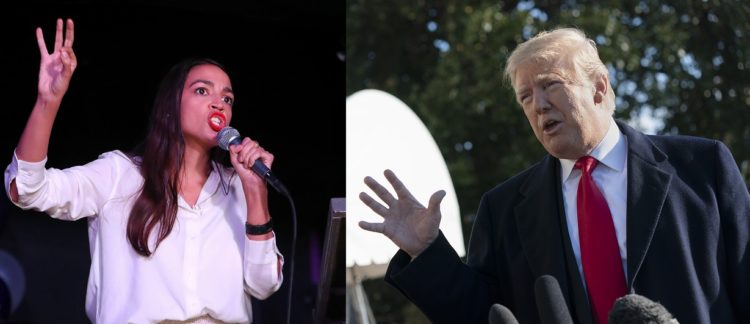
Ocasio-Cortez was dragged through the mud for that and a number of similar remarks by conservative pundits, but in many ways, the media has embraced Ocasio-Cortez while shunning Trump, and the question I keep finding myself asking is… why?
“There’s a lot of people more concerned about being precisely, factually, and semantically correct than about being morally right,” @AOC says in response to criticism that she’s made factual errors. https://t.co/sKf3sHl9F6 pic.twitter.com/xKc2eB7GEk
— 60 Minutes (@60Minutes) January 7, 2019
In that recent “60 Minutes” interview, Ocasio-Cortez was asked directly about how often she’s been caught distorting the truth. To many Democrats’ approval and my instant discomfort, she responded by simply mirroring the talking points of numerous Trump administration officials in recent years: truth isn’t as important as intent. Are her lies “not the same thing” as his because of the politics behind them? Or because she feels she’s fighting the good fight? Because chances are good that those on the other side of the aisle feel as though they’re the good guys, too.
“If people want to really blow up one figure here or one word there, I would argue that they’re missing the forest for the trees,” she said to Cooper. “I think that there’s a lot of people more concerned about being precisely, factually, and semantically correct than about being morally right.”
Like Fox News with Sanders, even the liberal-leaning CNN took issue with Ocasio-Cortez’s apparent comfort with lying as long as the ends justify the means. She effectively used the same argument as Sanders as well: Don’t get hung up on the data, pay attention to the fear I’m trying to evoke instead. This isn’t a practice that’s relegated to the camps of these two politicians; in fact, it’s becoming the modus operandi for sitting and aspiring lawmakers alike. Why bother fighting on the grounds of facts when you can win using nothing but emotion? Your supporters will embrace you no matter how inaccurate your claims, and your detractors will vilify you whether you tell the truth or not.
So here we find ourselves, an American people clamoring for a champion and, just like in 2016, we find ourselves choosing sides between two people with no real interest in addressing us like adults, telling us the truth, or engaging in productive discussion. Granted, one is the president and the other is a first-term congresswoman, but in terms of damaging the American political discourse, their official roles are less important than their perceptions among the American people. Pro-Trump righties and pro-Ocasio-Cortez lefties aren’t at all bothered by either of these politicians lying to the American people (whether intentionally or not)—they’re only mad about it when it comes from the opposing team.
Politics and hypocrisy have always been bedfellows, but as of late, it seems the American people have never been more eager to embrace dishonesty, not as an unfortunate byproduct of politics, but rather as the way good politics should work. When all you want is to win at any cost, it can be easy to lose sight of what you’re sacrificing for victory. Today, we’ve decided that we would rather be talked down to and misled by the politicians we think have the right intentions instead of demanding to be represented by leaders who see us as grown-ups worthy of being told the truth.
So here’s the crux of it (and I’m sure this will earn me some extremely colorful hate mail): If you can shrug away Trump’s lies but take to Twitter in a frenzy when Ocasio-Cortez says something untrue, you’re a hypocrite. If you’re one of the people who has justified Ocasio-Cortez’s misrepresentations of the facts as “necessary” in today’s political climate while shouting at the sky about Trump’s dishonesty, you’re a hypocrite, too.
Maybe you can use that as the common ground on which to build a more cooperative government, but I’d be willing to bet our newfound love affair with weaponized dishonesty doesn’t produce any positive results at all.








COMMENTS