When the call comes, whether it’s to quickly subdue a disorderly passenger or take that cold-bore headshot of a terrorist hijacking, a Federal Air Marshal (FAM) doesn’t get to warm up. You must deliver excellence on demand. The phrase “Performance on Demand” captures precisely this discipline: the ability to switch from standby to fully engaged, physically and mentally, without warning.
In elite military circles, such as the Green Berets, Rangers, Navy SEALs, and Air Force Pararescue, this ethos is woven into training, culture, and selection. The same principle doesn’t just apply to the airplane or the battlefield. This can easily fit into everyday life, such as in the boardroom or even in the grocery store. This article explores how “performance on demand” is built, tested, and internalized, and how anyone can borrow from the world of elite operators to raise their baseline.
What “Performance on Demand” Really Means
Performance On Demand isn’t just a slogan – it’s a way of life. It means having the ability to shift instantly from a state of rest to full engagement, moving from calm to peak performance in a heartbeat. It’s about being reliable under stress, maintaining clarity and control even as the pressure rises and the stakes grow higher. True performance on demand comes from integrated readiness, where physical strength, mental focus, emotional composure, and technical skill operate in harmony. And most importantly, it’s sustained through resilience: the capacity to perform, recover, and adapt repeatedly, no matter what challenges come next.
Many years ago, while enjoying a few too many adult beverages around a backyard bonfire, the conversation of performance on demand came up between me and my brother-in-law. By no means am I an endurance athlete but had great overall physical fitness. At the end of the discussion and a final bourbon, I entered my credit card number into a website and was officially entered in the 2013 Hartford Marathon. My simple goal – performing on demand without any long-distance training regimen – and hopefully not die from a heart attack along the way.
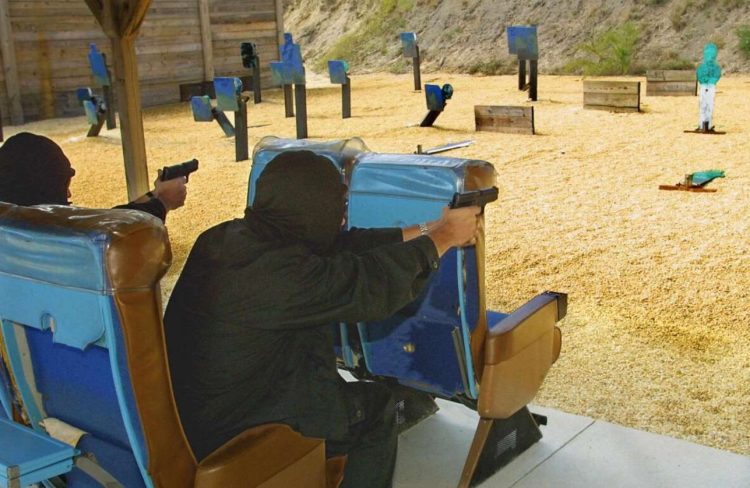
A Federal Air Marshal must often remain covert and unassuming until a threat emerges, then act decisively. One moment, you might be seated in coach; the next, you may need to neutralize a hijacker in the back row. There is no “ramp-up time.” The capacity to pivot instantly is Performance on Demand.
“Switch-On” Readiness
Our military’s elite serving in special operations units also epitomize the mantra of Performance on Demand. U.S. Army Rangers epitomize aggressive readiness. Their airfield seizure doctrine emphasizes rapid parachute infiltration followed by direct action after sitting idol on a C-17 aircraft waiting to be delivered to a foreign land. These units cultivate a mindset in which performance doesn’t escalate; it is held in a state of latent tension, ready for snap deployment.
Few cultures epitomize performance on demand better than the U.S. Navy SEALs. Their infamous Hell Week (where trainees endure extreme sleep deprivation, cold, physical taxation, and continuous pressure) is a crucible designed to break those who cannot switch on under chaos. SEALs often train with “stress inoculation” — exposing themselves repeatedly to high-pressure stimuli (gunfire, environmental extremes, sleep debt) so that in real operations, their baseline is higher, and their threshold for collapse is lower.
Across all these units, the doctrine is clear: your “on” must be stable, sharp, responsive – not oscillating between idle and panic.
From Battlefield to Boardroom: Performance on Demand in Civilian Life
The same principles that guide a Federal Air Marshal at 30,000 feet or an Army Ranger on the battlefield can be seamlessly applied to everyday life. In the corporate world, a leader facing a sudden financial crash or a public relations crisis must pivot instantly from routine operations to decisive, full-scale solutionist.
The quiet heroics of daily life – a caregiver managing a sudden emergency or a parent juggling competing crises – the ability to summon focus and control on demand is invaluable. All too often in the news we read or hear about a random act of violence or an active shooter situation. In the unlikelihood of being caught in those moments, there’s no time to ramp up or gather yourself; you must find your still point in chaos and channel calm under fire.
Build Your Own Performance on Demand Culture
We had a saying in the Federal Air Marshal Service, “Your Body Can’t Go Where Your Mind Hasn’t Been”. This boils down to mental preparation of the actions you’d take in any given situation. For example, if you can’t mentally imagine yourself taking certain actions in a crisis situation and don’t believe in your own capability to enact that action, you most likely won’t see it to fruition when that crisis event occurs.
Already have an account? Sign In
Two ways to continue to read this article.
Subscribe
$1.99
every 4 weeks
- Unlimited access to all articles
- Support independent journalism
- Ad-free reading experience
Subscribe Now
Recurring Monthly. Cancel Anytime.
Creating a culture or mindset of performance on demand starts with how you train. Don’t just rehearse when conditions are ideal – practice under pressure. Add time limits, distractions, and unexpected challenges so you learn to recover and perform even when your baseline falters. Overlearn the fundamentals of your craft, whether it’s analysis, communication, or negotiation, until they become automatic. When crisis hits, it’s your mastery of the basics that keeps you grounded.
Pair that with clear objectives and autonomy; when you understand the mission and what success looks like, you can adapt confidently when plans fall apart.
Always Ready, Always On
Performance on Demand is not reserved for elite warriors; it’s available to anyone who will cultivate it. A Federal Air Marshal must live it daily on a plane; a Green Beret or SEAL must embody it as identity; yet a CEO, firefighter, parent, or crisis manager can adopt the same mental framework.
Your “switch” should never feel like a warm-up; it should always feel like activation. That is the distinction between good and exceptional, ordinary and elite. In the sky or the boardroom, may your readiness never falter when the moment demands it.
……..and yes, I successfully completed my one and only marathon without any training in just over five hours.










COMMENTS