

Establishing rules for warfare began in 1864 during the first Geneva Convention. There it was proclaimed that all injured soldiers, regardless of nationality or allegiance, had the right to receive medical aid. Over the decades, the rules of war were altered to adapt to advancements in military technology and tactics.
In modern times, the basic principles of international humanitarian law revolve around protecting civilians and other noncombatants. This limits attack to “military objectives” and prohibits any deliberate harm on “civilian objects.”
Military objectives is an umbrella term that encompasses people and objects that make active contributions to military action (e.g., soldiers and their weapons). Civilian objects are defined as individuals and properties that do not fall under military objectives. Direct attacks toward civilian objects such as residential buildings, businesses, houses of worship, schools, hospitals, and other public buildings are prohibited unless they are being used to disguise military operations. All precautions to minimize civilian casualties must be undertaken in the event attacks affecting civilian objects cannot be avoided.
The use of indiscriminate weapons is also prohibited under the laws of warfare. These include anti-personnel landmines and cluster munitions, as these weapons cause incidental loss of civilian life or damage to civilian property. Firsthand videos of Russia using the latter in the war in Ukraine have been mounting over the internet and can be used in a violation case.
Can the ICC Make Russia Accountable, If Proven Guilty of War Crimes?
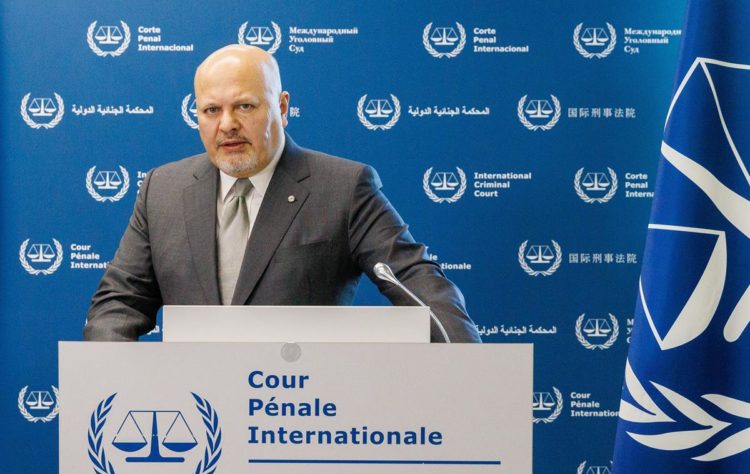
Unfortunately, even if the ICC found that Russia has committed war crimes, the procedures that can hold Moscow accountable remain unclear. The ICC notes that the Russian Federation is not part of the treaty that created the court. This brings the possibility of the country denying the ICC’s legal authority over them.
“If there is an indictment against any Russian officials, it is very unlikely that they would ever be arrested and taken to the Hague,” said Bellinger.
Marie Struthers of Amnesty International admits in a statement with TIME that international institutions do not have as much judicial power as some would like. “On Russia, traditionally, these international mechanisms have been rather weak,” she said. However, she remained hopeful that the scale of the Russian invasion and the international support for Ukraine might lead to a different result.
“Both of which leads me to say, not with 100% certainty, but that maybe we will come out of this particular horrible conflict with some mechanism that’s more robust in terms of holding the Russian military and perhaps even the President accountable.”
“We’ll have to see whether international institutions like the UN, the International Court of Justice, the International Criminal Court, and the General Assembly can rise to this challenge,” said Belligender, who also believes that today’s circumstances will lead to a different result for the international community.
The United Nations General Assembly last March 2 concluded its meetings with a historic vote in favor of reprimanding the Russian Federation for the invasion of Ukraine. The resolution, which is backed by 141 of 193 members of the UN, demanded Russia to withdraw its military forces from Ukrainian soil immediately.
While resolutions from the General Assembly are rather symbolic and are not legally binding, it does bring significant political pressure. With a landslide vote in a rare emergency assembly, Russia has become further isolated from the rest of the world.
“We’ll have to see whether international institutions like the UN, the International Court of Justice, the International Criminal Court, and the General Assembly can rise to this challenge,” said U.S. Secretary of State Antony Blinken to reporters after the vote.
If you’re just tuning into SOFREP for the first time, click here to enjoy a free 2-month trial membership and be kept up to date on developments in Ukraine and elsewhere around the globe.








COMMENTS