

The helicopter crew had to cut loose the ladder. Because the mountainous air was thin, a second chopper had a difficult time lifting off of the ridgeline, actually dragging the four team members through the jungle before clearing the target area. A third chopper lifted out the three remaining Bru team members, carrying no more men due to weather and thin air conditions resulting from the height of the mountains. All three helicopters received heavy enemy ground fire.
As darkness closed in, CWO2 George P. Berg returned to the LZ to pick up the three remaining Green Berets. Crew chief Spec. 4 Walter Demsey and door gunner Gary L. Johnson lowered three STABO extraction harness rigs attached to ropes that were more than 100 feet long, to the trio of soldiers on the ground. (STABO harness rigs were designed by Special Forces during the war for extraction from the jungle when no landing zones were available.)
They hooked into the STABO rigs as Doc Watson gave the chopper crew the signal to lift out of the LZ. Berg began moving off of the LZ when NVA gunfire slammed into the aircraft. Demsey and Johnson returned furious gunfire from their M-60 machine guns. Hernandez was lifted to approximately 30-40 feet off the ground when his STABO rig snagged on a tree branch, snapping the rope that held him. The Green Beret fell to the ground, knocked unconscious.
He didn’t hear NVA AAA fire slam into the Huey, literally knocking it out of the sky. The ill-fated helicopter traveled approximately 600 feet before it made an ugly U-turn and flipped over, crashing into the side of the mountain, bursting into flames and slamming Doc Watson and Baby Jesus Lloyd into the side of the cliff, killing them instantly.
Miraculously, Sammy Hernandez survived the fall. When he regained consciousness, he heard NVA soldiers and trackers searching for the men of RT Intruder. The stealthy jungle fighter moved silently into thick vegetation and hid throughout the night.
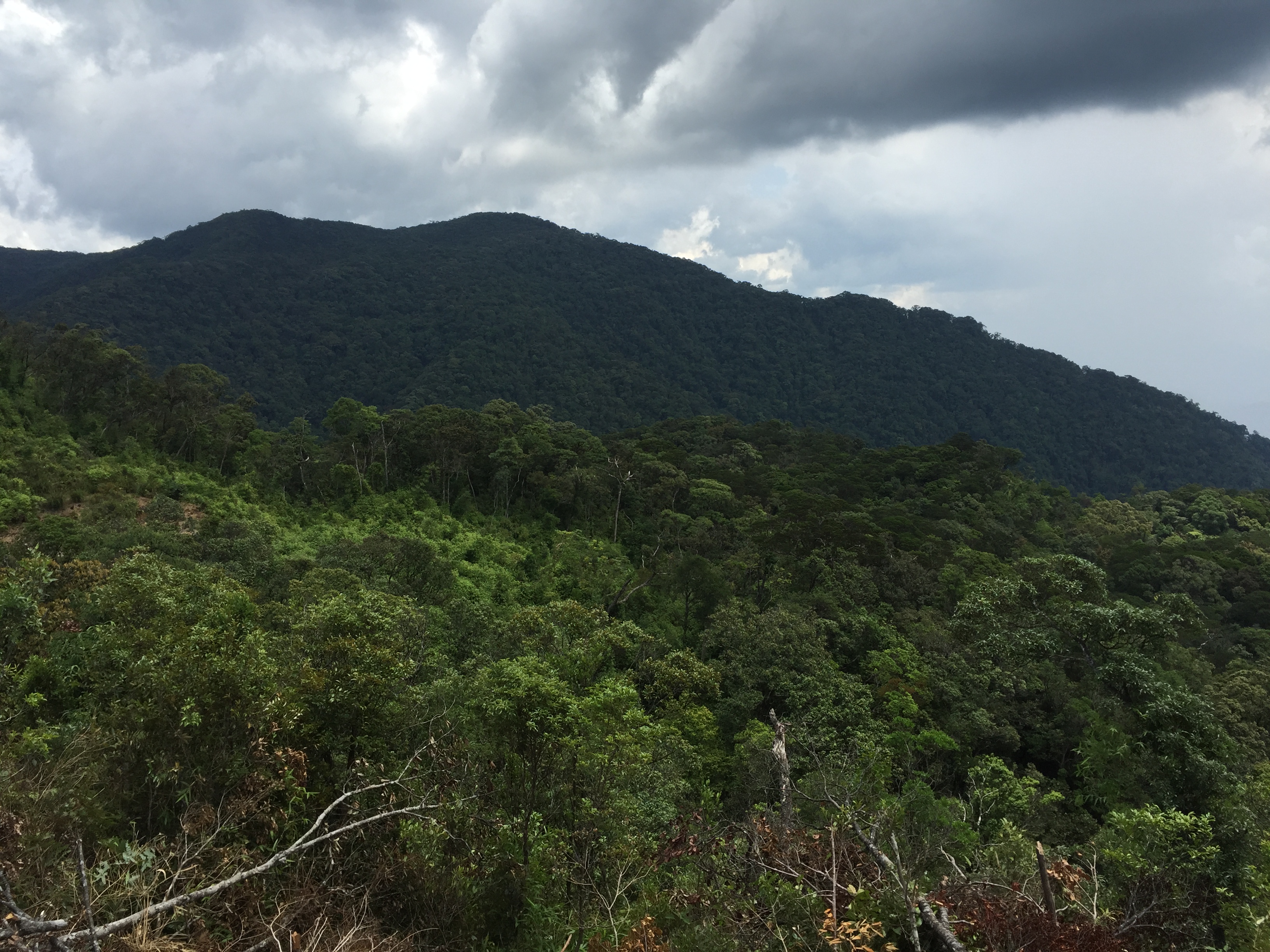
On February 19, RT Habu, led by one-zero SSG. Danzer, was inserted into the target to recover the dead bodies—presuming that Hernandez was KIA. Other Green Berets on that mission included Cliff Newman; SSG James Woodham, a medic; SFC. Jimmy Horton; Sgt. Lemuel McGlothren; and SFC. Charles Wesley, who had been lifted out of the target the previous day. Wesley volunteered for the mission and put one of the six body bags and extra ammo in his rucksack.
The expanded RT Habu was running a Bright Light mission—the most deadly of all SOG assignments because the NVA knew the Green Berets, in coordination with air assets from the Air Force, Marine Corps, and Army, would be willing to die in an effort to recover Americans killed in action. When recon teams ran Bright Light missions, they carried no food, minimal water, extra ammo, hand grenades, body bags, bandages, and emergency medical supplies.
Shortly after RT Habu was inserted, a chase helicopter with Green Beret Billy Waugh aboard spotted an American in an open area, flashing a bright-colored panel. It was Sammy Hernandez, who had crawled silently out of thicket to the open area and signaled the helicopter crew and Waugh. It picked up Hernandez and flew him back to Phu Bai.
Back at the target area, Covey—an O-2A, twin engine, light observation plane flown by Air Force 1st Lt. James (Woodstock) Hull with veteran recon man SFC. Jose Fernandez flying in the right seat as Covey rider—located the crash site and directed RT Habu toward it, which was no easy task due to the thick jungle vegetation. For Fernandez, this was his second flight as a Covey rider after running recon for several years. Several times Hull flew the O-2A low, near tree-top level, to spot the team so Fernandez could move it through the thick jungle to the crash site.
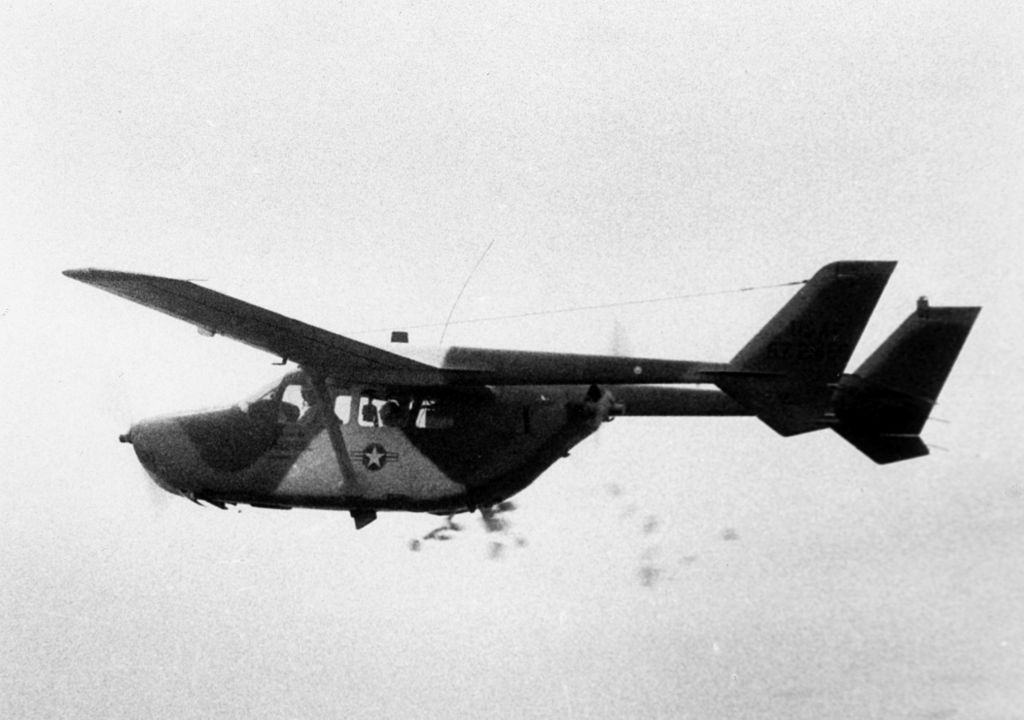
As they vectored the team to the end of the cliff several hundred feet above the crash site, the O-2A was hit with heavy enemy gunfire. It crashed a few miles away, killing both Hull and Fernandez, which added another layer of grief to a Bright Light mission attempting to recover six dead Americans.
Thanks to Hull and Fernandez though, RT Intruder located the crash site. They had to rappel down the cliff to reach it. Eventually, the team placed the bodies of Berg, Woods, Johnson, and one leg—which they assumed was Demsey’s, as the rest of Demsey’s body couldn’t be located. These four body bags were stacked near the helicopter’s frame to be lifted out by helicopter hoist in the morning.
Another grisly discovery was that of the bodies of Watson and Lloyd, hanging from trees on the cliff’s face, still attached to their STABO rigs. Danzer determined that because night was falling, RT Habu should try to retrieve the bodies of the two recon men in the morning.
However, the NVA fiercely attacked RT Habu in the morning, wounding several team members. Meanwhile, a few miles away, Capt. Fred “Lightning” Wunderlich and three men from his recon team rappelled from a CH-53 helicopter onto the crashed O-2A. They confirmed that Hull and Fernandez were dead. The team recovered Fernandez’ body from the wreckage, but they couldn’t recover Hull because the front engine of the O-2A had pinned him into the aircraft.
Across the A Shau Valley, Capt. Jim Butler and RT Python had been embroiled in intense combat with other NVA units, in fighting so intense that assistant team leader SSG Les Chapman fought hand-to-hand with NVA soldiers. Butler had used Stinger, Spectre gunships, F-4 Phantom jets, A-1 Skyraiders, and numerous gunships from several helicopter units assigned to support SOG missions during that team’s time on the ground.
By the end of February 20th, an Air Force CH-53 pulled out RT Intruder, flew the team—most of whom were wounded—back to a field hospital, then turned around and returned to the A Shau Valley to rescue RT Python, which suffered at least one KIA and several WIAs.
Still MIA
Today, the six Americans are among the 1,627 service members who are still listed as missing in action from the Vietnam War. They are among the more than 83,000 U.S. service members who remain missing in action today collectively from WWII, Korea, and Vietnam. People familiar with this mission concede that approximately 51,000 of those service members are listed as missing over water—both Navy personnel and aviators.
Under the new consolidation plan, DPAA will bring three previous federal operations together under one command: the Defense POW/Missing Personnel Office (DPMO), the Joint POW/MIA Accounting Command (JPAC), and the Air Force’s Life Sciences Equipment Laboratory at Wright-Patterson Air Force Base in Ohio. A decision on the DPAA’s permanent headquarters location will be made by early next year.
On June 19, Secretary of Defense Ash Carter announced the Department of Defense Executive Service appointment of recently retired LTG Michael S. Linnington as director of the DPAA. Linnington, a 33-year Army veteran, previously served as the military deputy to the undersecretary of defense for personnel and readiness in Washington, D.C.
To date, in 2015, the remains of 39 service members have been located and returned to the U.S.: 26 from the Korean War, seven from World War II, and seven from the Vietnam War. Of special concern to Green Berets like Cliff Newman are the remains of 51 Green Berets and approximately 250 airmen who were lost in Laos during the eight-year secret war in Vietnam and are listed as missing in action, as the highly acidic soil of Southeast Asia attacks their remains.
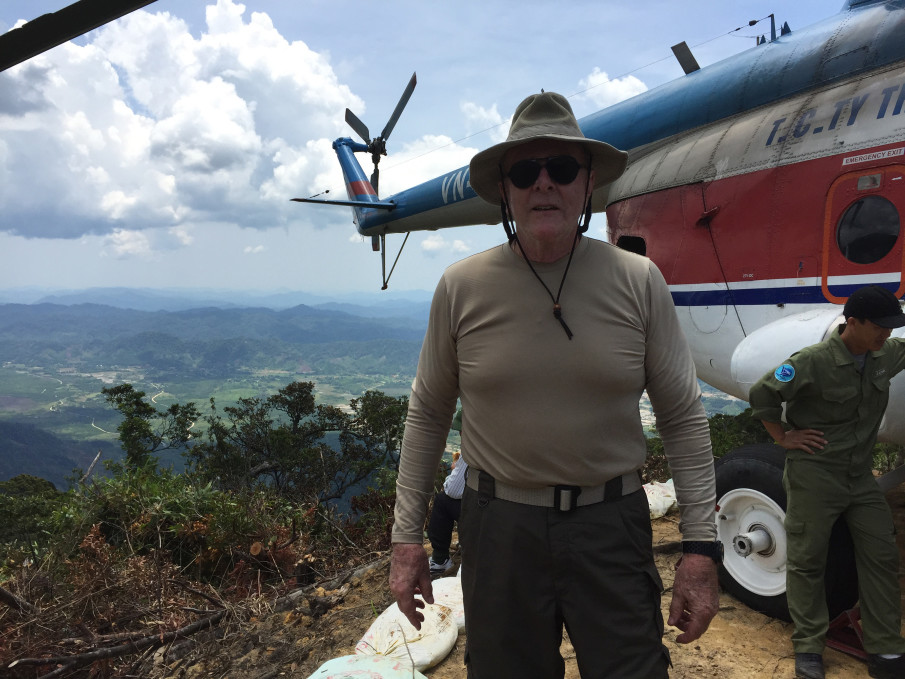
In 2003, Newman, Wesley, and McGlothren returned to Southeast Asia to work with the Joint Task Force for Cull Accounting in an attempt to locate the six Americans. That mission ended without locating them. Newman returned with a dedicated, hard-working DPAA recovery team earlier this month. However, that effort, too, failed to pinpoint the location of the six Americans’ remains.
Newman said he could not comment to SOFREP on that mission until he completes an after-action report on that mission for DPAA officials. However, he did praise the DPAA team he worked with in the field. “All I can say is, I’ll gladly go back to help find them, that’s the least I can do,” Newman said. “However, I’m not getting any younger.”
One positive note: Hull’s remains were recovered nine years ago and a formal burial service was held for him in Arlington National Cemetery in 2006.
(Images provided by Cliff Newman, a SOG recon man who did the first combat jump into Laos.)








COMMENTS