

A Dangerous Escalation
This launch didn’t happen in a vacuum. It came just days after Ukraine fired Western-supplied long-range missiles, including US Army Tactical Missile System (ATACMS) and British Storm Shadow cruise missiles, into Russian territory.
Moscow has repeatedly warned that such strikes on its rear bases would be seen as a major escalation.
Experts see the ICBM launch as a calculated show of force. While its use as a conventional weapon may seem excessive, it serves as a clear signal from Moscow: escalate further, and the stakes will rise.
“An ICBM launch can certainly be seen as a threatening gesture, potentially in response to the lifting of restrictions on ATACMS and Storm Shadow. It’s a means of deterrence,” said a European military source, cited by Reuters.
With Russian President Vladimir Putin recently lowering the threshold for nuclear strikes, these moves only add to the already precarious situation.
Why an ICBM Now?
The choice to deploy an ICBM is puzzling. These weapons are expensive, not particularly precise for non-nuclear use, and seem excessive for targeting industrial sites in Dnipro.
However, the message behind the launch is what matters.
Russia’s move could be a response to Ukraine’s newfound capability to strike deep into Russian territory.
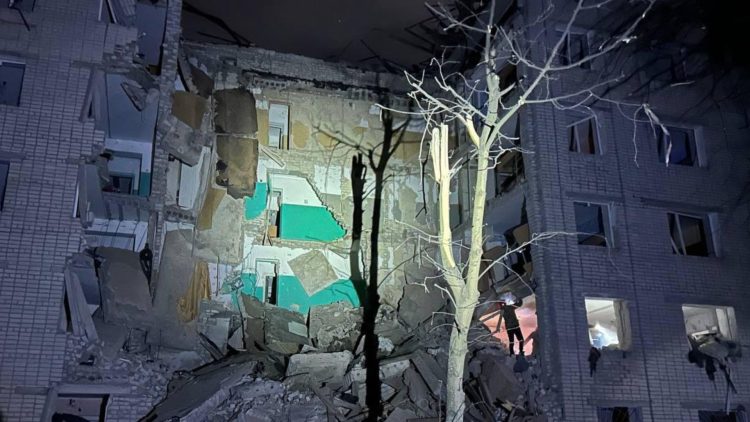
The Ukrainian Air Force confirmed that Russia struck the Ukrainian city of Dnipro with a conventionally armed ICBM this morning, marking the first combat use of an ICBM in history.
Footage from Dnipro showed glowing reentry vehicles hitting the ground around 5 AM local time. pic.twitter.com/PWTGajH9bT
— OSINTtechnical (@Osinttechnical) November 21, 2024
Just this week, Russian officials claimed to have intercepted British Storm Shadow missiles over Kursk and faced a barrage of ATACMS strikes.
By using an ICBM, Moscow may be trying to reassert its dominance and remind the world—and Ukraine—of its vast military arsenal, even if it means resorting to weapons typically associated with nuclear warfare.
A First in Military History
If confirmed, this would mark the first time in history that an ICBM has been used in active combat.
Security experts have called this “unprecedented” and a concerning escalation.
“If true this will be totally unprecedented and the first actual military use of ICBM. Not that it makes a lot of sense given their price and precision,” Andrey Baklitskiy of the UN Institute for Disarmament Research wrote on X, formerly known as Twitter. Yet, here we are.
Ukrainian armed forces claim that Russia attacked city of Dnipro with an ICBM with conventional payload. If true this will be totally unprecedented and the first actual military use of ICBM. Not that it makes a lot of sense given their price and precision https://t.co/nfDxxG068J
— Andrey Baklitskiy (@baklitskiy) November 21, 2024
Even without a nuclear warhead, the use of an ICBM raises eyebrows worldwide. It signals that both sides are willing to take greater risks as the conflict drags on, with no resolution in sight.
Final Thoughts: Heightened Stakes
This development underscores the heightened stakes as the war grinds into its third year. Both sides are racing to establish leverage before any potential peace talks, with Ukraine now empowered by Western weaponry and Russia responding with increasingly aggressive measures.
For now, the reported ICBM attack on Dnipro stands as a stark reminder of how far this conflict has escalated—and how much further it could go. Whether this marks a new phase of the war or serves as a one-off deterrent remains to be seen.
What’s clear, though, is that the stakes keep rising. And with them, so does the potential for this local conflict to spill over into something much larger and more dangerous.








COMMENTS