The article details the formation and contributions of the New Zealand Special Air Service (NZSAS) during the Malayan Emergency, highlighting their rigorous selection and training process, as well as their effective operations in the jungle alongside British forces. Despite their eventual disbandment, the NZSAS demonstrated significant capabilities and resourcefulness in combat.
Key points from this article:
The New Zealand Special Air Service (NZSAS) was created in 1955 as part of New Zealand's contribution to the Malayan Emergency, with Major Frank Rennie leading its formation.
How the NZSAS's unique composition, including a third Maori troopers, allowed them to connect better with local tribes and effectively conduct operations in the jungle.
Why the NZSAS's success in the Malayan Emergency, including capturing or killing 30 Communist Terrorists in an ambush, showcased their effectiveness despite limited resources and ultimately led to their disbandment by the New Zealand government.
Updating summary...
SAS in Malaya: The New Zealanders Arrive
Stavros Atlamazoglou
Speed
1x
Listen
COMMENTS
As it happens, New Zealanders are not likely to be kept out of the fray.
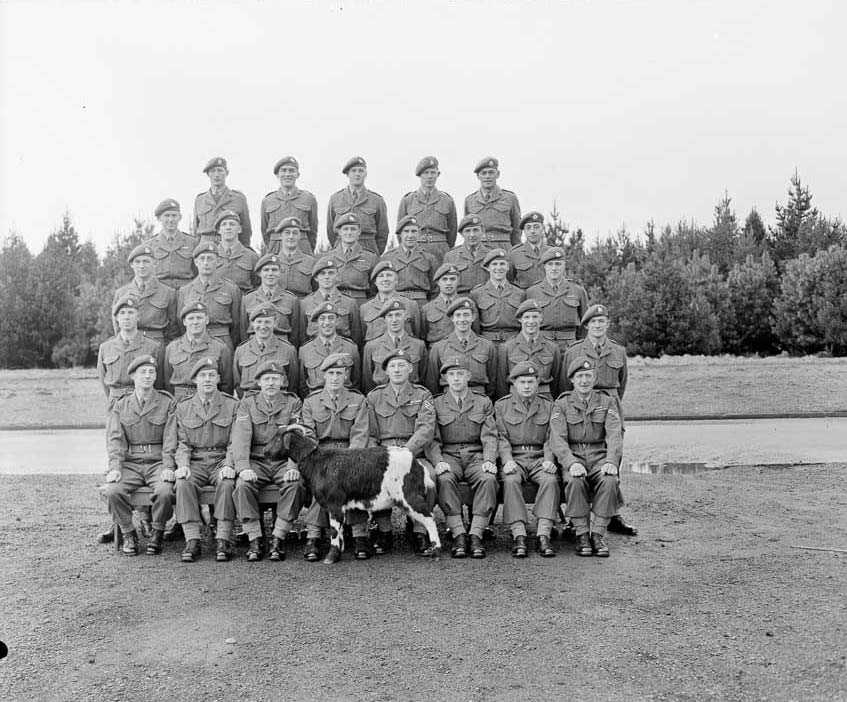
Major Frank Rennie, a WWII veteran, was tasked with creating the outfit. A selection course took place at Waiouru Military Camp, located in a mountainous section of New Zealand’s north island. Applicants had to be single, under six-foot, weigh less than 185lbs, have their own teeth, good eyesight, and no criminal record.
Almost 1000 applied, both soldiers and civilians. Major Rennie had limited room and budget for his new unit. So, naturally, everything turned into a contest. Training never ceased.
Advertisement
“From day one we started running,” a trooper remembers. “And we run everywhere for the next six months.” In the end, less than 200 stood standing. And of these, not all were selected. “They were four left,” a successful applicant recollects. “And they’d to be told by the commander that they failed. And it was very emotional.”
Rennie now had the ingredients to work with. The next months were spent kneading the dough of successful applicants into SAS troopers fit for service in Malaya. This next phase of training took place in nearby Paradise Valley, which was chosen for its resemblance to the Malayan jungle.
Advertisement
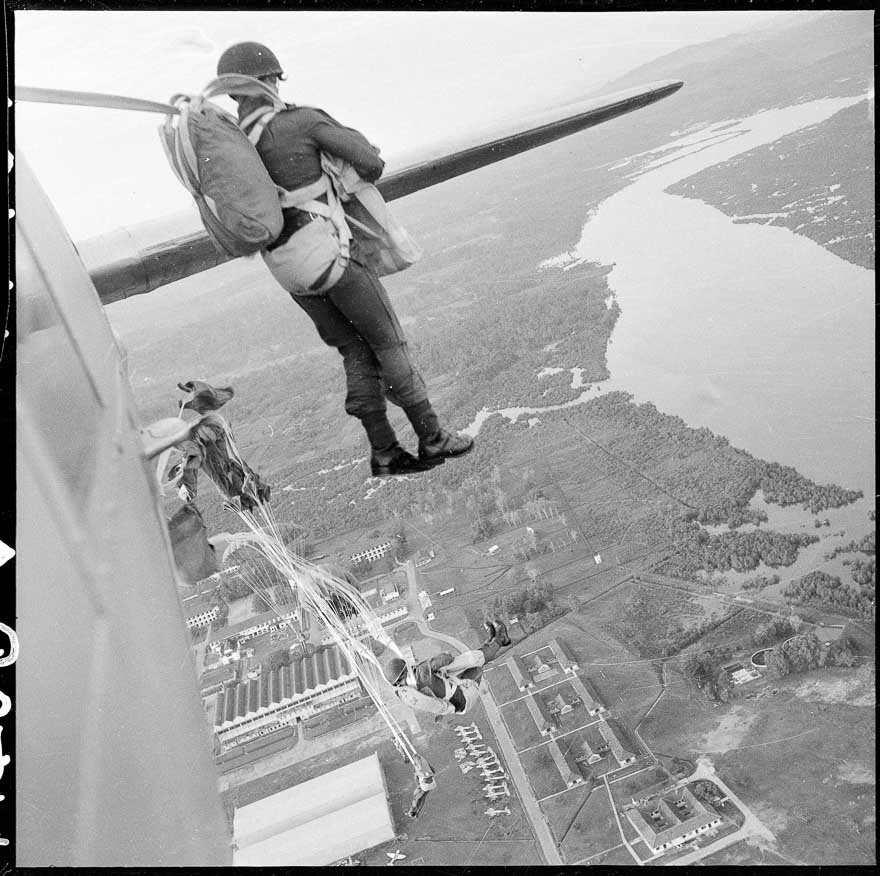
Airborne training took place in Singapore in the school already established by the 22 SAS.
Ultimately, 140 men left New Zealand’s shores to fight for Queen and country. Their small number notwithstanding, the Kiwis knew their stuff.
They joined their British brethren at Fort Brooke. The mountainous Perak province was their primary hunting ground for the next two years. Although formally part of the 22 SAS, the New Zealanders enjoyed the flexibility to plan and run their missions, but always true to the main strategy.
Advertisement
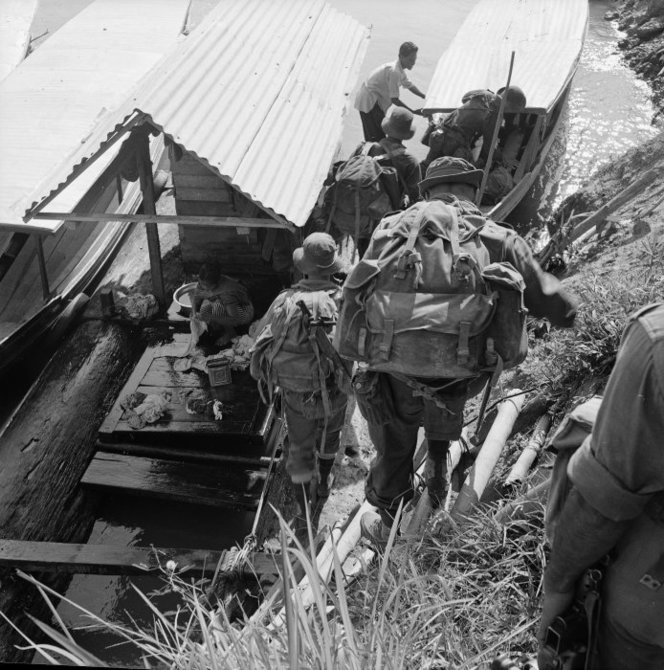
A river patrol about to launch (Natlib.govt.nz).
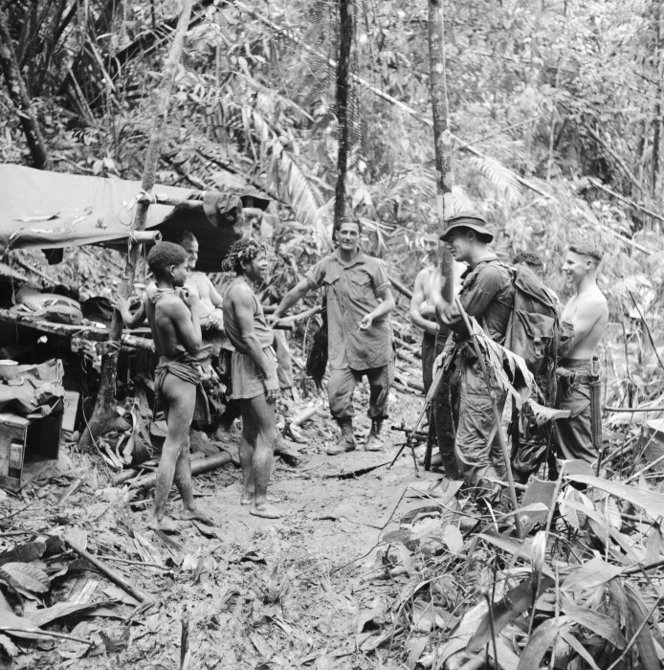
Operations included long-range recce patrols deep inside the jungle and hearts-and-minds attachments with native tribes. The former concentrated in locating enemy camps, caches, and trails, and then calling in conventional reinforcements, the latter in proselytizing as many tribesmen as possible to the government’s cause.
In this delicate process, the Kiwis enjoyed a unique privilege over the British squadrons: their Maori troopers. Making up almost 1/3 of the NZ Squadron, Maoris weren’t just superb natural trackers, but they could also relate easier with the locals since they looked more like them.
A pair of tribesmen is joking with an NZSAS patrol (Natlib.govt.nz).
Of the 24 months in-theatre, the New Zealanders spent 18 in the jungle. The average patrol was three months. And boy were they effective.
In an ambush alone, they killed or captured 30 Communist Terrorists (CTs), quite an achievement considering that normally a kill took 1800 hours even for the SAS. (This wasn’t a sign of bad performance; on the contrary, the Malayan Emergency was a war of politics, influence, and resources more than a battle of attrition. And the SAS suffocated the insurgency of all three with their hearts-and-minds ops and jungle recces.)
Throughout their stint in Malaya, they suffered two fatalities. A trooper was killed by enemy fire, and another died from heat-stroke whilst in patrol.
In 1957, the Kiwi deployment came to an end. Despite their small number and funding, the New Zealanders had proved themselves, through their hard work and resourcefulness, to be equal to their British brothers.
Unfortunately, however, a few months later, an unwise New Zealand government decided that they were a luxury and disbanded the unit.
But this wasn’t destined to be their end. Borneo, Thailand, and Vietnam were waiting.
Advertisement
What readers are saying
Generating a quick summary of the conversation...
This summary is AI-generated. AI can make mistakes and this summary is not a replacement for reading the comments.










COMMENTS