

At this point, one may wonder why this is important? Isn’t the same old play of a postcolonial independence struggle, just in another theatre?
You’re right. Partly.
The Malayan Emergency is important to the student of military strategy and special operations for two reasons: First, because the British showed that a COIN campaign could succeed — spoiler alert, the government forces won — that a hearts-and-minds strategy is sometimes preferable to big numbers (remember, this was right before the Vietnam War, and the U.S. military was watching). And second, because it set the stage for the return of the Special Air Service (SAS).
The initial British approach to the Malayan Emergency was to throw large numbers of men. It didn’t work. By the time the cumbersome conventional units arrived at the scene of an attack, the CTs had already vanished in the jungle.
A fresh approach was needed.
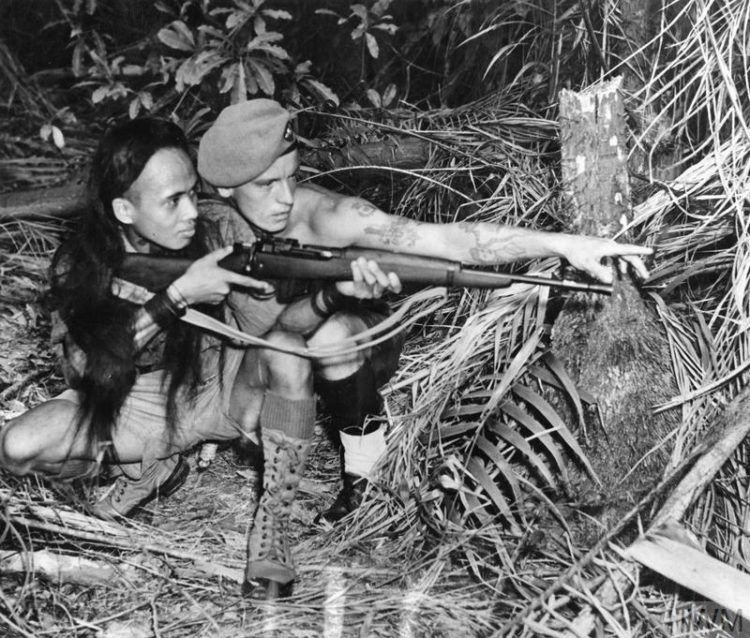
Headquarters instructed Brigadier “Mad Mike” Mike Calvert, the last CO of the SAS during WWII, to tour the battlefield and gauge the situation. He recommended a two-pronged strategy: erect protected camps to safeguard the locals from the CTs’ influence and terror, and raise unconventional units that could hunt the CTs in their jungle havens and fight them on their terms.
Protected communities, called “New Villages,” began to mushroom all around. And the locals (both Malays and Chinese) were given further incentives to resist Communism’s charm for “equality” by being given a stake in the colony’s economy.
As for Calvert’s second recommendation, first came the Ferret Force.
And soon thereafter, the SAS.
In this series, we’ll see how these units developed, operated, and succeeded in stemming the Communist tide; and how the harsh jungle environment created Tactics, Techniques, and Procedures (TTPs) that aspiring SAS troopers still learn.
This article was originally published in March 2020. It has been edited for republication. Stay tuned for part II.








COMMENTS