
Terrorist Bombings
Quincy, Illinois
27-28 September 1976
SGM Mike R. Vining, USA Retired
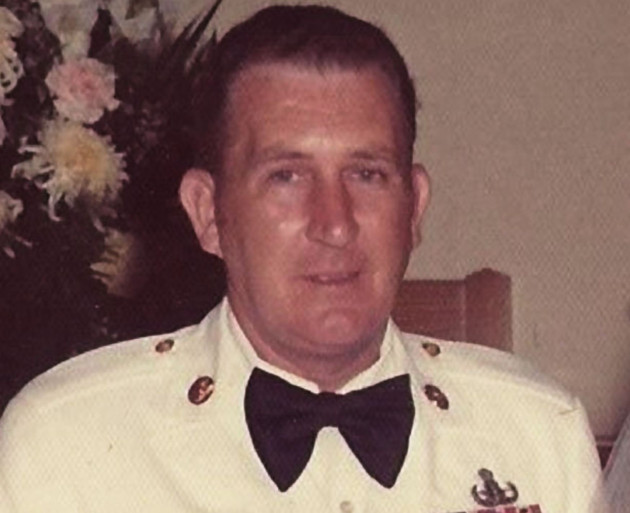
SGM Kenneth Ray “Ken” Foster, Sr., SSG James P. “Jim” Smith, SSG George Sledge, and SP5 Mike R. Vining were all on a Presidential Campaign Secret Service support for Republican Senator Robert Dole. We were all from the 63rd Ordnance Detachment (EOD), Fort Leonard Wood, Missouri. Robert Dole was running as the Vice President candidate for President Gerald Ford’s reelection. Early in the evening on 27 September, Senator Dole spoke at the Quincy College Gymnasium, Quincy, Illinois. His wife, Elizabeth, and daughter, Robin, had accompanied him.
Later in the evening, SGM Foster and I (Mike Vining) were eating a late supper at a local restaurant when we heard that there had been a series of detonations around town. The first bomb went off at 8:20 p.m. on a small blacktop bridge located at North Fifth just east of Parker Heights Park. This was followed by three detonations outside of town at a manufacturing facility called “Quincy Compressor Division Plant,” a division of Colt Industries, Incorporated, which was located at 36th and Wismann Lane, Quincy.
The bombs had exploded in a ten-minute span between 9:50 and 10 p.m. The detonations had damaged a power transformer, a large air compressor, a water-cooling tower, and portions of the plant’s wall. A police officer who had arrived between the first and last blasts at the factory was treated at a local hospital for an eardrum injury. Earlier that same morning, the plant had received two bomb threats, one at 7:45 a.m. and another at 8:15 a.m. Then, at 3:15 p.m., they received another bomb threat.
We arrived back at the Ramada hotel, where Senator Dole was staying, and found out the other two members of our team, some Secret Service agents, police, sheriff’s deputies, and fire department personnel had gone to check out the incident. Up to this point, there had been no connection or threat that implied that the detonations had anything to do with Senator Dole’s visit.
Earlier in the month, between 6 and 7 September, someone had stolen 1,690 pounds of dynamite from the Western Illinois Stone Company. The stolen dynamite was cartridges that were 3 inches in diameter. The company had also reported that a powder magazine and a detonator magazine were also broken into between 15 and 16 September. This theft had nothing to do with the incident, but we were aware of it.
The following morning on 28 September, we went to Baldwin Air Field to support Senator Dole’s departure. Because of the events of the night before, we made very sure everything was okay. We checked the terminal, the chartered aircraft, and baggage. Then, at 7:50 a.m., we received a “bomb threat.” Senator Dole was scheduled to leave shortly before 8 a.m. We were confident that we had searched well, but we did another quick look to make sure. Senator Dole arrived at the airport and departed. We all watched his airplane until we lost sight of it. At this time, we finished our Secret Service support. Adams County Sheriff Robert E. Nall asked if we would go out to the site of the bombing to help determine anything about the cause. We went to the Hotel to change out of our suits and to check out.
The four of us arrived at the entrance to the Colt Compressor factory at around 10:00 a.m. and were stopped at a checkpoint that had been set up around the site. We were told searchers had found another device that had not detonated. We drove to the command post and met with a representative of the police and fire department. The fire department had been conducting a search of the area in the daylight when they found the device. Several trailers were parked side by side in a fenced-in area. They had opened a side door on the trailer and came face to face with an improvised explosive device.
The trailers housed a huge compressor, and the device was on the trailer bed in front of the compressor. They were able to take a Polaroid picture of the device. We could discern that there were at least five to six sticks of standard 1-inch diameter dynamite, an alarm clock, and a 6-volt K-Mart battery. SGM Foster said he would go down to the site for a reconnaissance and see what kind of plan of attack we could use to defeat the devise. Ernest Arenz, the state arson inspector for Illinois, said he would like to go down with him. Because the trailers were parked side by side, you had to walk between two trailers and be right in front of the device in order to see it. SGM Foster told me to set up and get the tools ready for when we decide how we will render it safe base on his assessment of the situation. SGM Foster and the state arson inspector walked down to the incident site. Jim and George set up a safety position to observe them, and I readied the tools. SGM Foster soon disappeared between the trailers; the time was 10:40 a.m.
Soon, there was a loud explosion. I saw large pieces of the trailer flying through the air and smoke. Jim and George rushed down as the arson inspector came staggering out. They helped him to safety, as the explosion had temporarily blinded him. He also suffered from ruptured eardrums. I ran down to the detonation site and saw SGM Foster lying on the ground. He took the blast to his upper body and head, and was missing part of his right arm. He had died instantly in the explosion.
The three of us then continued a search of the area for any other devices that had not detonated. The earlier search was suspended when this device was found. Once we were certain the area was safe, we brought the coroner down and loaded SGM Foster’s body into a body bag. We then placed him on a stretcher and loaded him into the coroner’s vehicle. The news crews had their cameras on and recorded the event. No sooner had this event been completed than another bomb threat was called in to the local high school.
Four telephoned bomb threats were called on the local high schools. We went over to the high schools to aid them in their search. Both Quincy High School I and II were evacuated, and we briefed the searchers on how to conduct a search. The searchers worked in the school, so if something was odd or out of place, they would know it and then report it.
Nothing was found at the school; it was a hoax. Also, a bomb threat was called into the E. L. Smith Company, 601 South Fifth, around noon. We then went over to the coroner’s office to pick up SGM Foster’s personal effects. By the time I was able to call home to my wife to tell her what had happened, she had already heard about it on the news. They said, “Today in Quincy, Illinois, an Army Bomb Disposal Specialist was killed.” My wife at that time knew out of the four us I was the only Specialist, so she thought it was I. The others were of Sergeant rank. I told her what happened and that SGM Foster was killed.
At 5:30 p.m., state arson inspectors and federal Treasury Department Alcohol, Firearms, and Tobacco division agents arrived. Two bomb squad members from Springfield, Illinois, and one from Peoria, Illinois, also arrived. We stayed at Quincy until a team from the 50th Ordnance Detachment (EOD), Granite City, Illinois, relieved us. All four of us had driven up from Fort Leonard Wood, Missouri, together, and now only three of us made the ride home.
SGM Foster was married and had four children, two boys and two girls. SGM Foster was laid to rest on 2 October 1976 at Rowan Memorial Park Cemetery, Salisbury, North Carolina. Other members of the unit and I acted as pallbearers. The loss of SGM had a sobering effect on the unit for some time. He and his wife had recently received orders to Germany, and he would have finished out his career there.
On 22 April 2014, he was reinterred in the Missouri Veterans Cemetery, Fort Leonard Wood, Missouri, where he resides next to his wife, Elizabeth Rose Foster.
The city of Quincy and the Colt Compressor factory put up money for information that would lead to the arrest and conviction of whoever did this.
An ex-girlfriend turned in her old boyfriend and did not accept the reward money. That money was given to Mrs. Foster.
Robert Eugene Motley, age 39, was sentenced on 1 March 1977 for murder to serve 15 to 45 years, and the two juveniles, Jeffrey T. Lewis, age 18, and Leslie Irvin, age 18, were acquitted. On 15 September 1976, Robert and Lewis broke into a dynamite and cap locker at a quarry east of Quincy and stole two 50-pound boxes of dynamite and a box of blasting caps. Irvin’s only involvement was that he was the driver of a burglary.
They then moved the explosives to a barn across the river in Marion County, Missouri, for storage. Motley assembled the components in his apartment at 422 North 9th Street, Quincy, Illinois. He had purchased several wind-up alarm clocks.
On 26 September 1976, Motley and Lewis went to the barn to test out the firing systems. The power source was six-volt batteries. They built ten explosive devices using between six and 11 sticks of dynamite. They then took the ten explosive devices to Motley’s apartment.
On the evening of the 27th, Motley and Lewis drove over and picked up Stanley Stock at his girlfriend’s house. They then drove to an area north of Quincy and tested one of the explosive devices on a bridge. The trio then drove to the Colt Industries plant. Motley instructed Lewis and Stock to place the explosive devices on the roof of the factory so as to cause damage and not hurt anyone, and that part of the plant would be shut down.
He told them to set the time on the clock for 45 minutes. Motley then drove to a tavern two miles away, waited 30 minutes, and then drove back to the factory and picked up Lewis and Stock. Lewis and Stock were unable to get on the factory roof, so they placed the explosive devices in some air compressors that were in the factory parking lot. The trio was together when the explosive devices detonated, and then Motley dropped off Lewis and Stock back in town. They caused over $200.00 worth of damage with no injuries that night.
An informant (I believe it was his wife) told the police that it was Robert Motley who did the bombing. A warrant was issued for his apartment, and they moved bomb-making material and a notebook with a diagram for designing the explosive devices. Charges and an arrest warrant were filed on Motley for arson and murder.
Motley surrendered to the police on 29 September in the company of his attorney. Motley entered a guilty plea agreement with the State’s Attorney for the offense of murder. Motley was not charged with any crimes committed in Missouri, nor were any Federal charges filed as part of the agreement. He was confined to the Corrections Facility in Vienna, Illinois. He would also testify against Lewis and Stock. Motley also admitted to a couple of traffic offenses and a $300 fine in the State of Missouri for shooting a deer out of season.
Motley’s occupation for the previous 12 years was a construction worker.
The only thing I heard about a motive was that his wife, Marilyn Shaffer, who was separated and filed for divorce, was an employee of the Colt factory. He was trying to get his spouse fired and get her to go back with him. The FBI was brought into the investigation due to interstate transportation and theft of explosives. Mr. Motley served seven years in prison. SGM Foster’s name is on the EOD Memorial, Eglin Air Force Base, Florida.
The following is my opinion of the events that resulted in SGM Foster’s death. All of the bombs were placed at the same time. The one that killed SGM Foster failed to detonate as designed. The face of the clock had a screw placed in it, and the hand of the clock failed to make electrical contact because of the paint on the hand. SGM Foster probably thought that when he arrived at the bomb, he had little time to do something. So I believe he tried to take out and separate the blasting cap from the explosives. In doing so, he caused movement of the device and caused it to make better electrical contact, and the device detonated.
The device had started out as functioning on time and ended up becoming anti-disturbance. Otherwise, I believe SGM Foster would have departed the area, and we would have rendered the device safe remotely.
Jim, George, and I received the Army Commendation Medal for heroism. SGM Foster’s widow, Liz Foster, received his Soldier’s Medal for heroism posthumously by Fort Leonard’s post commander, MG Richard L. Harris.
On 9 June 1992, the new 154-unit Guest House Complex at Fort Leonard Wood, Missouri, was officially dedicated as the “Foster Lodge.” SGM Foster’s bust and plaque are located at the entrance.
SFC George Sledge, USA (Retired), passed away on 17 August 2005 at the age of 56. He is buried at the Missouri Veterans Cemetery in Springfield, Missouri.
MAJ James P. “Jim” Smith, USAR (Retired), now lives in Fayetteville, North Carolina.
Robert Eugene Motley, Sr., Find-A-Grave Profile: Robert Eugene Motley Sr. (1938-2021) – Find a Grave Memorial
SGM Mike R. Vining, USA (Retired), now lives in South Fork, Colorado.








COMMENTS