
How did Explosive Ordnance Disposal (EOD) become involved with supporting Very Important Persons (VIPs) with the U.S. Secret Service? I hope to explain the origin in this article and bring the reader up to date on this EOD mission.
I have a copy of a letter dated 18 March 1958, from the U.S. Treasury Department, Washington 25, D.C., Office of the Chief, U.S. Secret Service (USSS) to the Commanding General, Second Army, Fort Meade, Maryland. The letter states:
The Washington, D.C. Police Department has recently been unable to furnish the services of an expert on explosives and bombs during public appearances of the President (Dwight David “Ike” Eisenhower, 1953 to 1961). Your 67th Ordnance Detachment (EOD) stationed in Washington, D.C. (Fort Lesley J. McNair), has cooperated and furnished assistance on several occasions recently.
If it does not interfere with your own programs, could you extend an indefinite authorization for one of your experts on explosive devices to assist and cooperate with the Secret Service and Washington Metropolitan Police in providing occasional standby protection against devices during public appearances and other activities of the President and the Vice President?
Your consideration of this request will be appreciated.
Very truly yours,
U.E. (Urbanus Edmund, 1948 to 1961) Baughman
Chief, U.S. Secret Service
A True Copy Receipt:
Frank W. Hackley
Capt, OrdC
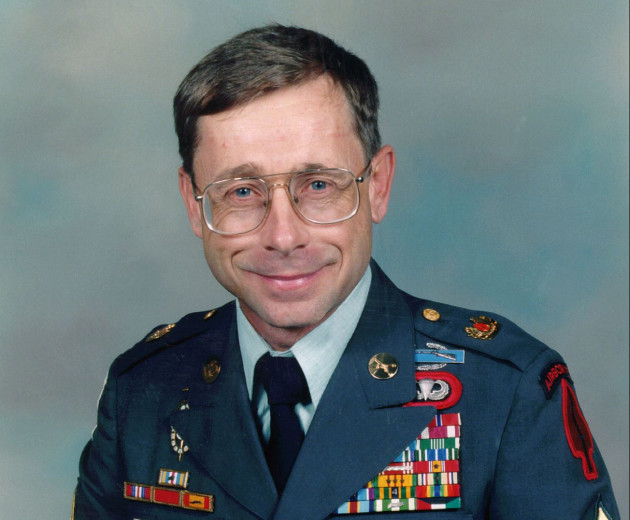
Special note: Captain Frank W. Hackley (1930 – 26 April 2021) later made Colonel. In 1960, as a First Lieutenant, he published his first book on Civil War Ordnance. In 1967, then Major Hackley served as the MACV EOD Advisor, Republic of Vietnam. Also in 1967, he published the “History of Modern U.S. Small Arms Ammunition, Vol. I, 1880-1939.” This was followed by “History of Modern U.S. Small Arms Ammunition, Vol. II, 1940-1945” and “History of Modern U.S. Small Arms Ammunition, Vol. III, 1946-1977.”
In 1969, three EOD units were declared White House Support. Those Units were the 67th Ordnance Detachment (EOD), Fort Lesley J. McNair, Washington, D.C., the 57th Ordnance Detachment (EOD), Fort Belvoir, Virginia, and the 144th at Fort Meade, Maryland. Also, EOD detachments were located near the President’s home. Residents were tasked with supporting the Secret Service while the President was residing there. This included the 66th Ord Det (EOD), Cape Canaveral Air Force Station, Patrick Air Force Base, Florida and the 87th Ord Det (EOD), Presidio, San Francisco, California.
Although members of these Units already held Top Secret Background Investigation (TSBI) clearances, they had to submit for new TSBI clearances with the White House caveat. Most of the applicants sailed through, but a few were rejected for minor things. They were allowed to keep their TSBI clearances and remain in EOD. An individual in the 87th did not get the White House clearance. He was born in the United States; his mother and father had become US citizens, but his older brother hadn’t become a US citizen. He was denied because of his brother.
There was a lot of shuffling of people within the Control area to get these detachments up to strength and operational. The duty was good, but you were not home that much.
During an election campaign year, all EOD detachments were used not only to provide Secret Service support to the President and Vice President but also to qualified Presidential Candidates. This is based on eligibility criteria (major party, high polling/primary votes, and threats) and can use matching funds for some of the security costs. In 2024, recent legislation aims for equal protection for major candidates.
The only EOD fatality occurred on 28 September 1976 when SGM Kenneth Ray “Ken” Foster, Sr., lost his life to an Improvised Explosive Device (IED) at Quincy, Illinois.
It was during a presidential campaign that the Secret Service provided support for Republican Senator Robert Dole. SGM Foster was the Senior Supervisor for the 63rd Ordnance Detachment (EOD), Fort Leonard Wood, Missouri. Robert Dole was running as the Vice President candidate for President Gerald Ford’s reelection. Early in the evening on 27 September, Senator Dole spoke at the Quincy College Gymnasium, Quincy, Illinois. His wife, Elizabeth, and daughter, Robin, had accompanied him. Also on this support was SSG James P. “Jim” Smith, SSG George Sledge, and SP5 Mike R. Vining.
That evening, there were four explosions in the city, but there wasn’t any connection to Senator Dole’s visit. On the 28th at the airport, a bomb threat was called in, but nothing was found. Senator Dole and his family departed with no issues. The team was relieved of its Secret Service support, but was still on temporary duty (TDY) orders for the support when asked by the Adams County Sheriff if the team would go out to one of the bomb sites (Colt-Quincy Compressor Company) and render an opinion of what took place. Upon arrival, the team was informed of an IED that had not detonated. SGM Foster went down for an inspection of the device, and it detonated. SGM Foster was killed instantly. SGM Foster received a posthumous Soldier’s Medal.
A condolence letter dated 30 September 1976 was written to SGM Foster’s widow (the late Elizabeth Rose Waybright Foster Pratt) by H. Stuart Knight, Director of the U.S. Secret Service. It read: Dear Mrs. Foster. We were all deeply saddened and concerned to learn of the untimely death of your husband. I understand he was a very fine man who was dedicated to his work and highly knowledgeable in his field. Men such as your husband are assets to our country and we all share in your personal loss. On behalf of the men and women of the United States Secret Service. I extend deepest heartfelt sympathy to you and your children. Sincerely, H.S. Knight, Director.
Today, the U.S. Department of Defense (DoD) provides EOD support to the U.S. Secret Service (USSS) and U.S. Department of State (DoS) related to the protection of certain US and foreign officials and persons, including the POTUS/VPOTUS (President of the United States/Vice President of the United States), their spouses, and visiting dignitaries. This support is through JEOD VIPPSA (Joint Explosive Ordnance Disposal Very Important Persons Protection Support Activity).
U.S. Northern Command (USNORTHCOM)
JEOD VIPPSA
309 A Street, Bldg 41C
Ft McNair, DC 20319-5014
JEOD VIPPSA’s beginnings started in December of 2007 with formal directives, such as a USNORTHCOM Executive Order (EXORD), which shows the formalized EOD VIP protection process was in place. Department of Defense Instructions (DoDI) like DoDI 3025.19 (issued 29 November 2011, updated 13 March 2017) solidified EOD roles and responsibilities, including VIP support. The DoDI also includes the explosive detection dog (EDD).
JEOD VIPPSA Mission
United States Northern Command (USNORTHCOM) is designated the supported Combatant Commander (CCDR) for providing routine EOD very important person mission support to the U.S. Secret Service (USSS) and the U.S. Department of State (DoS) in the USNORTHCOM area of responsibility (AOR), and coordinates routine (25 or fewer teams) EOD very important person mission support to the USSS and DoS continental United States (CONUS) and outside the continental United States (OCONUS). Joint Force Headquarters-National Capital Region (JFHQ-NCR) is the lead agency for the Joint EOD VIPPSA mission. JFHQ-NCR serves as action agent for USNORTHCOM. It processes USSS and DoS requests for routine reimbursable and non-reimbursable EOD protective support. JFHQ-NCR receives, approves, tasks, and coordinates these requests for locations worldwide.
(a) Non-routine requests (more than 25 teams) for EOD or related capabilities under U.S. Department of Defense (DOD) support of special events are coordinated through the DoD Executive Secretary. Requests for Assets (RFAs) for XXX NSSEs (National Special Security Events) are considered nonroutine and coordinated through the Executive Secretary and the Assistant Secretary of Defense (Homeland Defense and Global Security). DoD provides services, equipment, and facilities in support of the USSS when performing its protective duties under Title 18, USC, Section 3056, and Public Law 94-524 when requested by the Director of the USSS and approved by SecDef (Secretary of Defense).
(b) The USSS and DoS request EOD support directly to joint EOD VIPPSA. Services report qualified EOD team/element leader and team/element member availability weekly to joint EOD VIPPSA. For missions within CONUS, joint EOD VIPPSA selects EOD teams/elements based on the availability and geographic proximity to the mission support site. For OCONUS missions, the joint EOD VIPPSA tasks Services and the Geographic Combatant Commander (GCC) to provide EOD teams, based on availability.
(c) For CONUS missions, EOD teams/elements tasked to support the USSS or DoS are attached with specification of tactical control (TACON) to Commander, USNORTHCOM at the mission site for the duration of the support mission. For OCONUS, EOD teams/elements are attached with specification of TACON to the supported GCC. EOD teams/elements receive daily mission tasking from the lead USSS or DoS agent on site.
Additional Facts: The Secret Service started its protection of the President in 1902, under President Theodore Roosevelt. On 1 March 2003, the Secret Service was transferred from the Department of the Treasury to the newly created Department of Homeland Security.
** Contributors: LTC Ret. Robert E. “Bob” Leiendecker, USA, and John F. Flynn.








COMMENTS