

Expert Analysis

Global Tensions Rise Across Three Fronts, but No One Is Winning

Iran escalates by threatening global energy and shipping systems, while Ukraine grinds through attrition and Cuba absorbs economic pressure. Across regions, instability is rising faster than any path to resolution.

Eastern Europe

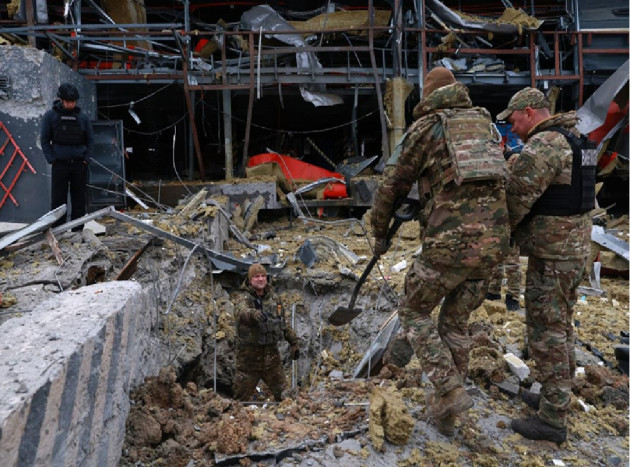
The war in Ukraine has entered a phase where interpretation is as contested as terrain. Claims of breakthrough and collapse circulate constantly, amplified by military bloggers on both sides who are structurally incentivized to exaggerate momentum. The more disciplined reading is narrower and less dramatic. Ukraine is holding key defensive lines and imposing real costs; Russia retains the larger manpower pool and continues to apply pressure across multiple sectors. The coexistence of those facts defines the war’s current equilibrium.

Advertisement

On a two-lane road somewhere in eastern Ukraine, an armored vehicle rolls forward under open sky. Within seconds, multiple FPV drones drop in low and fast, striking from different angles before the crew can react. There is no artillery warning, no buildup, no maneuver in the traditional sense, just a compressed kill chain measured in seconds and built on cheap, expendable systems. This is what the war looks like now. Not sweeping breakthroughs or collapsing fronts, but constant, localized destruction that accumulates faster than either side can convert it into decisive movement.

This is not momentum. It’s accumulation.

Recent assessments from the Institute for the Study of War are best understood as a warning against misreading tempo as trajectory. Russian forces continue offensive operations, but gains remain incremental and costly, often failing to generate meaningful operational exploitation. Ukrainian forces, while under strain, have demonstrated an ability to disrupt Russian advances through layered defenses, precision strikes on logistics, and continued adaptation at the tactical level. The front is active, but not fluid in the way social media mapping suggests. Movement exists; decisive movement does not.

Advertisement

Diplomacy reflects this same stasis. Talks between U.S. and Ukrainian officials have resumed in limited formats, but Russia’s absence underscores the central problem: the negotiating positions remain structurally incompatible. Moscow continues to seek recognition of territorial gains and political concessions Kyiv cannot accept. Ukraine engages because it must remain diplomatically credible, not because a settlement is within reach. As a result, negotiations function less as a pathway to resolution than as a parallel track to ongoing military pressure.

Sloviansk carries disproportionate weight in this context. It is not simply another urban objective in Donbas; it is where the 2014 war first crystallized into open conflict. Renewed pressure in that axis would signal more than tactical intent. It would indicate a Russian effort to reassert control over the symbolic and geographic core of the original war, linking the current campaign back to its unresolved foundation. That does not imply imminent collapse of Ukrainian defenses there. It does explain why activity in that sector will be read for political meaning as much as military outcome.

Advertisement

The underlying constraint on both sides is endurance. Ukraine faces mounting manpower challenges, with recruitment fatigue, uneven mobilization, and strain on frontline units increasingly visible. Its financial position remains dependent on continued Western support, which is substantial but politically contingent and often delayed in execution. Russia absorbs heavy losses but compensates through a larger demographic base, continued recruitment pipelines, and a war economy that prioritizes sustainability over efficiency.

This is why the summer fighting season is likely to intensify rather than resolve the conflict. Ukraine will aim to trade space for attrition while expanding deep strikes against Russian logistics and energy infrastructure. Russia will seek to convert steady pressure into localized breakthroughs that can accumulate into broader erosion. External factors matter at the margins. Elevated energy prices linked to the Iran conflict improve Russian fiscal resilience, easing some of the strain imposed by sanctions. They do not change the structure of the war. They extend its timeline.

Iran Axis

The emerging pattern in the Iran conflict is not one of imminent decision, but of deliberate escalation centered on infrastructure and economic chokepoints. Tehran’s posture has shifted from implicit deterrence to explicit threat: shipping lanes, energy systems, and the physical networks that sustain Gulf economies are now central targets in its messaging. This reflects a clear strategic logic. Iran does not need conventional superiority to impose costs. It needs to make stability itself uncertain.

The Strait of Hormuz remains the critical lever. Iranian officials have signaled that attacks on their territory could trigger mine-laying operations designed to disrupt maritime traffic across the Gulf. The precedent is well established. Even limited mining operations in confined waterways create disproportionate disruption, slowing transit, raising insurance costs, and forcing naval resources into time-consuming clearance operations. The objective is not closure in an absolute sense; it is friction at scale.

A parallel line of threat targets civilian-adjacent infrastructure. Iranian statements warning of retaliation against Gulf power systems, and earlier references to desalination facilities, highlight a vulnerability that is often underappreciated. In the Gulf, electricity, water, and economic continuity are tightly coupled. Disrupt one, and the others follow. This is not incidental rhetoric. It reflects an operational concept built around systemic pressure rather than battlefield dominance.

These dynamics narrow the space for diplomacy. Public positions on all sides continue to harden, and escalation is increasingly framed as necessary to restore deterrence rather than avoid conflict. For Tehran, endurance itself functions as leverage. The regime’s calculation appears to be that surviving sustained pressure validates its strategic model and preserves internal cohesion. Under those conditions, negotiations become instruments of positioning, not resolution.

Energy markets translate these dynamics outward. Rising oil prices reflect not only immediate disruption risk, but the broader uncertainty surrounding maritime security and infrastructure vulnerability. Iran’s strategy is to externalize the cost of conflict, forcing global actors to absorb economic consequences that may, over time, fracture political consensus against it. This is less a bid for battlefield victory than a campaign to reshape the incentives of those involved.

This does not stay regional. It shows up in fuel prices, shipping costs, and the price of everything that moves.

The likely trajectory is continued pressure without clean escalation thresholds. Direct action to secure maritime flow risks triggering the very disruptions it seeks to prevent; restraint risks normalizing a degraded operating environment. Tehran’s approach is designed to make both options unattractive. The regime is not signaling flexibility. It is signaling capacity to endure and to impose costs in return. Under those conditions, negotiation recedes, and managed instability becomes the operating state.

Cuba

Cuba is entering the current strategic landscape as a pressure point shaped less by immediate military risk than by converging economic and geopolitical forces. U.S. policy has moved toward intensified isolation, particularly through energy restrictions that have contributed to repeated nationwide power failures. This is not incidental pressure. It is targeted leverage against the regime’s ability to maintain basic state function.

The broader framework suggests a shift in how Washington is approaching the problem. Policy discussions extend beyond sanctions into questions of political transition, legal pressure on leadership, and the structure of a potential post-regime order. This places Cuba within a wider pattern: economic coercion paired with strategic ambiguity about how far that coercion may extend. Negotiation remains present, but it operates alongside escalating pressure rather than moderating it.

Russia’s involvement situates Cuba within a larger alignment. Moscow’s support, including energy discussions and diplomatic backing, reflects a shared interest in resisting U.S. pressure. At the same time, sanctions design increasingly links these theaters. Restrictions on Russian oil flows, and the selective application of exemptions, directly affect Cuba’s access to fuel. The result is a layered system in which pressure applied in one theater propagates into another.

This connection to the broader Russia-Iran axis is structural rather than ideological. These states operate within a shared environment defined by sanctions, energy leverage, and opposition to U.S.-led systems. Their coordination does not require formal alliance to be effective. It emerges through aligned incentives and overlapping constraints.

For now, Cuba remains a crisis of degradation rather than confrontation. But degradation has its own trajectory. Sustained energy shortages, economic contraction, and political isolation increase the risk of internal instability. External actors may interpret that instability as opportunity, particularly if collapse appears manageable or containable.

That is the underlying risk. A system weakened enough to invite intervention, but not weak enough to guarantee control once pressure is applied. In that space, Cuba becomes less a static problem and more a variable in a wider strategic contest, shaped as much by decisions in Washington and Moscow as by conditions on the island itself.


What Comes Next

The immediate trajectory across all three theaters points toward continuation, not resolution. In Ukraine, the approach of the summer fighting season will compress decisions. Diplomatic channels will remain open in form, but their function will narrow to signaling and positioning. On the ground, the pattern is likely to hold: Russia applying steady pressure in selected sectors, Ukraine absorbing, adapting, and striking where it can impose cost rather than reclaim large swaths of terrain. The constraint on both sides is not intent but capacity. Ukraine’s manpower and mobilization strain will shape its ability to hold depth; Russia’s losses will test how long its recruitment pipelines can sustain offensive tempo. Neither side has a clean solution, which is why the war persists.

In the Gulf, escalation will revolve around systems rather than decisive engagements. The central question is whether maritime flow can be maintained without triggering the disruptions Iran has explicitly threatened. Any attempt to secure shipping routes or degrade Iranian capabilities carries a high probability of retaliation against infrastructure that sits just below the threshold of conventional war. Restraint, however, risks normalizing a degraded operating environment in which uncertainty becomes the baseline. The conflict is therefore likely to evolve through calibrated pressure, where each move is designed to impose cost without forcing a rapid, uncontrollable escalation.

Cuba remains the least kinetic but potentially most volatile variable. Continued energy shortages and economic pressure increase the likelihood of internal instability, but not necessarily in ways that can be shaped from the outside. External actors may interpret deterioration as opportunity, yet the transition from pressure to intervention introduces its own risks, particularly in a system already under strain. The island’s trajectory will depend less on any single decision than on the cumulative effect of sustained isolation intersecting with external support from actors aligned against U.S. pressure.

Taken together, these fronts do not merge into a single war, but they do interact within a shared strategic environment. Energy markets, sanctions regimes, and political signaling now link them in ways that amplify local developments into broader consequences.

The danger is not sudden escalation. It is a world that learns to operate under constant pressure and calls it normal.

Advertisement

What readers are saying

Generating a quick summary of the conversation...

This summary is AI-generated. AI can make mistakes and this summary is not a replacement for reading the comments.




