

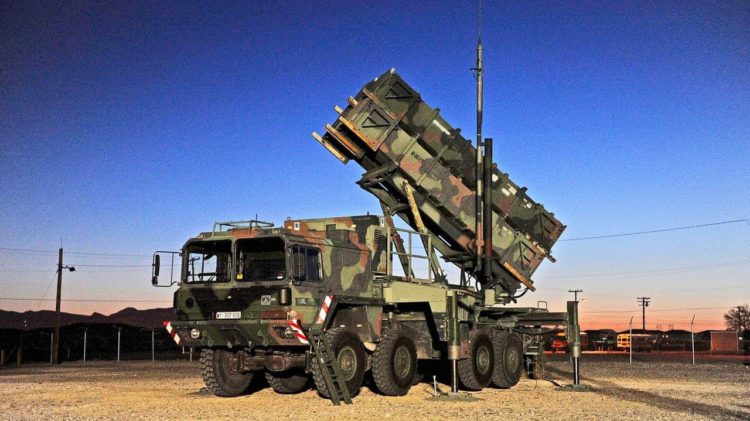
However, the decision regarding supplying Ukraine with its S-300 system was not mentioned in the post. It can be remembered that Ukrainian President Volodymyr Zelensky requested for said weapons during his historic speech at the US Congress last week, where he appealed for weapons that would protect them against missiles and the Russian Air Force. S-300 systems along with the Javelin and Stinger missiles have been vital weapons for Ukraine during the war, which have been seen to be working effectively against the Russian forces together with the Ukrainian’s Bayraktar TB2 drone. However, Zelensky would need more units of S-300 as they have been the subject of intensified Russian bombings throughout the invasion.
The only NATO members that operate the S-300 are Bulgaria, Slovakia, and Greece, which would require the countries to have amicable relationships with Russia if they were to procure parts and missiles.
“I wonder how we should service it, modernize it, provide spare parts when a country that can do so is a war aggressor, and any cooperation with that country is impossible?” Nad stated. “Slovakia needs to get rid of this dependence on Russia as soon as possible.”
It’s important to recall that Slovakia did preliminarily agree to provide their S-300 to Ukraine if the US and NATO could help them replace said systems. Slovakia requested assurances that their systems would be replaced immediately as they also do not want to make themselves vulnerable to a potential attack by Russia. These Patriot systems can possibly be the first step towards giving the Ukrainians the S-300s that they need.
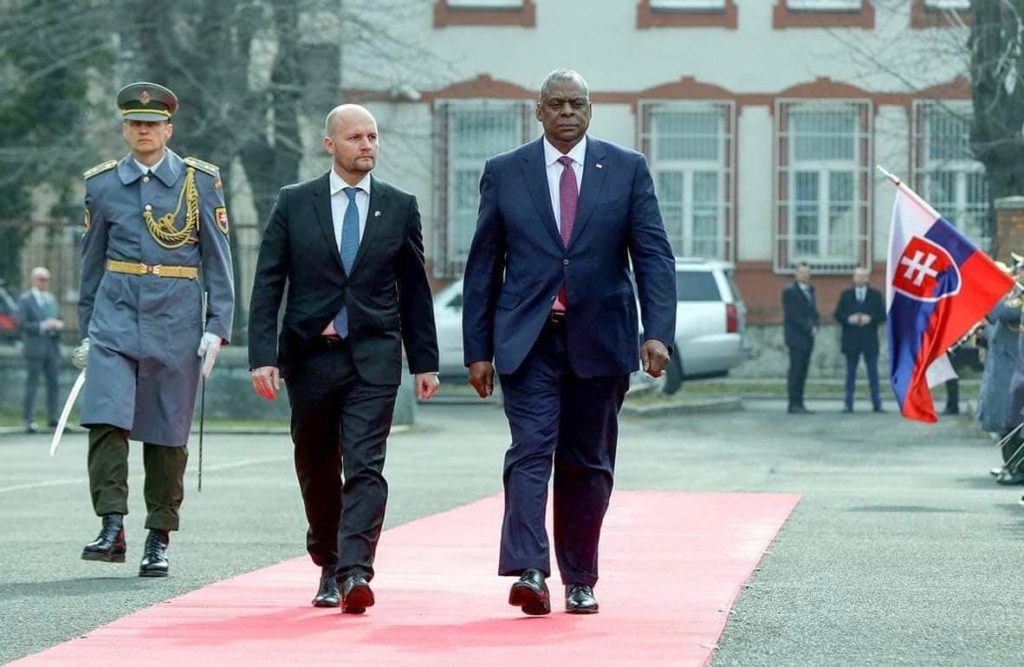
“Well, we’ve been in discussion with United States, with Ukraine, and also with other allies on possibility to deploy or to send or to give S-300 system to Ukrainians. And we are willing to do so. We’re willing to do so immediately when we have a proper replacement. The only strategic air defense system that we have in Slovakia is S-300 system,” Nad said during a press conference.
In response, Austin said that he did not have any announcements regarding the S-300 deal and that the US and its NATO allies were working together for a solution.
“I don’t have any announcements for you this afternoon. These are things that we will continue to work with all of our allies, and certainly, this is not just a US issue. It’s a NATO issue,” said Austin.
Given that Russian missiles seem prone to “accidentally” hit schools, theaters, hospitals, and even orphanages in Ukraine, It is reasonable to imagine that Russian missiles fired at targets in Ukraine that are near the borders of NATO countries could also “accidentally” come down in Poland, Slovakia, Hungary and Romania
Upon hearing the news that NATO had been working together to send S-300 systems to Ukraine, the Russian’s response was to say they would not allow such a transfer. According to a statement given by Russian Foreign Minister Sergey Lavrov, Moscow would consider the arms supply a “legitimate target” and could possibly take military action against it. Of course, this is a direct threat against a NATO country which if carried out would result in a significant escalation in hostilities. For example, NATO announcing a limited no-fly zone within Ukrainian airspace, 50-100 from the borders of NATO countries, and shooting down any Russian missile or aircraft entering that airspace.








COMMENTS