

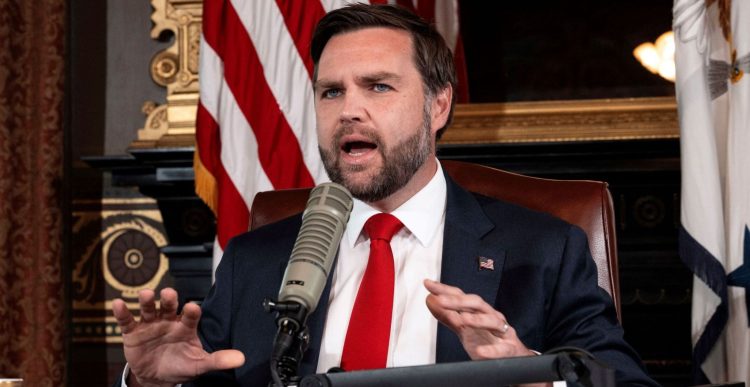
Vance made no effort to soften his words. He condemned those celebrating Kirk’s death online and framed the killing as the product of a dangerous movement. “Unity is impossible with people who think this way,” he said, vowing that the administration would act. White House deputy chief of staff Stephen Miller joined in, promising to deploy the Department of Justice, Homeland Security, and other agencies against what they describe as domestic terror networks linked to the left. The message was unmistakable: the Trump administration intends to make Kirk’s death the catalyst for a broader crackdown.
The political framing was swift. President Donald Trump himself cast blame on “radical left” groups and hinted at new investigations targeting left-leaning organizations. Vance echoed that line, arguing that dismantling this movement is essential to preserving safety and stability. He tied Kirk’s killing to what he sees as a toxic political culture that encourages violence.
Still, the facts on the ground remain unsettled. The alleged gunman, 22-year-old Tyler Robinson, is in custody. Authorities say DNA evidence links him to the rifle and other items found near the scene, but his motive is far from clear. Investigators describe Robinson as politically radicalized, with signs of fixation on Kirk himself, but they have not drawn firm conclusions about exactly why he carried out the shooting.
That gap between confirmed evidence and political narrative is where the tension lies. Vance and other Republicans are shaping the assassination into a rallying cry against left-wing extremism, but investigators continue to sift through the suspect’s digital footprint and personal history.
Vance also spoke personally, calling Kirk a dear friend and a central figure in shaping conservative organizing and Trump-era personnel choices. His tribute was heartfelt, but his broader message was political: this was more than the death of a friend—it was a warning shot in what he sees as America’s struggle against destructive ideology.
Kirk’s murder has already become a flashpoint. Whether it marks the start of a government campaign against left-wing groups or remains a singular tragedy will depend on where the investigation leads—and whether the politics surrounding it allow the facts to stand on their own.
VANCE: “We have to talk about this incredibly destructive movement of left-wing extremism that has grown up over the last few years, and I believe, is part of the reason why Charlie was killed by an assassin’s bullet.” pic.twitter.com/GqmVQLd4Ki
— Mary Margaret Olohan (@MaryMargOlohan) September 15, 2025
Rubio Stands Shoulder-to-Shoulder with Netanyahu Amid Gaza War and Qatar Fallout
U.S. Secretary of State Marco Rubio touched down in Jerusalem on September 15, 2025, stepping directly into the eye of the storm. His meeting with Israeli Prime Minister Benjamin Netanyahu wasn’t about pleasantries—it was about war, survival, and the tangled web of diplomacy that’s now stretched from Gaza to Doha.
Netanyahu set the tone immediately, hailing Rubio as an “extraordinary friend” of Israel. In turn, Rubio cast his visit as more than a diplomatic courtesy call—it was a signal flare to the world that America is firmly planted in Israel’s corner. That message landed just days after Israel carried out a stunning airstrike on Hamas leaders in Doha, Qatar. The strike rattled the region, enraged a key U.S. ally, and complicated Qatar’s already fragile role as mediator in the ongoing hostage talks.
Facing the press side by side, Netanyahu doubled down on Israel’s position: Hamas operatives would be hunted “wherever they may be.” He defended the strike in Qatar as necessary justice against those who orchestrated the October 2023 massacre—an attack that left more than 1,200 Israelis dead and 251 taken hostage. Netanyahu didn’t shy away from his critics either, brushing off international condemnation and even taking a swipe at President Donald Trump’s remarks, while still calling him Israel’s “greatest friend” in the Oval Office.
Rubio, in lockstep, made clear there was no daylight between Washington and Jerusalem on Hamas. His words carried the weight of America’s backing: Hamas, he said, must be eradicated before any vision of peace or prosperity for Gaza could take shape. He pressed Netanyahu for clarity on Israel’s next moves, particularly the looming ground offensive in Gaza City. Thousands of Palestinians have already fled following evacuation orders, bracing for the fight to come.
Next stop for Rubio: Doha. The airstrike there has left U.S. diplomacy in a tight squeeze—Israel asserting its right to self-defense while Qatar fumes over an attack on its soil. How Rubio navigates that fallout will shape whether the U.S. can still count on Qatar as a go-between in hostage negotiations.
This meeting unfolded on the eve of the United Nations General Assembly, where calls for a ceasefire are already mounting. Both leaders brushed those aside, insisting that only Hamas’s destruction would open the door to real stability. Their joint visit to the Western Wall hammered the symbolism home: an alliance built to endure, as unyielding as the stones they touched.
At its core, this wasn’t simply diplomacy. It was a declaration—Israel and the United States are aligned, bracing for whatever comes next.
US secretary of state Marco Rubio met Israeli Prime Minister Benjamin Netanyahu in Jerusalem on Sunday in the wake of Israel’s unprecedented strike on a Hamas meeting in Qatar, a key US ally in the region. https://t.co/rKKlfnDmoz pic.twitter.com/gleGO8fpqD
— Financial Times (@FT) September 14, 2025








COMMENTS