

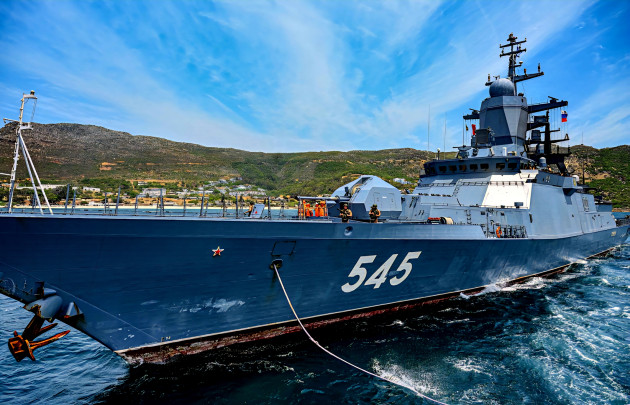
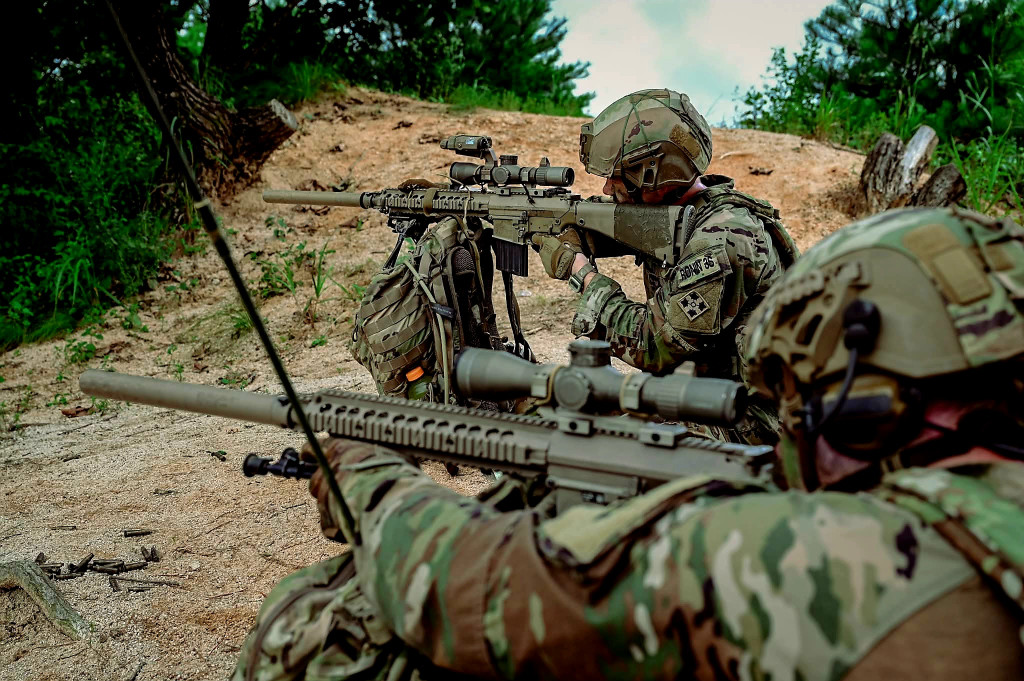
Lt. Gen. Matthew McFarlane, commanding general of America’s First Corps, said the move improves the corps’ ability to project landpower across the region while supporting ongoing efforts such as Operation Pathways. He emphasized that the alignment allows for tighter synchronization of readiness and modernization efforts while maintaining deterrence against regional threats.
Elements of the 4th Infantry Division have already been operating in the Pacific theater. The division’s 1st Stryker Brigade Combat Team has recently rotated through the Republic of Korea, supporting longstanding U.S. commitments on the peninsula. The reassignment formalizes an operational relationship that has already been developing through repeated regional deployments.
The change does not affect the stationing of division personnel or equipment. Division headquarters and subordinate brigades will remain at Fort Carson, but America’s First Corps will now oversee training cycles, modernization priorities, and deployment schedules.
America’s First Corps, based at Joint Base Lewis-McChord, is designed to deploy worldwide to command Army and joint forces, with a primary focus on maintaining stability and security in the Indo-Pacific. By aligning a heavy division under its control, the Army is reinforcing its emphasis on large-scale land operations and sustained presence in a region increasingly central to U.S. strategic planning.
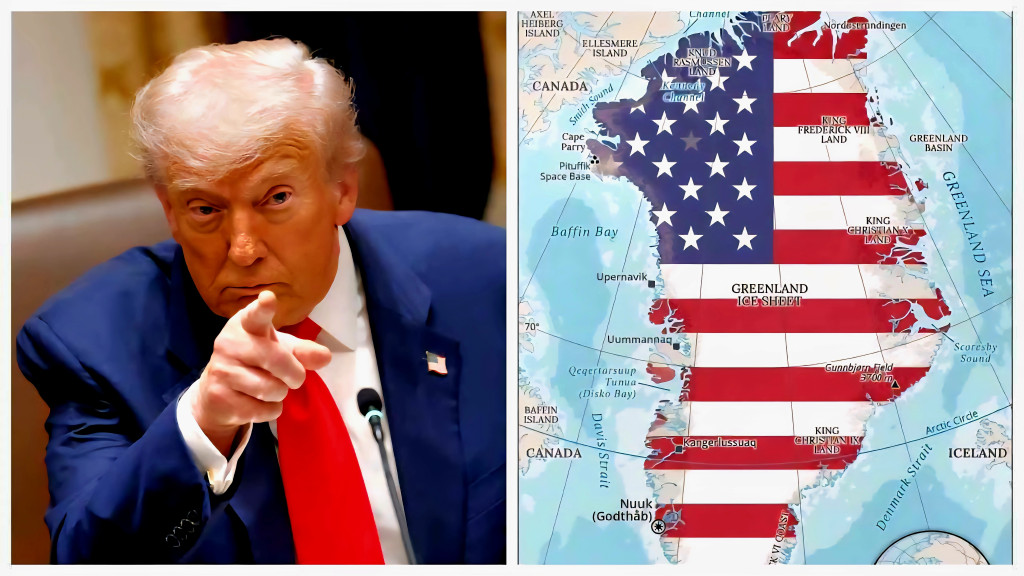
Trump Says U.S. Must “Own” Greenland to Defend It Against Russia and China
President Donald Trump said Friday that the United States needs to “own” Greenland to prevent Russia or China from gaining control of the strategically located Arctic territory, arguing that ownership allows for a fundamentally different and stronger defense posture than existing agreements.
Speaking to reporters at the White House during a meeting with oil industry executives, Trump said Greenland’s future was a national security issue, not a diplomatic preference. “You defend ownership,” Trump said. “You don’t defend leases.” His remarks were reported by Reuters.
Trump warned that failure to act could allow adversaries to establish a foothold near the United States. “We are going to do something on Greenland whether they like it or not,” he said, adding that if the United States does not act, “Russia or China will take over Greenland.” Reuters reported that Trump framed the issue as preventing hostile powers from becoming neighbors to the United States.
The president also suggested he would prefer a negotiated solution, but did not rule out more forceful measures. “I would like to do it the easy way,” Trump said. “But if we don’t do it the easy way, we’re going to do it the hard way.” Those comments were reported by multiple outlets, including Reuters and ABC News.
Greenland occupies a critical position between North America and Europe, sitting astride key air and maritime routes in the North Atlantic and Arctic. The United States already maintains a military presence at Pituffik Space Base, formerly Thule Air Base, which supports missile warning, space surveillance, and Arctic operations. Analysts have long viewed Greenland as central to Arctic defense, particularly as melting ice opens new sea routes, and competition with Russia and China intensifies.
Greenland is a self-governing territory within the Kingdom of Denmark, a NATO ally, and both Danish officials and Greenland’s government have previously rejected any notion of U.S. acquisition.
Reuters reported that European leaders have expressed concern that Trump’s remarks could strain alliance unity and raise questions about sovereignty.
Trump’s comments mark a sharp escalation from past discussions focused on basing access and defense cooperation. As Arctic competition accelerates, the question now is whether Washington will pursue expanded agreements with allies or push toward a far more confrontational approach to securing Greenland’s strategic ground.
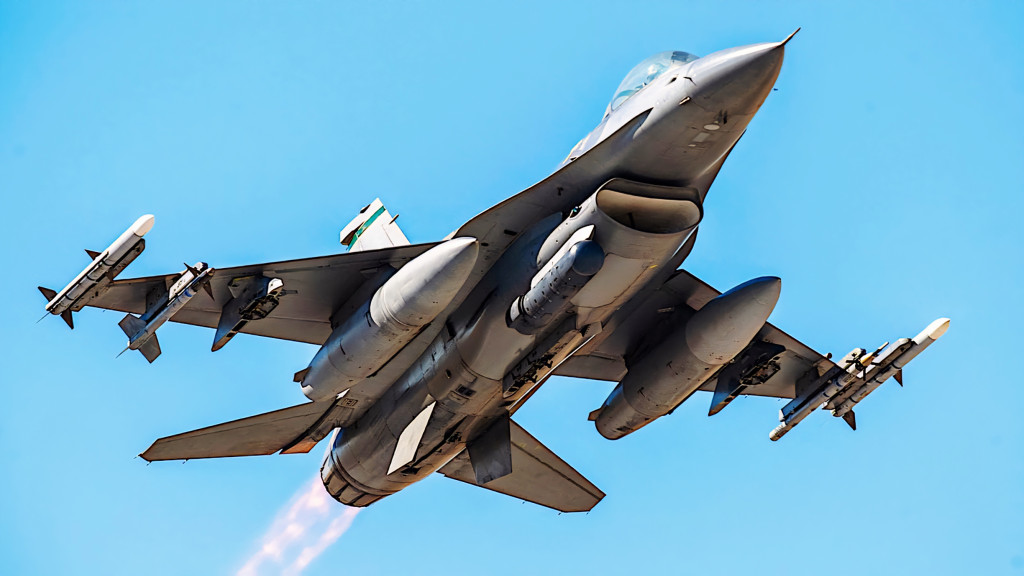
Taiwan Expands Search for Missing F-16V as Fleet Grounded for Safety Inspections
Taiwanese authorities have expanded search-and-rescue operations for a Republic of China Air Force F-16V fighter that went missing during a night training mission off Taiwan’s east coast on January 6, according to Taiwan’s Ministry of National Defense.
The aircraft disappeared shortly after taking off from Chia Shan Air Base, near Hualien. The pilot, Capt. Hsin Po-yi, reported a failure of the jet’s Modular Mission Computer shortly before radar contact was lost at approximately 1,700 feet. The MMC failure reportedly affected flight path and altitude display data. Taiwan’s Air Force confirmed the pilot had logged 611 flight hours.
As of January 9, search efforts have been expanded south along the Taitung coastline, covering the area from Changbin Township to the Beinan River estuary. According to Taiwan’s Coast Guard Administration, more than 30 aircraft sorties, 22 vessels, 132 vehicles, and nearly 300 personnel are involved. Army units have deployed coastal sweep teams, while Black Hawk helicopters are flying low-altitude night search patterns.
Officials say weather conditions continue to complicate recovery efforts. The Central Weather Administration reported wave heights of up to three meters, strong winds ranging from Force 6 to Force 9, and southward-moving currents in the search area. No wreckage or sign of the pilot has been located.
In response, the Air Force has grounded Taiwan’s entire F-16 fleet, roughly 140 aircraft upgraded to the F-16V standard, for immediate inspections of mission computers. Defense Minister Koo Li-hsiung stated there was no evidence of widespread MMC failures prior to the crash but confirmed the military is accelerating efforts to install Auto-GCAS systems on older aircraft, a program currently scheduled for completion in 2028.
The incident comes as China continues near-daily air defense identification zone incursions, underscoring ongoing strain on Taiwan’s pilots and airframes. Investigators say updates will follow as recovery operations continue.








COMMENTS