

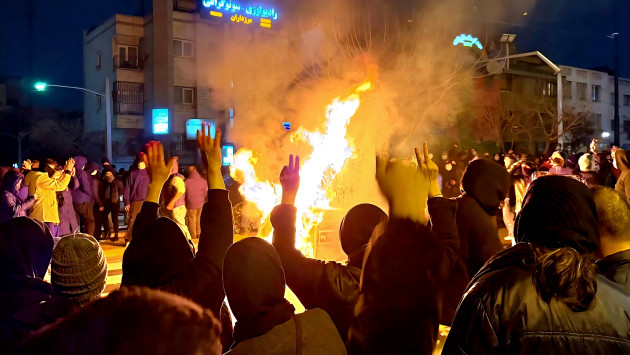
Iran Claims “Israeli Military‑Grade Ammunition” Used in Killing of Children
During Protests Iranian state media is reporting that forensic teams recovered “Israeli military‑grade bullets” from the bodies of two children killed during the ongoing unrest across the country.
According to Russian outlet TASS, an eight‑year‑old girl in Isfahan and a three‑year‑old in Kermanshah were fatally shot earlier this month with rounds allegedly linked to Israeli manufacture. The reports quote Iranian security officials who blame Israel and the United States for orchestrating the violence.
The story fits a familiar pattern in Tehran’s information campaigns. Iran’s Supreme Leader, Ayatollah Ali Khamenei, publicly accused Washington and Tel Aviv of directing separatist and armed groups to destabilize the Islamic Republic. He claimed that “actors linked to Israel and the United States” were behind thousands of deaths and pledged retribution against those responsible. Iranian officials have cited casualty figures ranging from two to five thousand, including hundreds of members of the security forces.
From a forensic and operational standpoint, the “Israeli ammunition” claim raises major credibility questions. In technical terms, “Israeli military‑grade” usually refers to ammunition manufactured by Israel Military Industries or IMI Systems, which produces standard NATO calibers like 5.56×45 mm, 7.62×51 mm, and 9×19 mm.
None of these calibers are exclusive to Israeli forces. Identifying a bullet as Israeli depends on headstamps, metallurgy, and production signatures, not on any unique ballistic design.
More importantly, such rounds are rare inside Iran. The Iranian military and Revolutionary Guard continue to rely primarily on 7.62×51 mm NATO and 7.62×39 mm AK‑pattern weapons, whereas 5.56 mm rifles like the M4 or Tavor are not standard issue. Any foreign operator attempting to blend into Iran’s security environment would almost certainly use the same 7.62 mm ammunition common to the region. Walking around with a Tavor or an M4‑pattern weapon in Iran would be suicidal from an operational security perspective.
Forensic evidence tying bullets to Israeli factories could instead result from older exports or captured stocks recycled through black‑market or proxy channels.
Given Iran’s history of framing unrest as foreign sabotage, a more plausible explanation is that domestic forces used nonstandard ammunition and are now exploiting that to deflect blame.
If Israeli‑marked rounds did turn up, the simplest answer may be that they came from Iran’s own inventory or from groups it has long sponsored abroad.
The idea of Mossad agents roaming Iranian cities shooting civilians with IMI‑stamped 5.56 mm rounds borders on absurd.
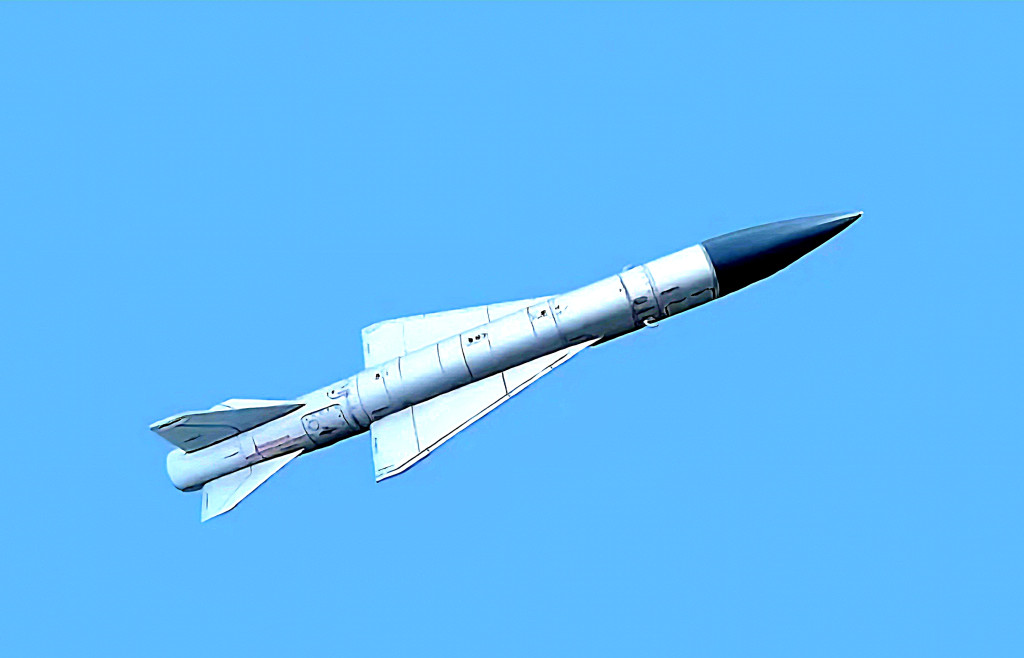
Ukraine Downed 9 of 12 Kh‑22s in Rare Successful Interception During Major Russian Strike
Ukrainian air defenses achieved a rare success overnight on 23–24 January when they shot down 9 of 12 Kh‑22/Kh‑32 anti‑ship cruise missiles launched at Kyiv, marking the first time in months that Russia has used this large Soviet‑era missile against the capital.
Russia launched a massive combined attack comprising 396 aerial targets – about 375 drones and 21 missiles, including Kh‑22s, ballistic missiles, and air‑launched weapons – against Kyiv, Kharkiv, and other regions.
The Kh‑22s were fired from Tu‑22M3 Backfire bombers over Bryansk, a pattern that had not been seen in a major Kyiv strike for several months.
Ukraine’s Air Force reported that its defenses intercepted 372 of the 396 incoming targets, including 9 of the 12 Kh‑22s, plus 5 ballistic missiles, 1 Kh‑59/69, and 357 drones. The interception rate against Kh‑22s represents a notable improvement; previously, Ukrainian officials had stated that the Kh‑22 was effectively uncatchable with existing air defense systems, and most had gotten through in earlier attacks.
Despite the strong performance, at least 3 Kh‑22s and other missiles struck key energy infrastructure in Kyiv Oblast, damaging substations and cutting power and heating to tens of thousands of homes. Civilian casualties were reported, with at least one death in Kyiv and several dozen wounded across the capital region and in Kharkiv.
The successful picket against Kh‑22s appears to reflect upgraded coordination between Western and Soviet‑era air defense systems, better targeting data, and improved allocation of Patriots and NASAMS assets.
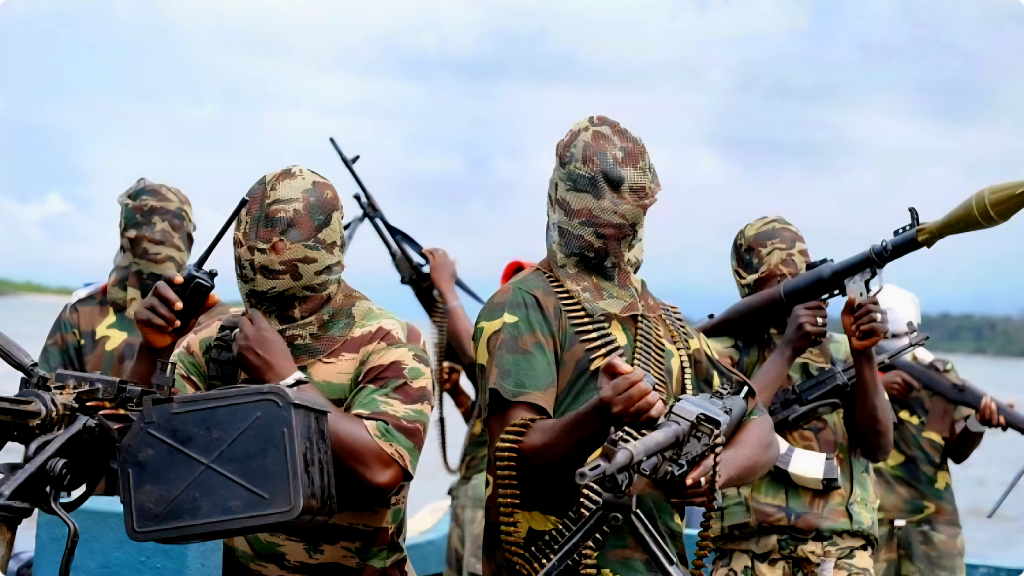
US Presses Nigeria to Protect Christians After Kaduna Church Abductions
The United States has urged Nigeria to take stronger action to protect Christian communities following the abduction of more than 170 worshippers from three churches in Kaduna State on January 18.
The mass kidnapping has drawn sharp condemnation from Washington, which warned that persistent attacks on religious groups threaten both human rights and regional stability.During a visit to Abuja,
Under Secretary for Political Affairs Allison Hooker said Nigeria must guarantee the right of Christians to worship freely and safely. She noted that religiously motivated attacks remain a major concern in the country’s north, where armed groups and bandits continue to target civilians.
Hooker’s comments followed renewed statements by President Donald Trump, who declared that American forces are “annihilating terrorists killing Christians” in Nigeria. He said militants aligned with extremist movements had “killed thousands” over the past decade.
The United States designated Nigeria as a Country of Particular Concern in late 2025, citing widespread intolerance and the government’s limited capacity to prevent large‑scale sectarian violence. Hooker emphasized that the new US–Nigeria Joint Working Group aims to improve crisis response by prioritizing counter‑terrorism support, intelligence sharing, and accountability for perpetrators.
Nigerian officials welcomed the talks, saying closer coordination with US Africa Command has already produced gains under Operation Hadin Kai and Operation Fasan Yamma in the northeast.
Defence spokesperson Brigadier General Tukur Idris said the US has pledged to accelerate delivery of drones, helicopters, and other equipment.
Meanwhile, Speaker of the House of Representatives Abbas Tajudeen called on security forces to rescue the kidnapped worshippers and bring the attackers to justice. He condemned the rising attacks on “soft targets” such as schools and churches and urged unity behind President Bola Tinubu’s renewed national security drive.The Kaduna abductions highlight Nigeria’s ongoing battle with armed groups exploiting weak rural security. Despite progress in some areas, the steady stream of mass kidnappings shows that restoring confidence and protecting religious minorities remain steep challenges.
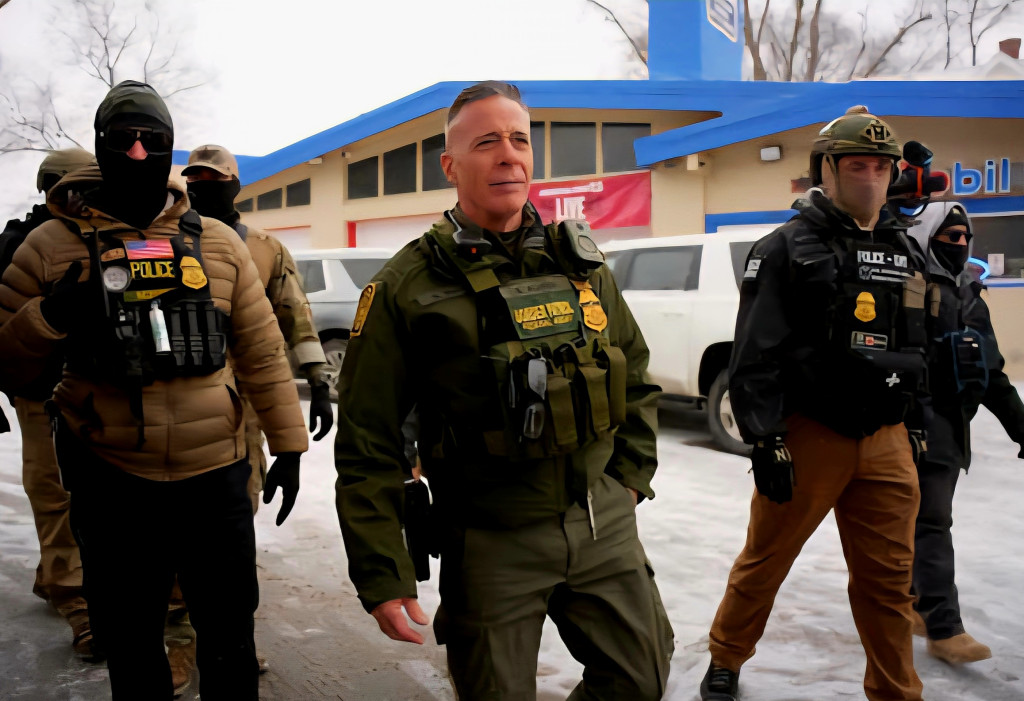
Chicago Union Carpenter Acquitted in Alleged Murder‑for‑Hire Plot Against Border Patrol Official
Federal prosecutors in Chicago said a 37‑year‑old union carpenter crossed the line from talk to conspiracy when he allegedly offered ten thousand dollars for the murder of a senior Border Patrol commander. The case against Juan Espinoza Martinez opened earlier this week, marking the first trial tied to the Trump administration’s immigration enforcement surge in the Midwest.
Jurors, however, ultimately acquitted Espinoza Martinez of the charge, finding insufficient proof that his online messages amounted to a genuine murder‑for‑hire solicitation.
Espinoza Martinez had been accused of using Snapchat to solicit the killing of Gregory Bovino, a Border Patrol official known for leading aggressive operations in several states. Prosecutors contended that the offer was no joke or neighborhood gossip, but a legitimate attempt intercepted only after messages surfaced through a government informant.
Defense attorneys portrayed Espinoza Martinez as a working tradesman with just twenty dollars in his bank account, arguing that he lacked both means and intent. By all accounts, Espinoza Martinez is a union carpenter – a profession that pays solid middle‑class wages across most major U.S. cities.
Ten thousand dollars is neither fantastical nor beyond what a union journeyman could realistically gather, making the alleged threat plausible on paper even if jurors found no proof of intent.
In court, prosecutors displayed the Snapchat messages, one reading “10k if u take him down” beside a picture of Bovino. A government informant and local construction contractor testified that he took the messages seriously enough to alert Homeland Security.
Judge Joan Lefkow barred prosecutors from describing Espinoza Martinez as a gang member due to insufficient evidence. While Espinoza Martinez is now cleared of criminal charges, the case underscores how quickly online anger can escalate into perceived threats of violence against federal officials.
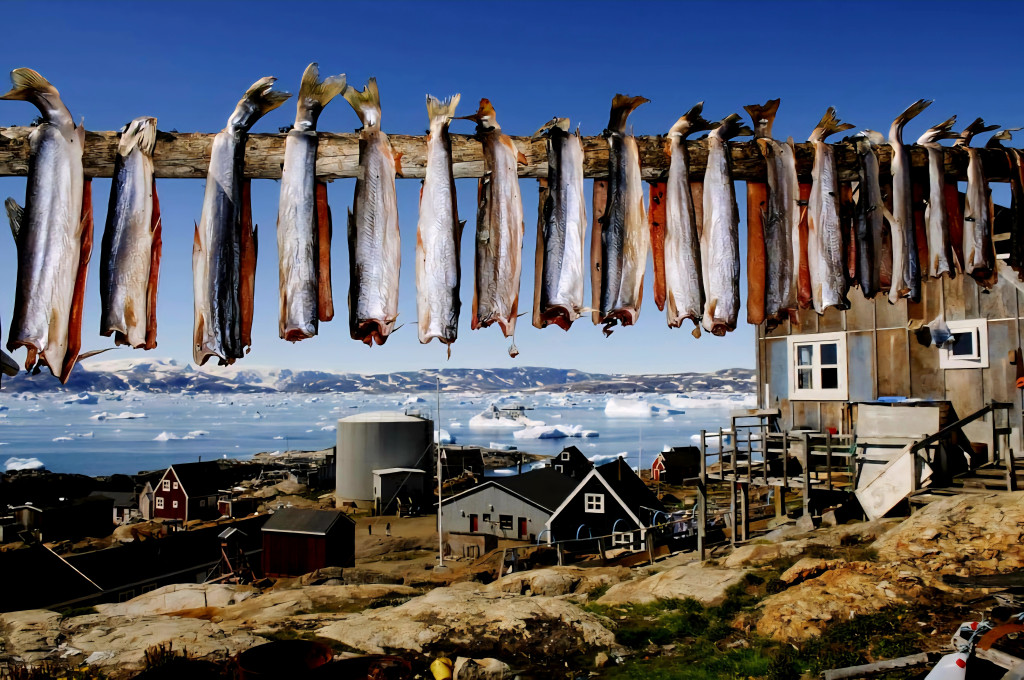
Freezers Full of Seal Meat: Greenland’s Culture of Preparedness
While Washington and Copenhagen trade barbs over Greenland’s political future, most locals are focused on something far more immediate: staying ready for whatever comes next. In the world’s largest island, prepping isn’t a subculture. It is a way of life born of necessity, isolation, and weather that respects no supply chain.
8In the tiny settlement of Kapisillit, 73‑year‑old Kaaleeraq Ringsted gestures to two chest freezers filled with reindeer meat, seal, cod, redfish, and halibut. He says he could live for a year without outside resupply. That level of self‑sufficiency isn’t unusual here. Weekly grocery shipments and unpredictable weather leave many Greenlanders relying on stored food and a network of hunters and fishermen spread across the Nuuk fjord.
Greenland’s government this week released updated crisis‑preparedness guidelines urging citizens to keep at least five days of food and water along with hunting weapons, ammunition, and fishing gear. For locals, those steps are second nature. Possessing both modern tools and traditional skills is what keeps communities functioning through blizzards, sea ice, and long supply interruptions.
The renewed attention to preparedness coincided with President Trump’s latest remarks walking back threats to seize Greenland or impose tariffs on Denmark. For most Greenlanders, though, global power politics barely register compared to the constant pressure of survival in one of Earth’s harshest environments.
Fisherman Aslak Wilhelm Jensen, working from his boat in the Nuuk fjord, shrugged off foreign headlines. His three full freezers of fish and meat define security far more than any distant treaty. “We’re not the kind of people who panic when we hear something’s happening out in the world,” he said. “We relax when there’s food on the table.”
For SOFREP readers, that sentiment resonates: preparation as peace of mind, not paranoia. In Greenland, everyone is a prepper because preparedness is what keeps life possible.








COMMENTS